How to Travel Korea by Train: Everything Foreigners Need (2026)
🔗 Some links on this site are affiliate links. If you book through them, we may earn a small commission at no extra cost to you. We only recommend services we believe are genuinely useful for train travel in Korea.
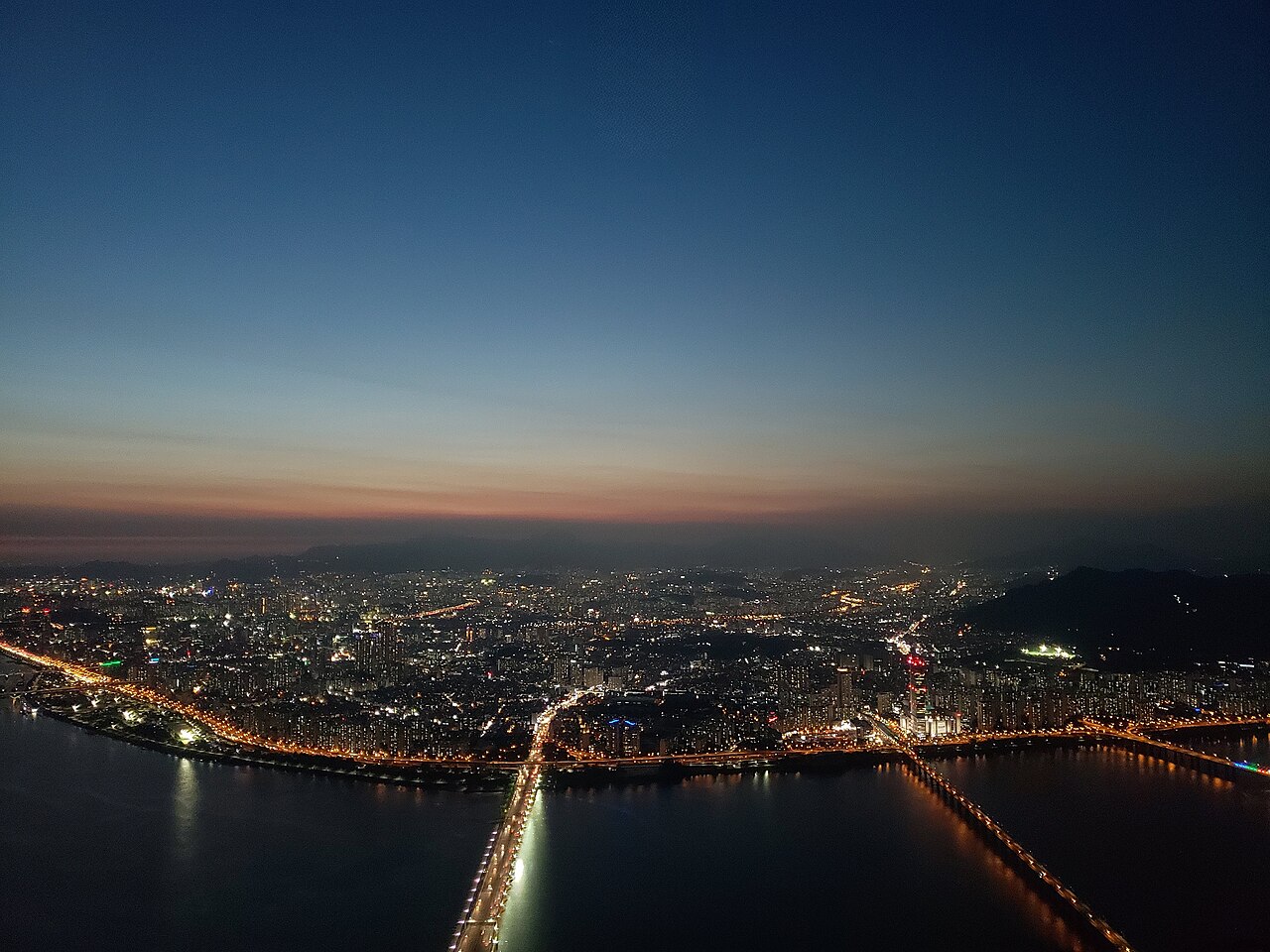
Korea might be the easiest country on earth to travel by train. It’s compact enough that the longest ride most visitors ever take is about two and a half hours. The trains leave on time to the minute. The stations sit right in the centre of the cities they serve — step off at Busan Station and you’re already downtown. And there’s no airport friction anywhere in the system: no security line, no check-in, no arriving ninety minutes early. You walk in, find your platform, and go.
The numbers back the feeling up. The KTX has carried more than a billion passengers since it opened in 2004, and it puts most of the country within about three hours of Seoul: Busan on the south coast in two and a half hours, Gyeongju’s ancient tombs in just over two, Gangneung’s beaches in about two, Jeonju’s hanok village in well under two.
There’s exactly one catch, and it’s the reason this site exists: the booking system wasn’t designed with foreign visitors in mind. Cards fail in strange ways, the tourist pass is sometimes brilliant and sometimes a waste of money, and nobody tells you which of Seoul’s stations your train actually leaves from. This guide is the hub for all of it — read it top to bottom for the full picture, or jump to the deeper guide each section links to.
One thing worth sorting before you even book a train: data. Korea runs on Naver Map and Kakao Map — Google Maps is genuinely limited here, covering neither real-time transit nor most walking directions accurately. Both apps need a live connection, and so do your e-tickets and translation tools. An eSIM activated at home means you’re navigating the moment you clear arrivals, with no SIM-swap queue and no scramble at an airport kiosk while jet-lagged.
Meet Korea’s trains
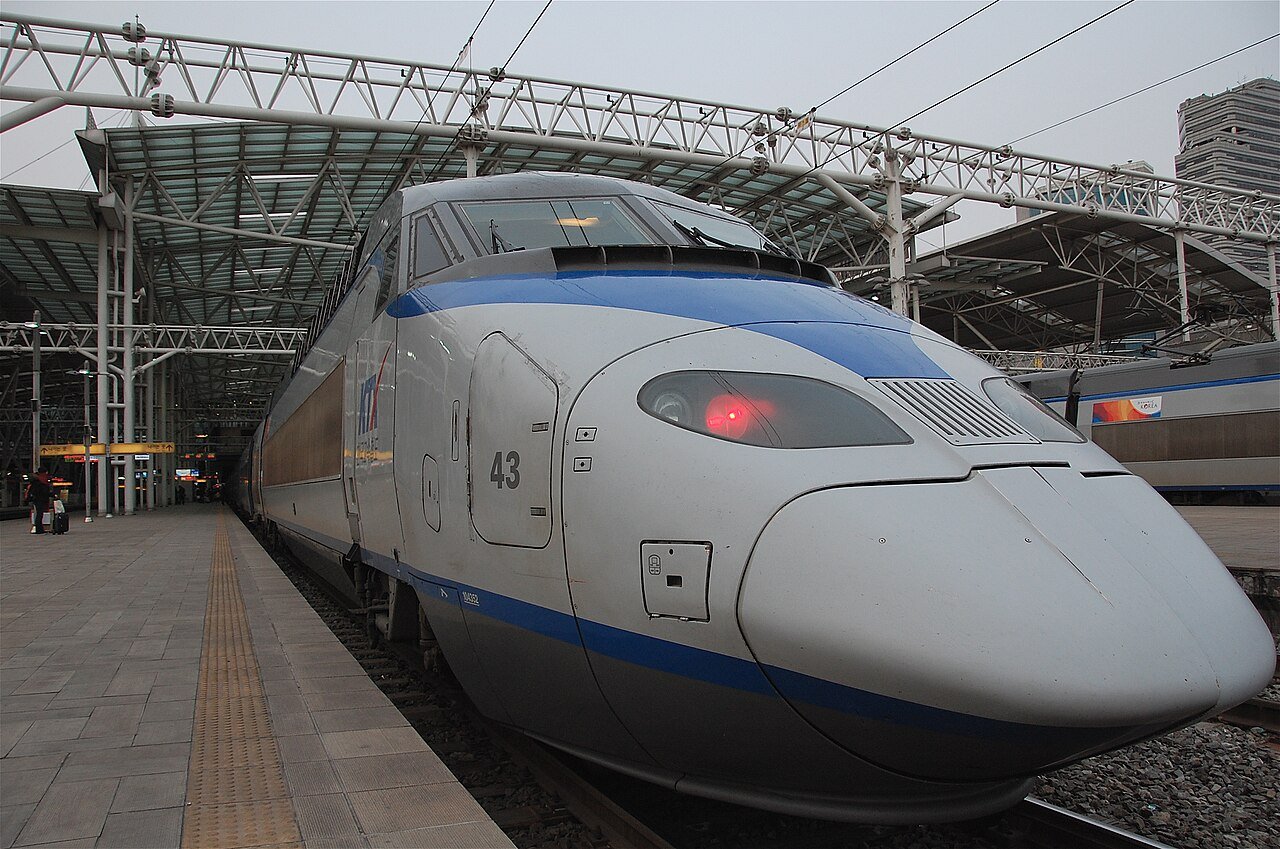
Everything on the network sorts into four kinds of train:
| Train | Speed | What it’s for | Example fare |
|---|---|---|---|
| KTX | up to ~305 km/h | The main event — high-speed lines from Seoul to Busan, Gyeongju, Jeonju, Gangneung | Seoul–Busan ₩53,900 |
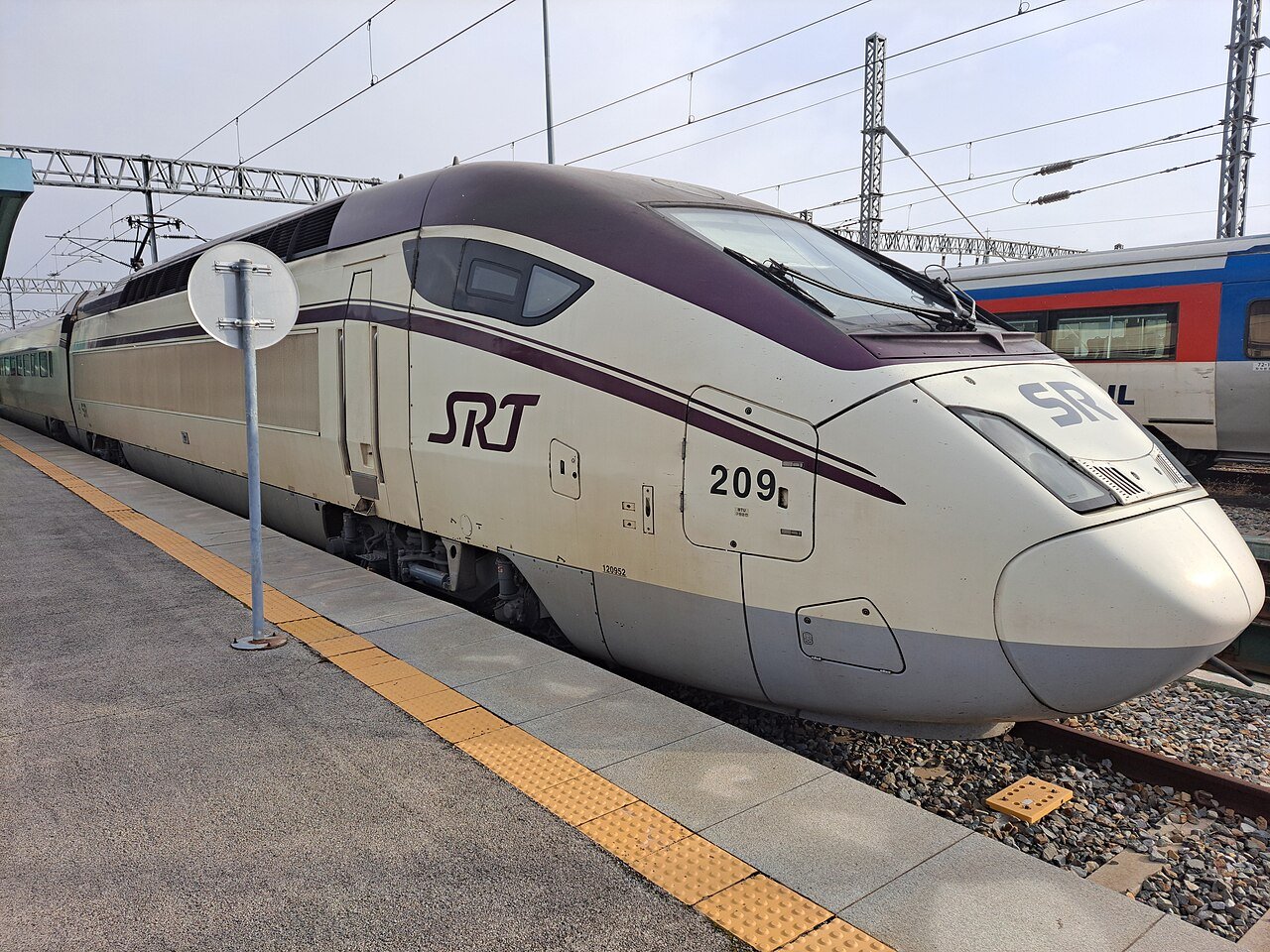
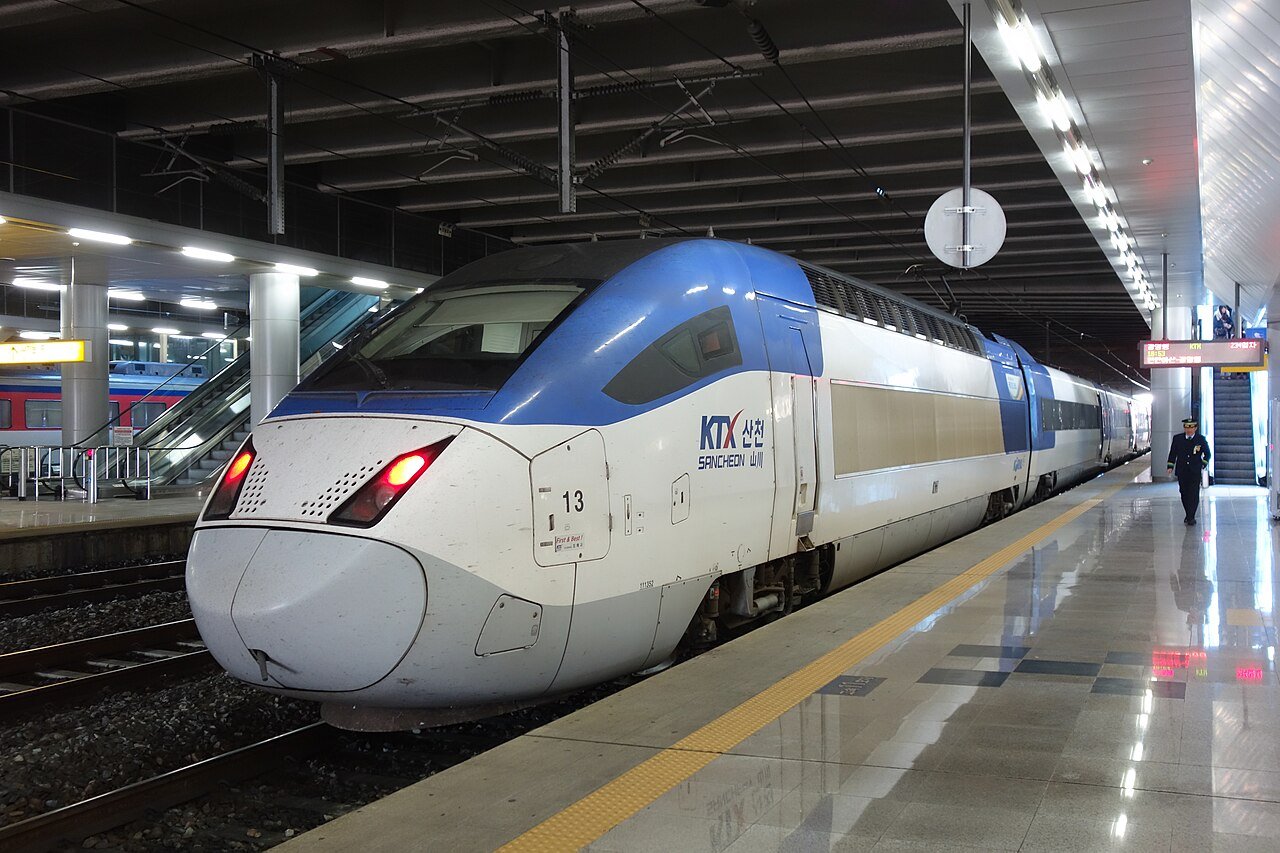
| KTX-Sancheon (ex-SRT) | same speed class | The former SRT fleet, merged into KTX in September 2026; runs from Suseo in southeast Seoul | Suseo–Busan about ₩52,600 |
| ITX-Saemaeul / Mugunghwa | conventional | The slow-and-scenic budget option on the same corridors | Seoul–Busan from ₩28,600 |
| ITX-Cheongchun | commuter express | The day-trip line east to Gapyeong and Chuncheon | Yongsan–Chuncheon ₩9,800 |
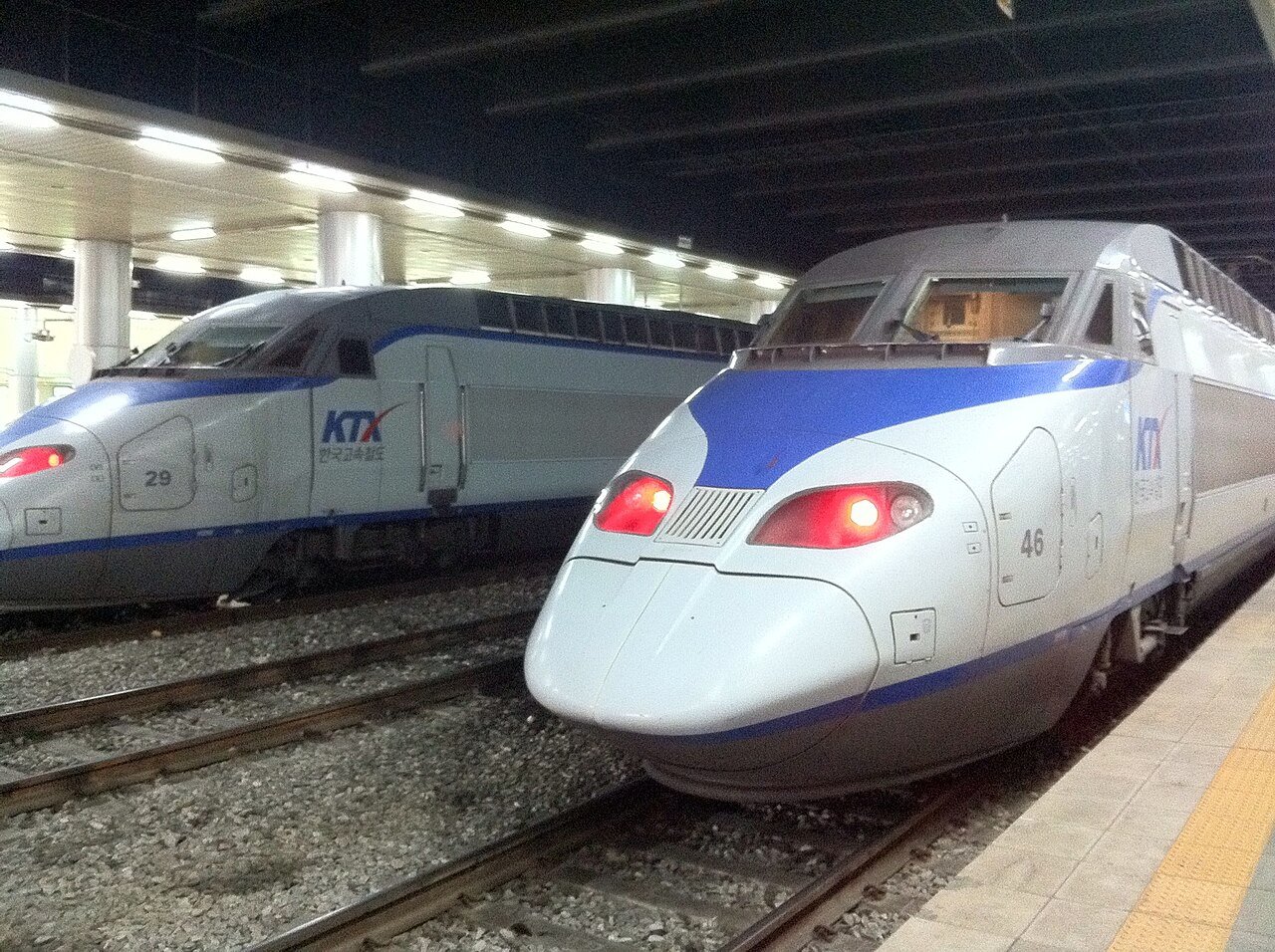
The KTX is the train you’ll ride most, and it’s a genuinely world-class one — smooth, punctual, and frequent. On the newer eastern routes like Gangneung you’ll board a KTX-Eum, a smaller sibling capped at 260 km/h. Same tickets, same booking, same experience from the seat.
The SRT used to be the separate answer to that question — a rival operator running from Suseo. Since 1 September 2026 it no longer is: Korail and SR merged, those trains run as KTX-Sancheon, fares came down about 10%, and everything books in one app. What survives is geography — Suseo departures are the smarter pick if you’re staying in southeast Seoul, near Gangnam or Jamsil. The full story is in KTX vs SRT.
The slow trains — ITX-Saemaeul and Mugunghwa — are roughly half the price and double the time. Lovely when the journey itself is the point; frustrating when it isn’t.
The ITX-Cheongchun is technically a commuter express, but for travellers it’s the gateway to Nami Island and Chuncheon’s dakgalbi alley: about an hour and a quarter from Yongsan to Chuncheon for under ₩10,000.
Where the rails go
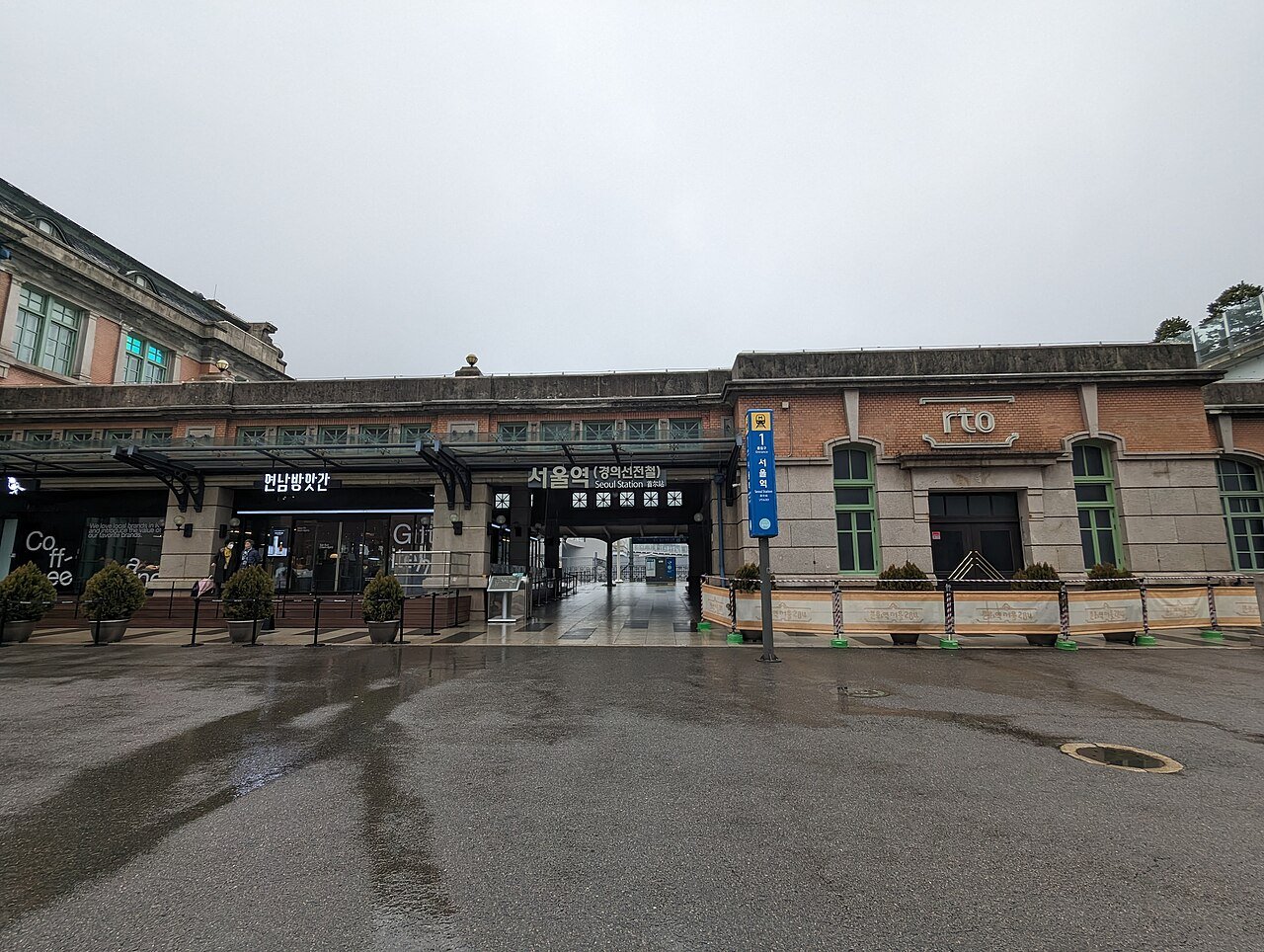
Most journeys start at Seoul Station — itself a quick ride from the airport on the AREX train — and the network fans out from there like fingers from a palm:
- South to Busan (Gyeongbu line, from Seoul Station) — the spine of the country. Daejeon, Dongdaegu, Ulsan and Busan, with trains every 10–25 minutes for most of the day. Busan takes about 2.5 hours and costs ₩53,900 (about US$41); Gyeongju is about 2 h 10 m for ₩44,200.
- Southwest to Jeonju, Gwangju and Yeosu (Honam and Jeolla lines, mostly from Yongsan Station) — Jeonju in about 1 h 40 m for ₩31,300, with the fastest services closer to an hour and a half.
- East to Gangneung (from Seoul Station, with some weekend departures from Cheongnyangni) — the KTX-Eum reaches the east-coast beaches in about two hours for ₩27,600 (about US$20).
- Northeast to Gapyeong and Chuncheon (ITX-Cheongchun from Yongsan, calling at Cheongnyangni) — about an hour to Gapyeong, an hour and a quarter to Chuncheon.
- The Suseo corridor (from Suseo) — mirrors the Busan and southwest routes from the city’s southeast.
For a sense of scale: the Seoul–Busan line runs 447 km, the southwest corridor about 253 km, and the Gangneung line 237 km. Korea fits a remarkable amount of country into a small map — which is exactly why the train beats flying here.
Which Seoul station is mine?
This trips up more travellers than anything except the card problem, so here’s the cheat sheet:
| Going to | Leave from |
|---|---|
| Busan, Gyeongju, Daejeon, Ulsan | Seoul Station |
| Jeonju, Gwangju, Mokpo, Yeosu | Yongsan Station |
| Gangneung and the east coast | Seoul Station (some trains: Cheongnyangni) |
| Gapyeong, Chuncheon | Yongsan (via Cheongnyangni) |
| Suseo-corridor departures | Suseo Station |
Seoul Station and Yongsan are one subway stop apart, so mixing those up costs you ten minutes. Suseo is on the far side of the city — mixing that up can cost you the train. Read your ticket twice.
Booking 101 for foreigners
Three things explain almost everything about buying Korean train tickets.
First, the window. Bookings open about 30 days before travel on the Korail global English site. If you’re searching six weeks out and finding nothing, nothing is wrong — the window simply hasn’t opened yet.
Second, the fares. KTX pricing is fixed and regulated — no dynamic pricing, ever. A ticket costs the same 30 days out or 30 minutes before departure, so booking early buys you availability, not savings. Kids under six ride free on a lap, ages six to twelve pay half fare, and if a train does sell out, standing tickets are offered at a small discount. One exception worth knowing: Korail discounts a limited block of seats on quieter departures through its online special fare — how that works.
Third, the card problem. The official Korail+ (formerly KorailTalk) app works beautifully in English right up until payment, where foreign cards often fail silently — no error, no charge, no ticket. The most reliable workaround is the Korail global website on a desktop; station counters always work too (bring your passport), and resellers like Klook or Trip.com charge a small markup for a completely normal checkout.
The battle-tested detail lives in three guides: how to pay with a foreign credit card, every way to buy KTX tickets, compared, and what to do when KorailTalk won’t cooperate.
The Korail Pass in 60 seconds
The Korail Pass is a foreigners-only pass for unlimited rides on the KTX and most other Korail trains. You pick a duration — 2, 3, 4, or 5 travel days — and use those days within a set window (Korail tweaks the exact terms now and then, so check when you book). Seat reservations are free with the pass — make them anyway on busy routes, especially Friday and Sunday evenings.
The decision rule fits in one line: about six long-distance legs is where the pass starts paying for itself; fewer than that, buy tickets. A single Seoul–Busan round trip costs ₩107,800 on regular tickets, well under the cheapest pass. Even adding Gyeongju and Gangneung to that trip leaves you roughly ₩22,600 below the 3-day pass — it takes a genuinely packed multi-city week before the pass wins on price.
Two footnotes worth knowing. The pass has historically excluded Suseo-departing trains (the old SRT) — with those trains now merged into KTX, confirm coverage at purchase rather than assuming. And because you buy the pass through tourist-facing sites with ordinary international checkouts, it quietly sidesteps the entire foreign-card problem above.
Run your own numbers in Korail Pass: is it worth it?, then see how to actually use it — activation, reservations, and the small print.
Where to go
A short, biased tour of what the rails open up — each with a full guide behind it.
Busan is the ride almost everyone takes first, and rightly so: Korea’s second city is two and a half hours away, with beaches, mountainside villages and the country’s best seafood waiting at the other end. Start with the complete Seoul to Busan guide, then what to do near Busan Station for your first hours in the city.
Gyeongju was the capital of the Silla kingdom for nearly a thousand years, and it shows — royal burial mounds rise between coffee shops, and temples sit in the hills above town. It’s about 2 h 10 m from Seoul. One housekeeping note: the station is now simply called Gyeongju Station (it was “Singyeongju” until late 2023) and sits a short bus or taxi ride outside the historic centre. Here’s how to do Gyeongju as a day trip from Seoul.
Jeonju is Korea’s food capital — the home of bibimbap, choco pie pilgrimages and the country’s most famous hanok village. Under two hours from Yongsan. The Jeonju Hanok Village guide covers what to eat and in what order.
Gangneung is the east coast in two hours: wide beaches, pine forests and Korea’s unofficial coffee capital, all reached on the quiet little KTX-Eum for ₩27,600. See Gangneung by KTX.
Closer to Seoul, a whole circuit of day trips runs on trains and pocket change — Nami Island via Gapyeong is the famous one. The ranked list is in best day trips from Seoul by train.
And don’t write off Seoul Station itself: there’s a surprising amount within walking distance of the platforms, which is exactly what things to do near Seoul Station is for.
How long do you need?
With trains this fast, less time than you’d think.
Five days is enough for the classic loop — Seoul, Busan and Gyeongju without feeling rushed, and it’s right around the point where a Korail Pass starts paying for itself. That exact route, timed train by train, is the 5-day Korea rail itinerary.
Seven days buys breathing room and a second flavour: Jeonju for the food or Gangneung for the coast. The 7-day Korea itinerary maps it out day by day.
As for money — trains will be one of your bigger line items, but the fares above are the honest whole of it: no seat-selection fees, no baggage fees, no surge pricing. Full daily numbers, from hostel budgets to comfortable-hotel budgets, are in how much a Korea trip actually costs.
The essentials nobody tells you
Sort your data before you land. Korea runs on Naver Map and Kakao Map — Google Maps is famously limited here — and both need a live connection, as do your e-tickets and translation apps. An eSIM set up at home means you’re navigating from the arrivals hall. The eSIM for Korea guide compares the options, and do you need data in Korea? gives the honest answer (spoiler: yes).
T-money is for cities, not trains. The rechargeable T-money card covers subways, buses and most taxis nationwide — but KTX and intercity trains always need their own ticket. Carry both and you’re covered.
Luggage is easier than you fear. Carry-ons go overhead, big suitcases go in the racks at the ends of each car, there’s no checked baggage and nobody weighs anything. If you can lift it, you can bring it.
Buy food before boarding. There’s no trolley service on the KTX, so grab gimbap, sandwiches or bakery goods at the station. Eating onboard is completely normal — half the carriage will be doing the same.
Stations are friction-free. No ticket gates — Korean rail runs on an honor system, with staff scanning tickets onboard. Arriving 15–20 minutes before departure is genuinely plenty. The flip side of all that punctuality: doors close on the minute, so be standing at your car when they do.
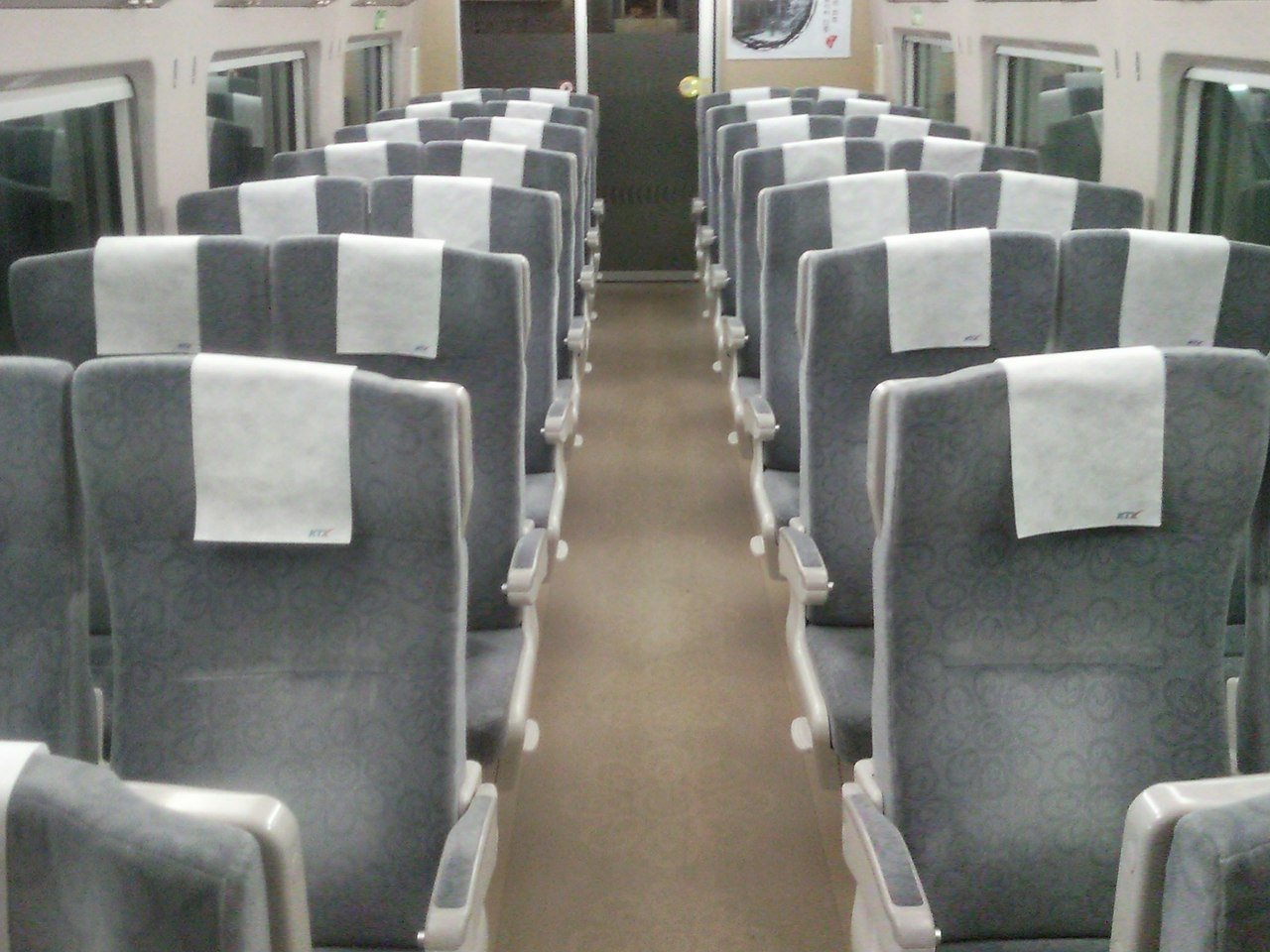
Onboard, think library. Seats are 2+2 in standard class, 2+1 in first. Newer trains have power outlets at every seat (the oldest KTX-I sets have very few — board charged). Free onboard Wi-Fi exists but is weak and crowded, which is one more argument for that eSIM. Keep conversations low and take phone calls to the vestibule between cars.
Quick questions
How far in advance should I book? The window opens about 30 days out, and prices never change — early booking is about seats, not savings. Midweek trains can be bought same-day; Friday and Sunday evenings and the Seollal/Chuseok holidays sell out fast and deserve booking the moment your plans firm up.
Are KTX and SRT tickets interchangeable? The question is retired: since 1 September 2026 the two merged, the former SRT runs as KTX-Sancheon, and both book in one app. If you hold a Korail Pass, confirm at purchase whether Suseo departures are covered.
Is the Korail Pass worth it for me? Quick test: six or more long-distance rides within the pass window, probably yes. A Seoul–Busan round trip, no — and nor is the usual Busan-plus-Gyeongju-plus-Gangneung loop; individual tickets are still cheaper there. Full math here.
Do children travel free? Under six ride free on a lap; ages six to twelve pay half fare.
Can I get by without speaking Korean? Yes. Station signage and departure boards include English, the Korail global site is in English, and your car and seat are printed clearly on the ticket. Booking payment is the only genuinely tricky part — and that’s solvable.
Is there food on the trains? No trolley service — buy at the station before boarding. Eating onboard is normal and expected.
What about Wi-Fi and charging? Free onboard Wi-Fi exists but is weak when crowded; newer trains have outlets at every seat, the oldest have few. Board with a full battery and your own data plan.
Related guides
- Seoul to Busan by KTX — the route everyone rides first, in full detail.
- Korail Pass: Is It Worth It? — honest math, no upsell.
- How to Book KTX with a Foreign Credit Card — the payment problem, solved properly.
- 5 Days in Korea by KTX — the classic loop, timed train by train.
- eSIM for Korea — data sorted before you fly.
- Korea transit cards: T-money vs WOWPASS vs Climate Card — the card that gets you to the stations and around each city.
🔗 Affiliate disclosure: Some links on this site are affiliate links. If you book through them, we may earn a small commission at no extra cost to you. We only recommend services we believe are genuinely useful for train travel in Korea.