Suwon Day Trip from Seoul: Hwaseong Fortress (by Train, 2026)
🔗 Some links on this site are affiliate links. If you book through them, we may earn a small commission at no extra cost to you. We only recommend services we believe are genuinely useful for train travel in Korea.
If you want one day trip from Seoul that takes almost no planning, this is it. Suwon sits about 30 minutes south of the city, and its centrepiece — the UNESCO-listed Hwaseong Fortress — is a ring of grand 18th-century walls, gates, and pavilions wrapped right around the old city. You get to it on the same T-money card you use for the Seoul subway, with no tickets to pre-book and nothing to sell out. It’s the trip to keep in your back pocket for a jet-lagged first morning or a half-free afternoon.
This guide covers how to get there, what to see along the walls, the palace, what to eat, and a simple half-day plan — plus the one thing worth sorting before you go: a working data connection, because finding the right bus from the station and tracing the wall route both run on Naver Map.
Seoul to Suwon at a glance
| Distance | About 30 km south of Seoul |
| Fastest train | Mugunghwa / ITX from Seoul Station — ~30 min |
| Cheapest | Subway Line 1 to Suwon — ~1 hr, T-money |
| One-way fare | From ~₩2,700 (Mugunghwa); subway ~₩1,700 |
| Station to fortress | ~10–15 min by bus/taxi, or a 25-min walk |
| Headline sight | Hwaseong Fortress (UNESCO World Heritage) |
| Day trip? | The easiest one in Korea — half a day is plenty |
Getting there
Suwon is barely a journey at all, and you have two easy ways to do it.
- By train (fastest) — Mugunghwa or ITX-Saemaeul trains run from Seoul Station to Suwon Station in about 30 minutes, from roughly ₩2,700 one-way. These are proper reserved/seated trains; buy at the station counter, a machine, or the Korail app.
- By subway (simplest) — Seoul Subway Line 1 runs straight through to Suwon Station. It takes about an hour from central Seoul, but you just tap in with a T-money card — no ticket, no planning. This is the move for most day-trippers.
From Suwon Station, the fortress is a couple of kilometres north. Hop a local bus (lines like 11, 13, 36, or 39) or a quick taxi to Paldalmun (the south gate) — about 10–15 minutes — or walk it in around 25. If you’d rather skip the legwork, our Seoul to Busan KTX guide and how to buy KTX tickets cover the longer-distance trains, but for Suwon, T-money alone gets you there and back.
Hwaseong Fortress — the walls and gates
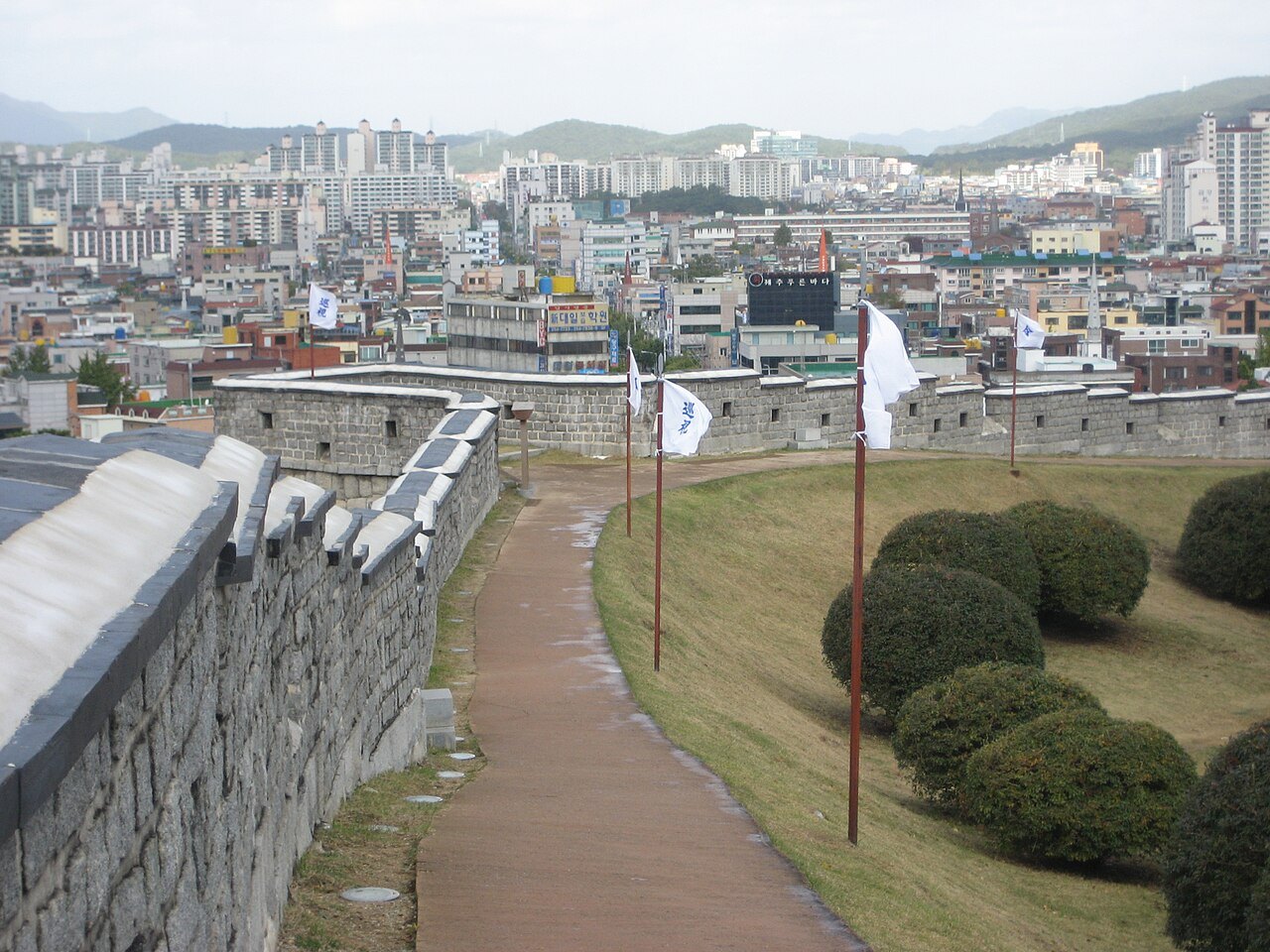
Hwaseong (“brilliant fortress”) was built in just under three years, 1794–1796, by King Jeongjo — partly to honour his father, Crown Prince Sado, and partly because he dreamed of moving the capital here. It was designed by the scholar Jeong Yak-yong, who invented a pulley crane to haul the stone, and the whole 5.7 km circuit of walls, floodgates, and command posts was so far ahead of its time that UNESCO listed it in 1997.
What makes it special is that it’s not a ruin behind a fence — the wall runs straight through the modern city, up and over a hill, with four great gates anchoring the loop:
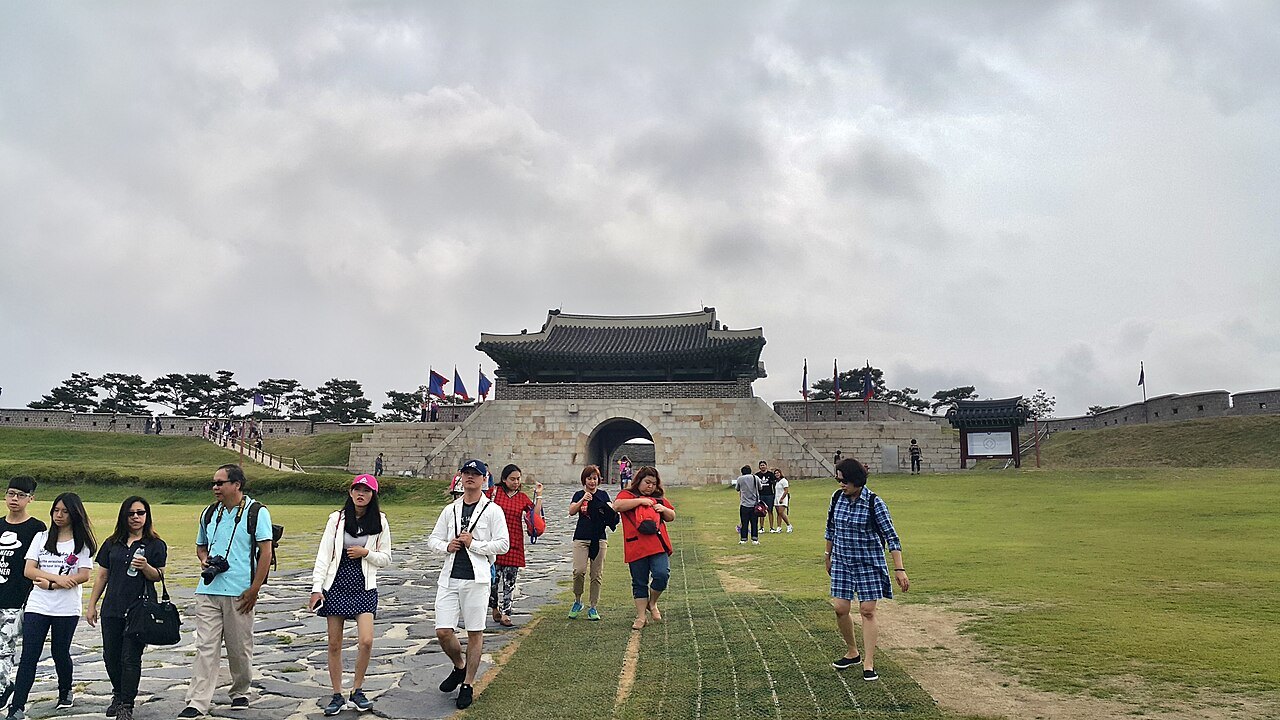
- Janganmun (north) — the largest fortress gate in Korea, a double-roofed giant with a semicircular defensive wall in front.
- Paldalmun (south) — the busy old south gate, marooned on a traffic island and ringed by the city’s best market food.
- Changnyongmun (east) and Hwaseomun (west) — the quieter pair, good places to start a wall walk away from the crowds.
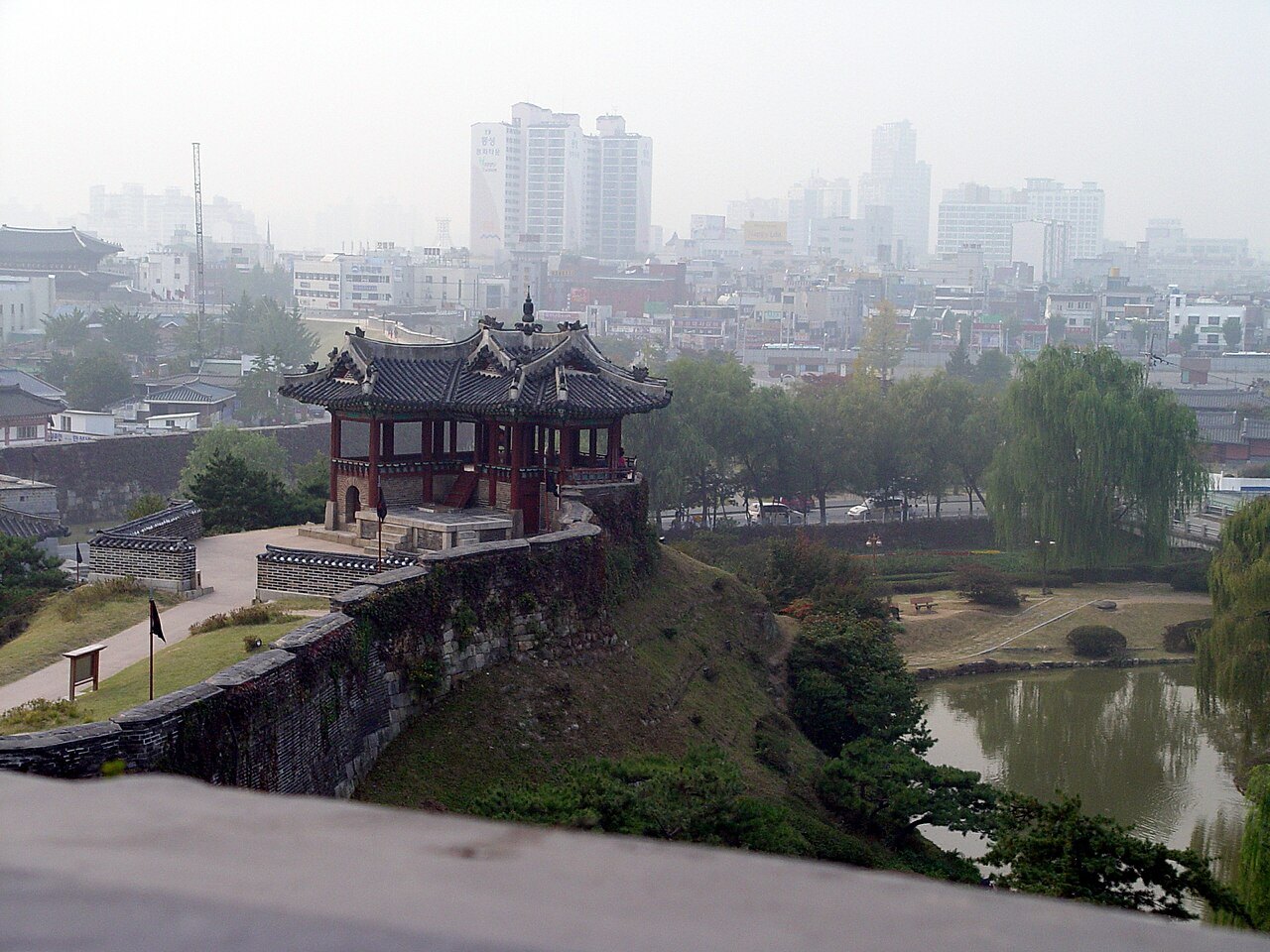
The single most photographed corner is Banghwasuryujeong, the pavilion in the photo at the top of this page: it perches on a rock above a lotus pond beside Hwahongmun, a seven-arched floodgate over the Suwoncheon stream. If you only walk one stretch, make it the run between Janganmun and Banghwasuryujeong — it’s flat, short, and hits the prettiest part of the whole fortress.
Hwaseong Haenggung — the temporary palace
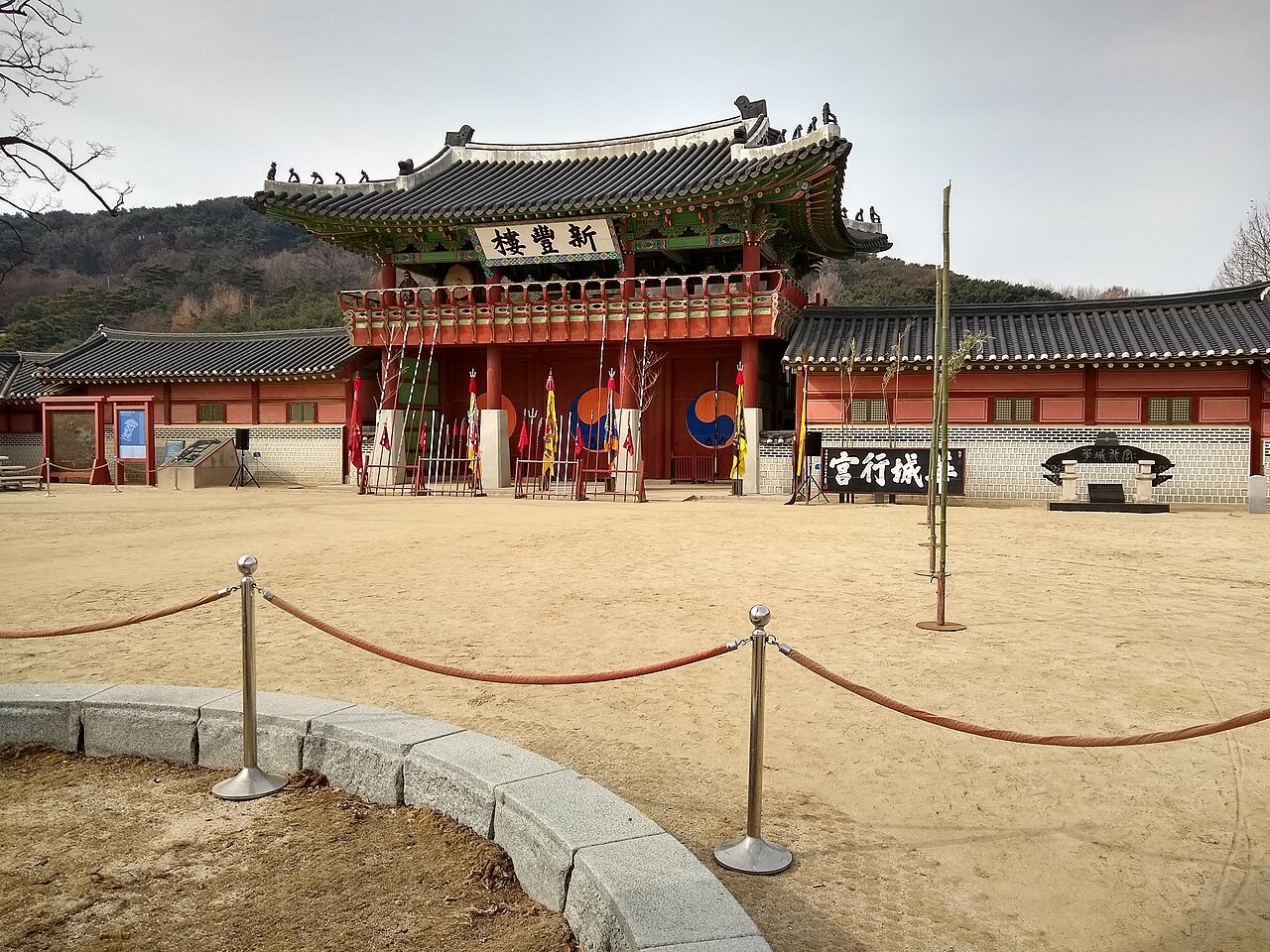
Inside the walls sits Hwaseong Haenggung, the largest of the Joseon dynasty’s temporary palaces — where King Jeongjo stayed on his visits to his father’s tomb. Much of it was destroyed under Japanese rule and painstakingly rebuilt, and today it’s one of Korea’s most atmospheric palace courtyards. Drama fans may recognise it: it was a key filming location for Dae Jang Geum (Jewel in the Palace). Entry is about ₩1,500, or grab the integrated ticket (~₩3,500) that adds the local museums.
Things to do beyond the walls
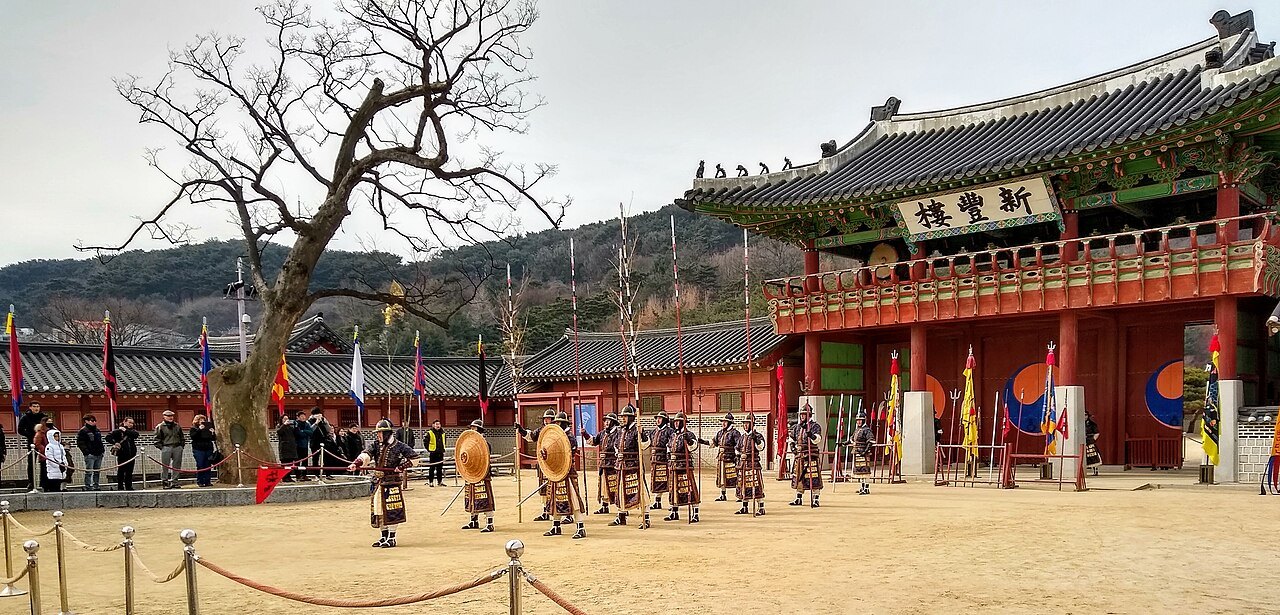
Suwon does more than walls and gates. Depending on the day and season, you can catch the 24 Martial Arts performance (Muye 24-gi) in the Haenggung courtyard, try traditional archery at Yeonmudae, ride the Hwaseong dragon-train trolley that loops the main sights, or float over the fortress in the Flying Suwon helium balloon near the palace. Just east of the Haenggung, Haengridan-gil has become Suwon’s hip café-and-boutique street — the natural place to refuel.
What to eat
Suwon is a genuine food destination, not just a fortress.
- Wanggalbi — Suwon’s signature: king-size marinated beef short ribs, the dish the city is famous for nationwide. The galbi restaurants near the Haenggung do the classic version.
- Tongdak (fried chicken) street — near Paldalmun and Jidong Market, an entire alley of old-school whole-chicken shops. Cheap, crispy, and a local institution.
- Market snacks — the markets ringing Paldalmun are made for grazing: hotteok, tteokbokki, blood sausage, and more.
A half-day plan
A relaxed half-day, easy to bolt onto anything else:
- Late morning — Train or Line 1 subway to Suwon Station; bus or taxi to Paldalmun.
- Midday — Lunch in the market: wanggalbi or the fried-chicken alley.
- Early afternoon — Walk up to Janganmun, then the pretty stretch past Hwahongmun and Banghwasuryujeong.
- Afternoon — Hwaseong Haenggung, plus a performance, archery, or the balloon if the timing lines up.
- Late afternoon — Coffee on Haengridan-gil, then back to the station.
Because it’s so close, Suwon also slots neatly into a bigger trip — see where the easy escapes rank in our best day trips from Seoul by train, or how a wider route comes together in the 5-day Korea rail itinerary.
Quick questions
How do I get to Suwon from Seoul? A Mugunghwa or ITX train from Seoul Station takes about 30 minutes (from ~₩2,700), or ride Subway Line 1 straight to Suwon in about an hour on T-money. From Suwon Station, it’s a short bus or taxi ride to the fortress.
Is Suwon worth a day trip? Yes — it’s the easiest one in Korea. A UNESCO fortress 30 minutes away, reachable on a T-money tap with no booking, and a half-day covers it.
How long does it take to walk the fortress? The full 5.7 km loop is about 2–3 hours, but one scenic section (Janganmun to Banghwasuryujeong) takes under an hour.
Do I need a ticket? Walking the walls is essentially free; Hwaseong Haenggung is about ₩1,500, with an integrated ticket around ₩3,500.
What’s the famous food? Suwon wanggalbi (king-size galbi) and the fried-chicken alley near Paldalmun.
Related guides
- Best Day Trips from Seoul by Train — where Suwon ranks among the easy escapes.
- Gyeongju Day Trip from Seoul — the history-lover’s day trip, further south by KTX.
- Things to Do Near Seoul Station — the hub you’ll pass through on the way.
- 5 Days in Korea by KTX — where a Suwon stop fits in a wider loop.
- How to Travel Korea by Train — the whole system, explained once.
🔗 Affiliate disclosure: Some links on this site are affiliate links. If you book through them, we may earn a small commission at no extra cost to you. We only recommend services we believe are genuinely useful for train travel in Korea.