KTX Sold Out? How Locals Still Get a Seat (2026)
🔗 Some links on this site are affiliate links. If you book through them, we may earn a small commission at no extra cost to you. We only recommend services we believe are genuinely useful for train travel in Korea.
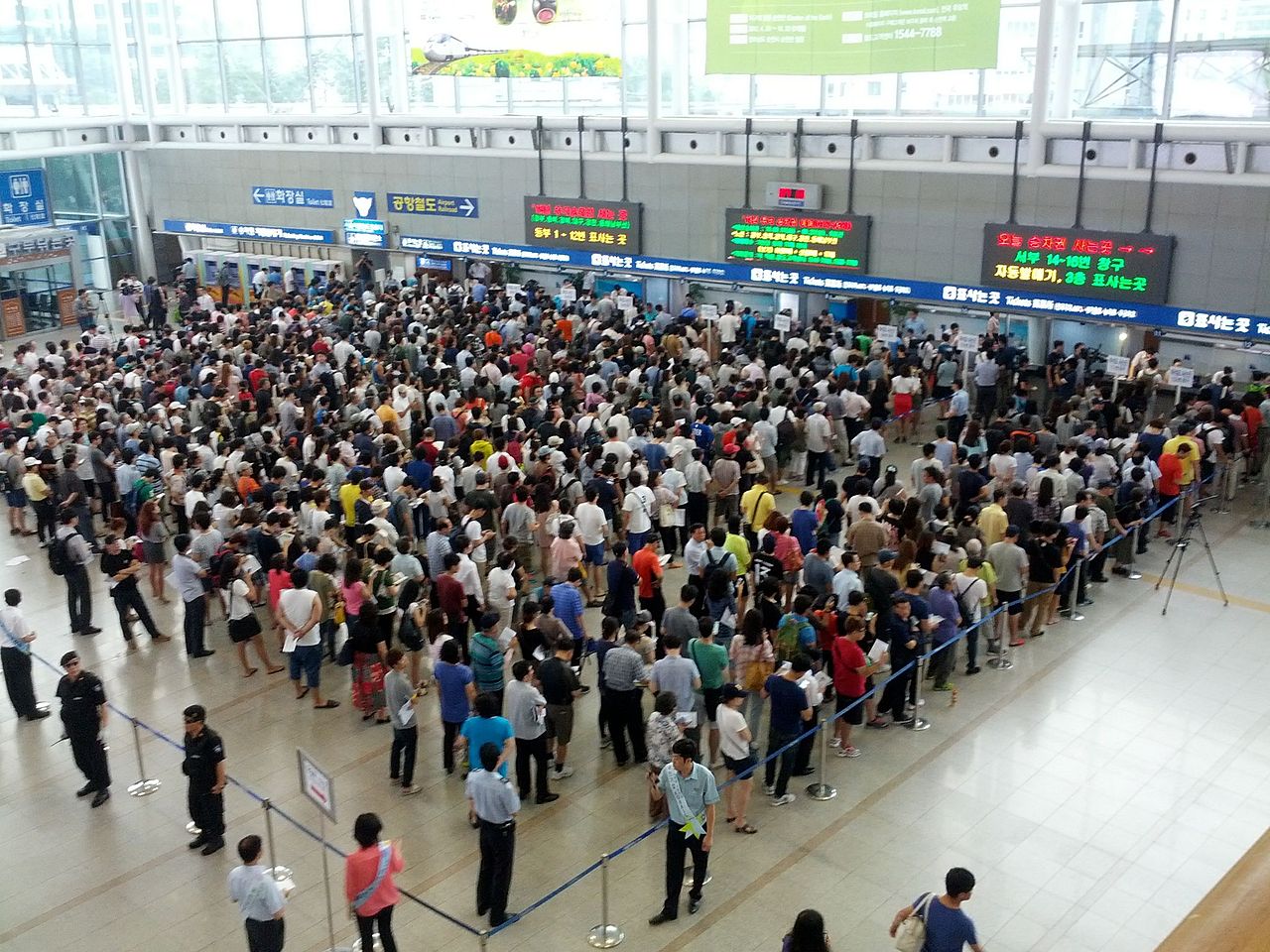
It happens on almost every Korea trip that touches a weekend or a holiday: you open the Korail app, choose your KTX, and the seats are already gone. Seoul to Busan, the busiest route in the country, is the worst for it. But a “sold out” screen is rarely the end of the story — Koreans deal with this constantly, and there is a whole toolkit for still getting on the train. Here is the local playbook.
When KTX tickets go on sale — and why they vanish
KTX tickets are released about 30 days before departure, and on busy travel days the good seats can vanish within hours of going on sale. Fares are fixed — there is no dynamic pricing, so booking early gets you a seat, not a discount. The extreme case is the two great holidays — Seollal (Lunar New Year) and Chuseok — when the whole country travels home at once and tickets disappear almost the moment they are released. One exception worth knowing: Korail discounts a limited block of seats on quieter departures through its online special fare — how that works.
One thing has genuinely improved. On 1 September 2026 Korail and SR merged their high-speed operations: the former SRT trains now run as KTX-Sancheon, and Korail added roughly 16,000 extra high-speed seats a day (about 116,000 a week), with weekend services up from 431 to 457 trips. There is simply more inventory than there was last year — and, as you will see below, one more station’s worth of departures you can now search in the same place.
Honest advice first: if your dates are flexible, avoid traveling on the actual holiday days. But if you are staring at a sold-out screen, work down this list.
Trick 1 — Join the waitlist (the one most visitors never find)
This is the most useful feature on the Korail system and almost no foreign guide mentions it. When a train is sold out, you can apply for the waitlist — yeyak-daegi (예약대기) — in the Korail+ app or on the Korail website.
How it works:
- You can apply for a sold-out train up to two days before departure.
- When another passenger returns a seat, the system assigns it to you automatically, in application order. You do not have to sit there refreshing.
- If you get a seat, you must pay by 6 p.m. on the day it is assigned. Miss that deadline and the reservation is cancelled and passed on.
- Assignment results come by SMS (if you signed up for notifications) or on the website.
The catch is that the waitlist closes two days out, so it does not help you the morning of your trip — that is what the next trick is for. Use both: put yourself on the waitlist as soon as you see “sold out”, and keep hunting cancellations manually as departure approaches.
Trick 2 — Hunt cancellations in the final hours
This is the most reliable manual move. People cancel and rebook constantly, and refunded seats drop straight back into the system. The sweet spot is the last few hours before departure — within roughly 3 hours of a train leaving.
There is a reason the timing clusters like that. Korail’s cancellation penalty steps up as departure approaches, with thresholds a day before, on the day itself, and again shortly before departure. Anyone whose plans have collapsed has a financial incentive to let the ticket go just before the next step up — so seats tend to arrive in waves right before those cut-offs rather than trickling evenly. Keep the app open on your route and refresh; availability flickers in real time. It takes patience, but on all but the most extreme days, a seat usually surfaces.
Trick 3 — Aim for off-peak trains (even the middle of the night)
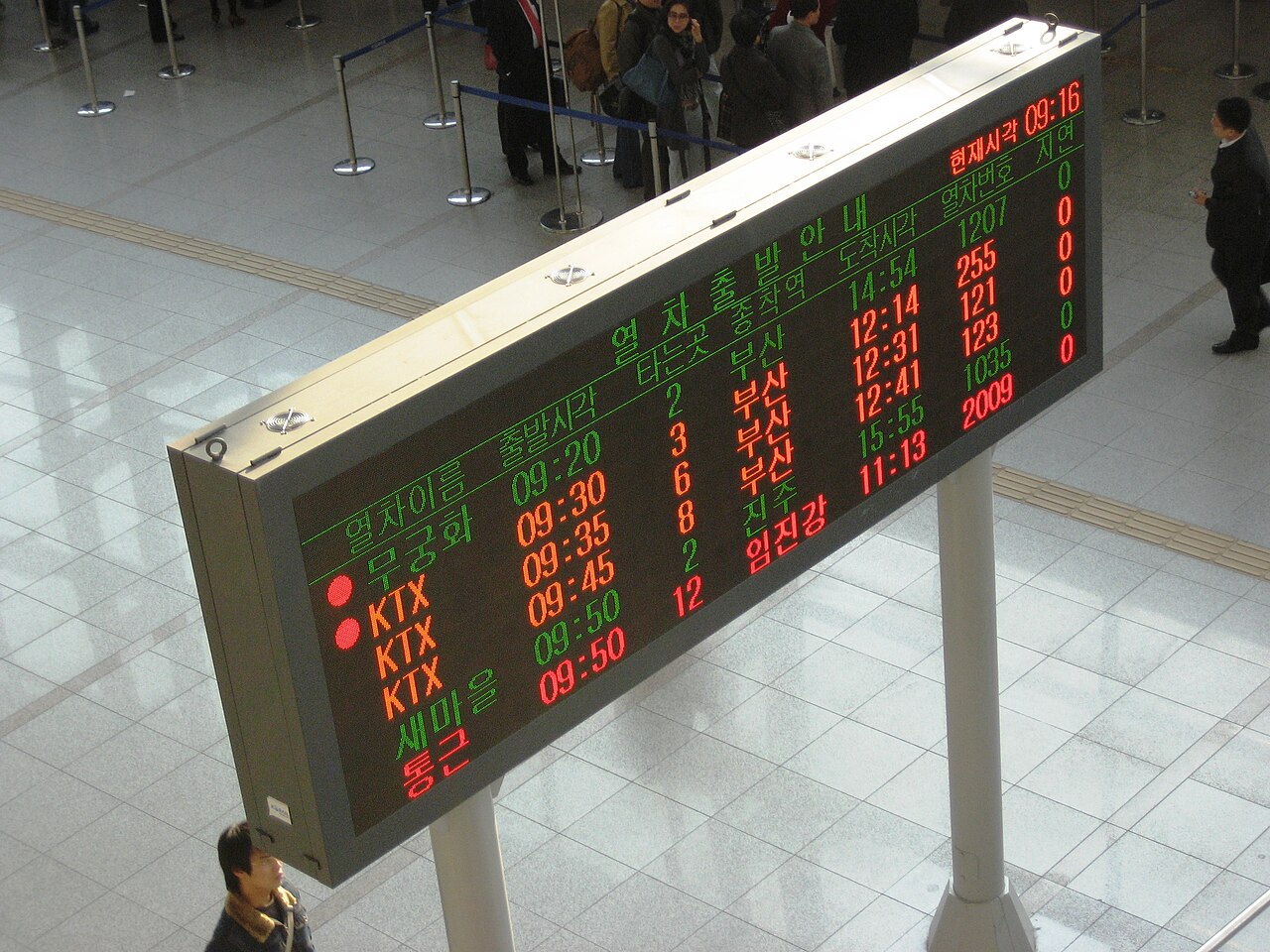
Demand is not flat. Very early and very late departures are far easier to book than convenient daytime ones. If you are a night owl — or freshly jet-lagged — the small hours, roughly 3–4 a.m., are when cancellations are easiest to catch and competition is thinnest. Shifting your departure by a few hours, or to an unloved time slot, is often all it takes.
Trick 4 — Take a standing ticket
When every reserved seat is gone, Korail sells standing tickets (ipseok, 입석) at a 15% discount off the base fare. Two and a half hours on your feet to Busan is not glamorous, but it beats missing the trip — and it is a real, bookable ticket, not a grey-area workaround.
Three things worth knowing:
- Claim a jump seat. Get to the platform early and head for the fold-down seats in the vestibules between cars — usually a couple per connection, first come first served. On holidays everyone has the same idea, so they fill fast.
- There is a hybrid ticket. Korail also sells a standing-plus-seat ticket (ipseok+jwaseok, 입석+좌석): you stand as far as an intermediate station, then take a seat for the rest of the run. If a full seated ticket is gone, check whether a partial one is available before giving up.
- Non-reserved cars are not a KTX thing. Some Korean trains offer non-reserved seating (jayuseok, 자유석), but on the high-speed network the standing ticket is what you will normally be offered when seats run out.
- If you hold a Korail Pass, you are already covered. Korail’s own pass guide says that when seats are sold out, pass holders may simply board and stand with a valid pass and passport. You do not need to buy anything or win a reservation race — a quietly useful perk that most pass guides never mention. (See how to use the Korail Pass.)
Trick 5 — Search Suseo departures too (they are in the same app now)
This used to be advice about “checking the SRT”. That advice is now out of date, and it matters.
Until this year, Suseo Station in southern Seoul was served by a separate operator, SR, with its own SRT brand, its own app and its own inventory. Since 1 September 2026 those trains run as KTX-Sancheon under Korail, and Suseo departures appear in the Korail+ app alongside Seoul and Yongsan — one search, one account, one queue. The old rule that “Seoul Station means KTX, Suseo means SRT” no longer holds either; the departure-station split has been dissolved.
So the move is not “open a second app” any more. It is: when your Seoul Station train is full, widen the search to include Suseo before you conclude the route is sold out. Suseo sits in the south-east of the city on Seoul Subway Line 3, the Suin-Bundang Line and GTX-A, so it is a genuine option if you can get there — and post-merger it carries meaningfully more seats than it used to. (How the trains themselves compare: KTX vs SRT.)
Trick 6 — Go to the station in person
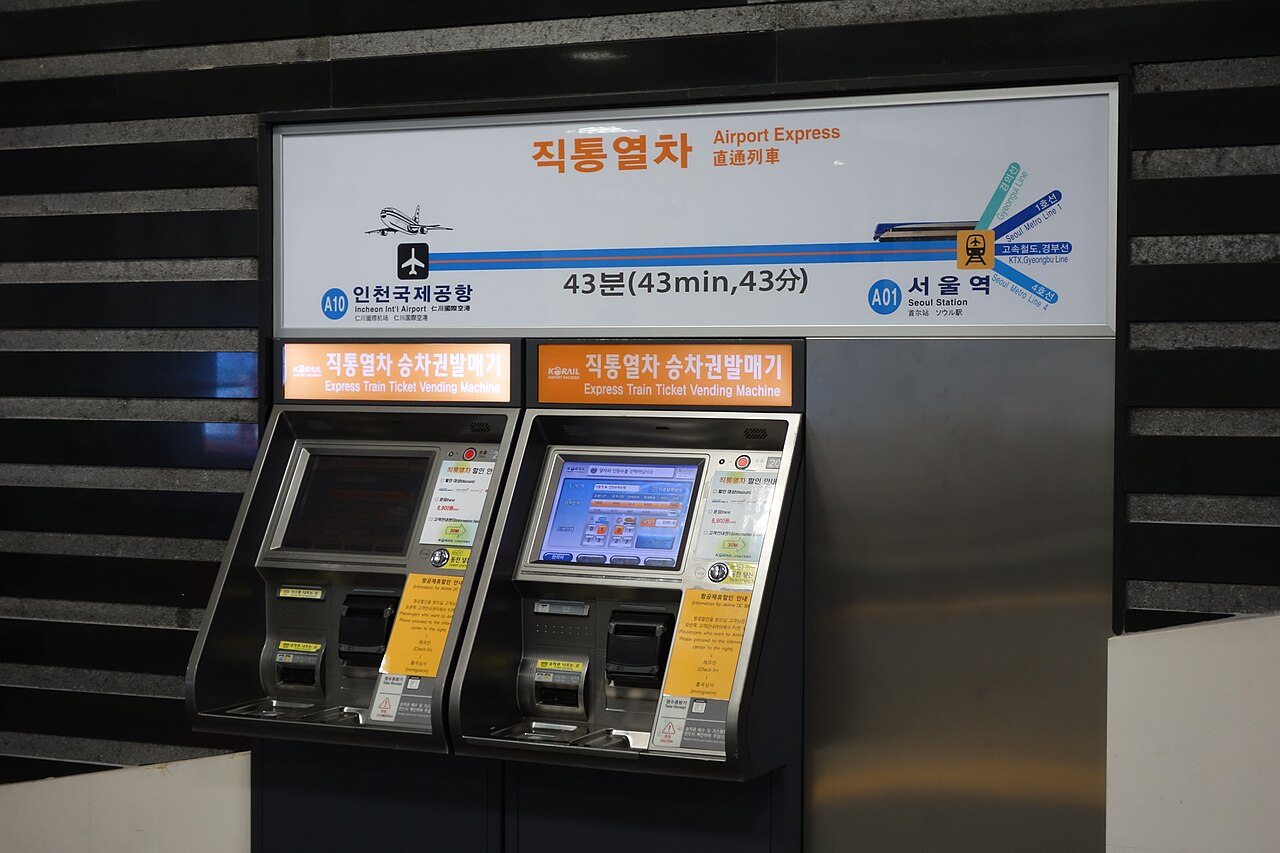
Online is not the only inventory. Seoul Station keeps staff at the counter for in-person sales, and the self-service kiosks — which have an English mode — can pull up seats too. It is not a secret stash: on a fierce holiday it is closer to luck, because everyone who heard the same tip is standing right there with you. But on a normal busy weekend, showing up in person can land you a later departure when the app shows nothing.
One caveat that catches people out: during the holiday advance-sale window, station counters do not run the advance sale — it is online only. Turning up at Seoul Station three weeks before Chuseok hoping to buy holiday tickets over the counter will not work. In-person is a same-day and near-term tactic, not a way into the holiday ballot.
I have made this bet myself. One holiday I headed to Seoul Station with no ticket at all, refreshing the app the whole way and hoping the in-person rumor was true. I was not alone — plenty of people had heard the same thing and were doing exactly what I was. It did not get me on the next train, but a few hours later I had a seat to Busan, and I made it home to my family. A gamble — but it worked.
Seollal and Chuseok: a different system entirely
For the two big holidays, tickets are not simply released 30 days out. Korail runs a separate advance-sale window a few weeks ahead, and it is split across several days by line — so the date you need to be online depends on where you are going.
Chuseok 2026 is a good worked example. For travel on 23–27 September, the general public sale ran 7–11 September, 7 a.m. to 1 p.m., allocated like this:
| Sale date | Lines on sale |
|---|---|
| 7 Sept | Conventional trains (ITX-Saemaeul, ITX-Maum, Mugunghwa) |
| 8 Sept | KTX on the Gyeongjeon, Gangneung, Donghae, Jungang, Jungbu Naeryuk lines |
| 9 Sept | KTX on the Honam and Jeolla lines |
| 10 Sept | KTX to and from Suseo Station |
| 11 Sept | KTX on the Gyeongbu line (Seoul departures) |
Three things that trip people up:
- You must be a Korail member first, and since the merger it has to be an integrated account — if you had a separate SR login, converting it is a prerequisite, not an afterthought.
- Reserving is not buying. Holiday reservations have their own payment window afterwards (for Chuseok 2026, 12–15 September). Miss it and your seats go back into the pool.
- There is a per-person cap — for Chuseok 2026, 12 tickets in total, up to 6 at a time.
If you are visiting during a holiday and this is all news to you on the day, that is exactly when tricks 1 through 6 earn their keep.
Trick 7 — Check resellers for the payment path
Resellers are not a hidden stash. Klook is an official KORAIL partner selling the same live inventory, so a genuinely sold-out train shows sold out there too. What they do fix is payment: any international card, Apple Pay and Google Pay, checkout in English, ticket on your phone. If your card keeps getting declined, that is the real reason to use one — see booking the KTX with a foreign card.
The realistic takeaway
On a normal busy weekend, the waitlist plus the cancellation-refresh, off-peak, standing-ticket and Suseo toolkit will almost always get you on a train — even if it is a few hours later than you had hoped. On Seollal and Chuseok, be honest with yourself: it is part planning, part luck. Get on the waitlist early, build in flexibility, watch the app in the final hours, and keep a backup time in mind. The trains are full because the whole country is heading somewhere it loves — and with a little persistence, you will get there too.
New to booking in the first place? Start with how to buy KTX tickets, and for the country’s busiest run, see the full Seoul to Busan KTX guide.
Quick questions
Can I still get a KTX ticket if it says sold out? Often, yes — join the waitlist for the train, and keep watching for refunded seats in the final hours before departure. Standing tickets, off-peak trains, Suseo departures and the station counter are all backups. Only the biggest holidays are genuinely hard.
What is the Korail waitlist and how does it work? If a train is sold out you can apply for the waitlist in the Korail+ app or on the website, up to two days before departure. When another passenger returns a seat it is assigned automatically in application order — no refreshing needed. If you are assigned a seat you must pay by 6 p.m. that same day, or the reservation is cancelled.
What is a KTX standing ticket and how much is it? A ticket without a reserved seat, sold when reserved seats are gone at a 15% discount off the base fare. You can stand, or claim a fold-down jump seat in the vestibule between cars. Korail also sells a partial-seat ticket where you stand for one section and sit for the rest.
Is the SRT easier to book than the KTX? There is no separate SRT any more. Since 1 September 2026 the former SRT trains run as KTX-Sancheon under Korail, and Suseo departures appear in the same Korail+ app alongside Seoul and Yongsan. Widen your search to Suseo departures rather than checking a second app.
When do KTX tickets go on sale? Booking opens about 30 days ahead for ordinary travel. Seollal and Chuseok are different: holiday tickets go on sale in a separate advance-sale window a few weeks earlier, split across several days by line.
🔗 Affiliate disclosure: Some links on this site are affiliate links. If you book through them, we may earn a small commission at no extra cost to you. We only recommend services we believe are genuinely useful for train travel in Korea.