Seoul to Gangneung by KTX: The Complete Beach Day-Trip Guide (2026)
🔗 Some links on this site are affiliate links. If you book through them, we may earn a small commission at no extra cost to you. We only recommend services we believe are genuinely useful for train travel in Korea.
Gangneung is the trip that changed weekends in Seoul. When the high-speed line opened for the 2018 Winter Olympics, it put the East Sea within two hours of the capital — and turned a far-flung coastal city into the easiest beach day in Korea. Wide pale-sand beaches, a coastline so obsessed with espresso it’s officially “the city of coffee,” sunrise trains that stop a stone’s throw from the waves: you can leave Seoul after breakfast and be barefoot on the sand before lunch.
This guide covers the whole trip end to end — the KTX (fares, timing, which Seoul station), how to get from Gangneung Station to the beach, what to see and eat, and a full day-trip plan you can copy. One thing to sort before you go: a working data connection, because every step here runs on Naver Map.
Seoul to Gangneung at a glance
| Train | KTX (KTX-Eum) on the Gyeonggang line |
| Journey time | About 1 h 30 m – 1 h 50 m |
| One-way fare | ₩27,600 (about US$20) from Seoul Station |
| Departs from | Seoul Station and Cheongnyangni (also Sangbong) |
| Frequency | Roughly 14+ trains a day |
| Day trip? | Yes — very doable. Overnight is better if you can. |
Getting there by KTX
KTX trains reach Gangneung Station from Seoul Station in about 1 h 30 m to 1 h 50 m for ₩27,600 one-way (around US$20). They also leave from Cheongnyangni in eastern Seoul — often the most frequent option and a touch quicker if you’re staying on that side of the city — plus a few from Sangbong. There are roughly 14 departures a day, so even without a fixed plan you’re rarely waiting long.
The trains on this route are usually the KTX-Eum, a sleek newer high-speed set built for the Gyeonggang line that opened in December 2017 ahead of the PyeongChang Olympics. The run climbs over the Taebaek mountains through Pyeongchang and Jinbu — ski country in winter — before dropping to the coast. Seat tip: for the mountain scenery, the views are best on the journey out; grab a window seat and enjoy the climb.
Fares on the KTX are fixed and regulated — there’s no dynamic pricing, so a ticket costs the same a month out or an hour before departure. Booking early buys you a seat, not a discount. That matters here more than on most routes: summer weekends and holidays genuinely sell out, sometimes days ahead, so book your return leg at the same time as the outbound. One exception worth knowing: Korail discounts a limited block of seats on quieter departures through its online special fare — how that works.
Booking with a foreign card
You can buy tickets on the Korail global site or the KorailTalk app in English — but foreign cards often fail silently at the payment step. The reliable fixes (desktop checkout, station counters, resellers) are in our how to book KTX with a foreign credit card guide, and if the app gives you trouble, see what to do when KorailTalk won’t cooperate.
Prefer the bus? Express buses run from Seoul Express Bus Terminal and Dong Seoul to Gangneung Intercity Terminal in about 2 h 50 m for roughly ₩24,600 — slower and barely cheaper, but a useful backup when the KTX is sold out, since intercity buses rarely fill up.
Does the Korail Pass help?
For a single Gangneung round trip, no — two one-way tickets (₩55,200) are cheaper than any pass. The Korail Pass only pays off if you’re stacking Gangneung into a wider multi-city run (say Busan and Gyeongju in the same week). Run your own numbers in Korail Pass: is it worth it?.
From Gangneung Station to the beach
Gangneung Station sits in town, a short hop from the coast. Your options:
- Taxi — the simplest. About 6 minutes to Gyeongpo or Anmok for ₩5,000–10,000. Worth it if you’re in a group or short on time.
- City bus — buses like 202 and 300 run from the station toward Gyeongpo and Anmok in 20–35 minutes; tap on with a T-money card (buy one at any convenience store).
- SEA TEA tourist bus — a red sightseeing bus loops the 23 km coast linking Anmok Coffee Street, Gyeongpo and Jumunjin roughly every 40–50 minutes. Handy if you want to hit several beaches in one day.
There are luggage lockers at Gangneung Station and an English tourist-information desk — drop your bag and travel light.
What to see
Gyeongpo Beach and Lake
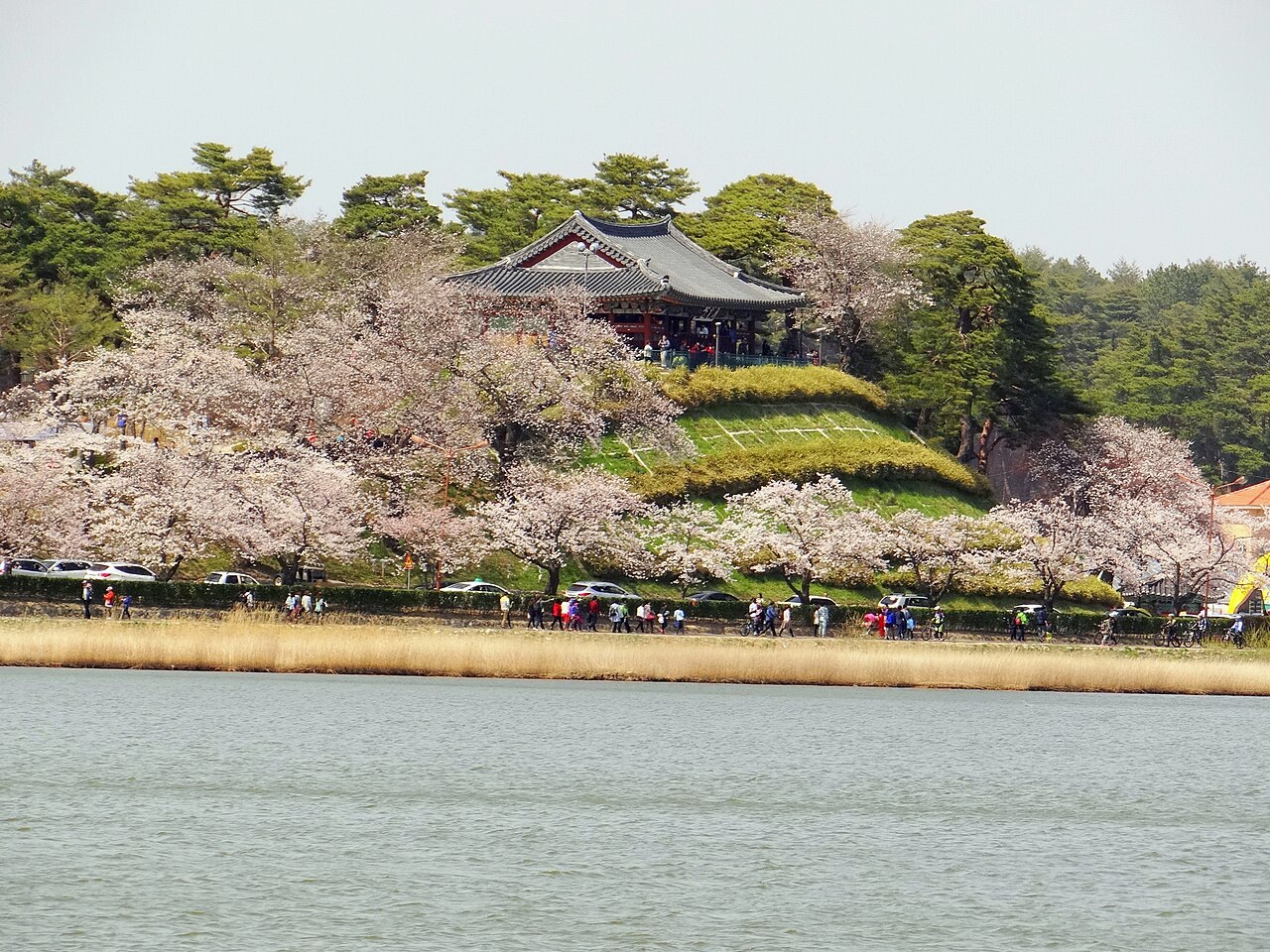
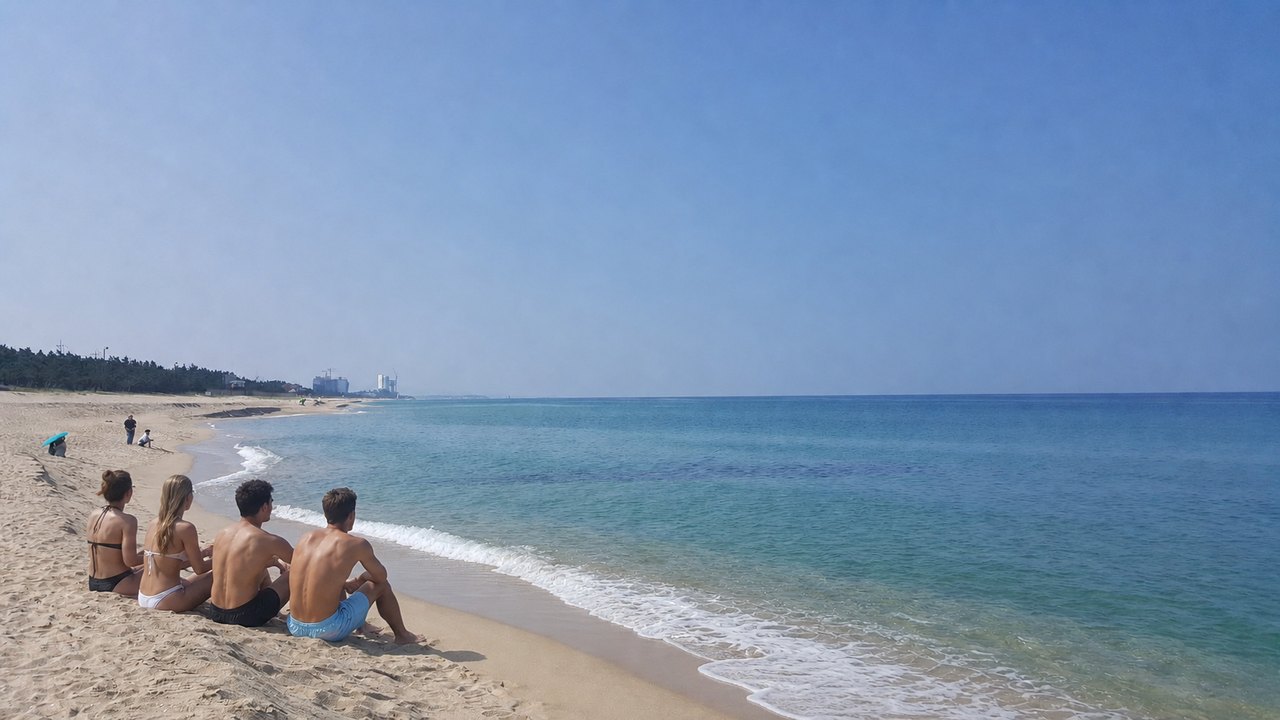
Gyeongpo Beach is the headline: a long, clean arc of pale sand backed by a pine forest, the kind of place that empties your shoulders the moment you see it. Just behind it, Gyeongpo Lake has a flat 4.3 km walking-and-cycling path ringed with cherry trees — peak bloom is early-to-mid April, when the Gyeongpo Cherry Blossom Festival takes over the lakeshore. Overlooking it all is Gyeongpodae, a centuries-old wooden pavilion that’s been a famous moon-viewing spot since the Joseon dynasty.
Anmok Coffee Street — Korea’s coffee capital
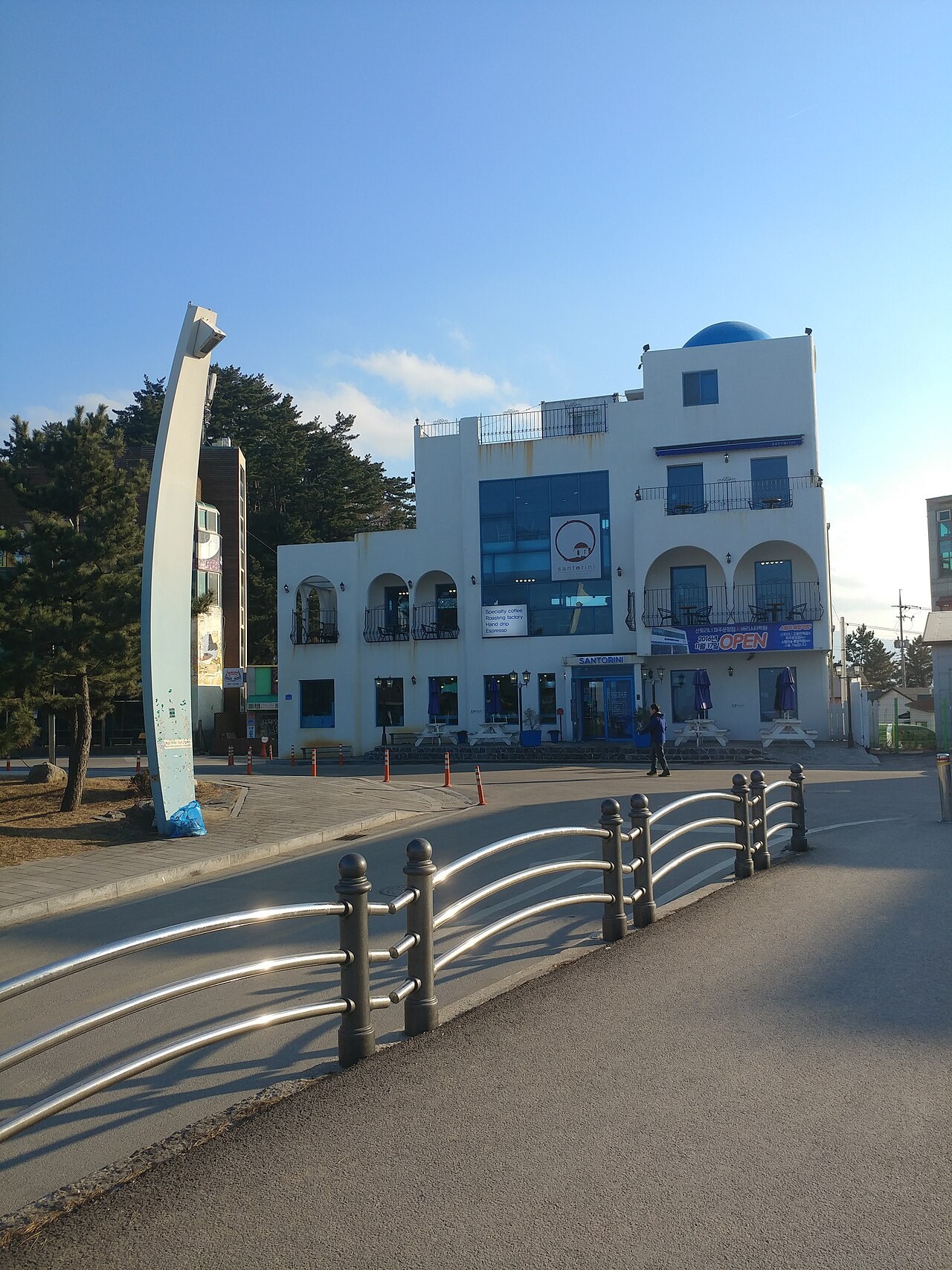
This is what makes Gangneung different. Anmok Coffee Street is a seafront row of 30-plus ocean-view cafés, and the city takes the title of “coffee capital” seriously: almost every café roasts its own beans, and Gangneung was the first place in Korea to build a coffee museum, run a barista academy, and host a Coffee Festival (every October, near Gyeongpo Lake). The story started in the 1980s with famously good vending-machine coffee on the beach; today pioneers like Bohemian and Terarosa draw pilgrims. Grab a hand-drip, take it to the sand, and watch the waves — this is the Gangneung experience in one cup.
Jeongdongjin — sunrises by the sea
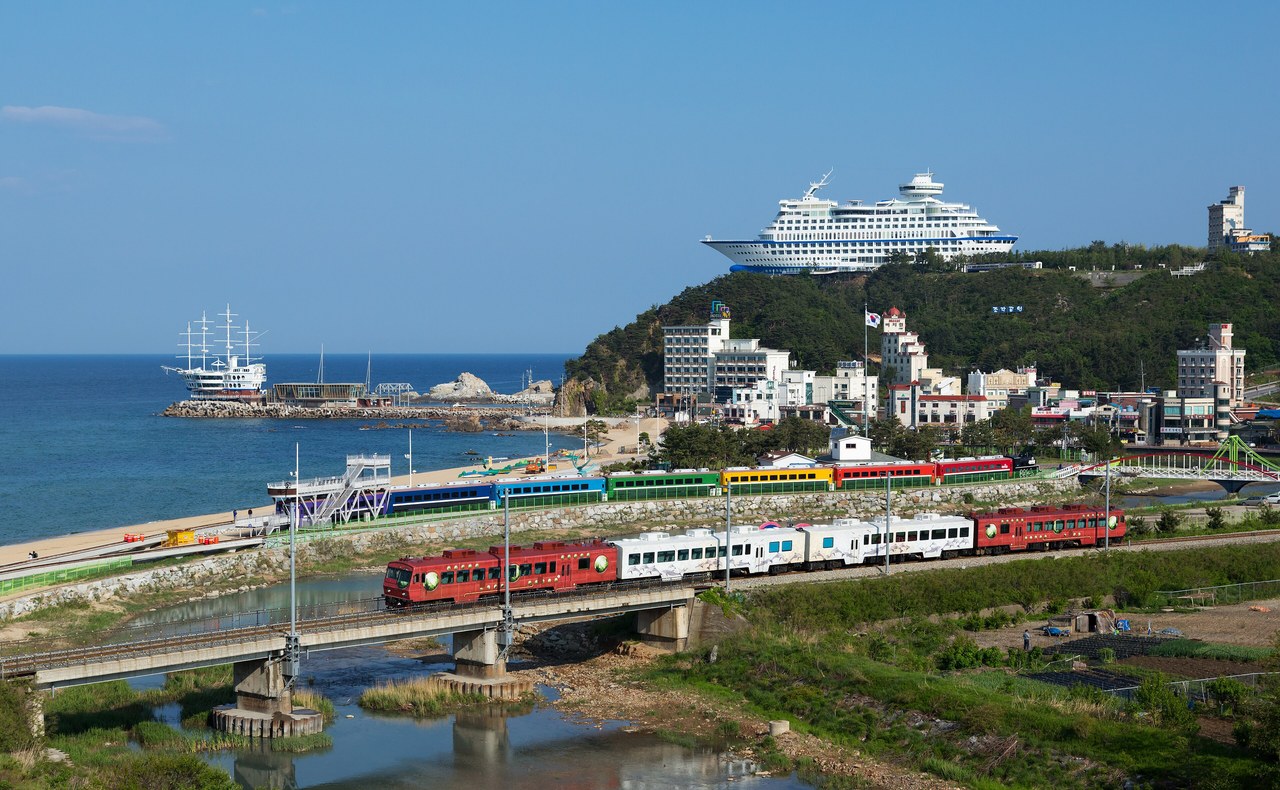
A little south, Jeongdongjin is home to the station closest to the sea in the world (a Guinness record — the tracks run about 50 m from the water). It’s Korea’s most famous sunrise spot, especially at New Year. Above the beach sit the Sun Cruise Resort, a hotel built in the shape of a cruise ship perched on a clifftop, and an hourglass park with one of the world’s largest sandglasses, turned each New Year to mark the passing year. The Jeongdongjin Rail Bike (about ₩25,000 for two, ~45 minutes) pedals along the old coastal track right beside the waves.
What about the “Sea Train”? The much-loved Bada Yeolcha — the sightseeing train that hugged the coast between Gangneung and Samcheok, past Jeongdongjin and Chuam — was retired at the end of December 2023 after 16 years, when its carriages aged out. As of early 2026 there’s no direct replacement running that route, so for the “train right beside the water” experience, Jeongdongjin Station (50 m from the surf) and the rail bike are your best bets. It’s worth a quick check with Korail or the Gangneung tourist office in case a new coastal service launches.
More beaches and photo spots
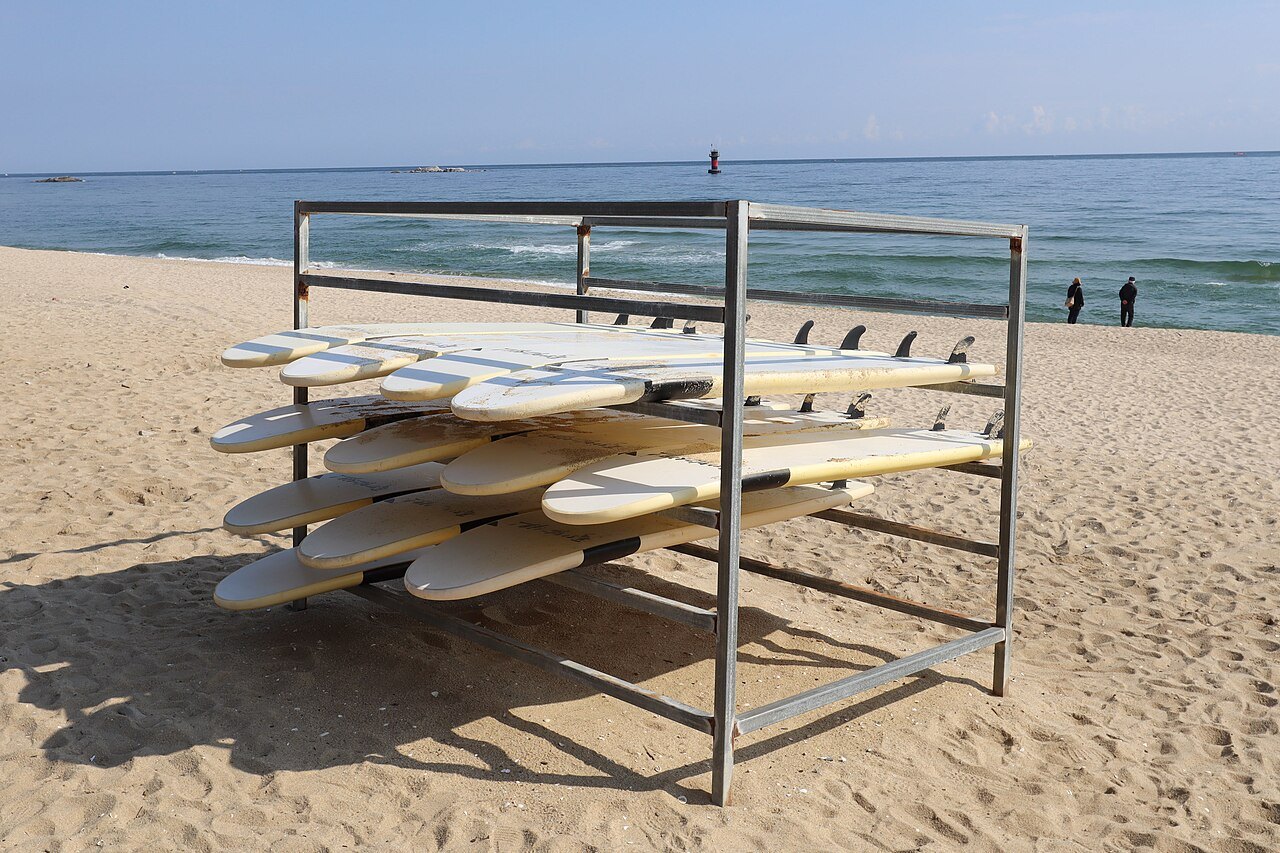
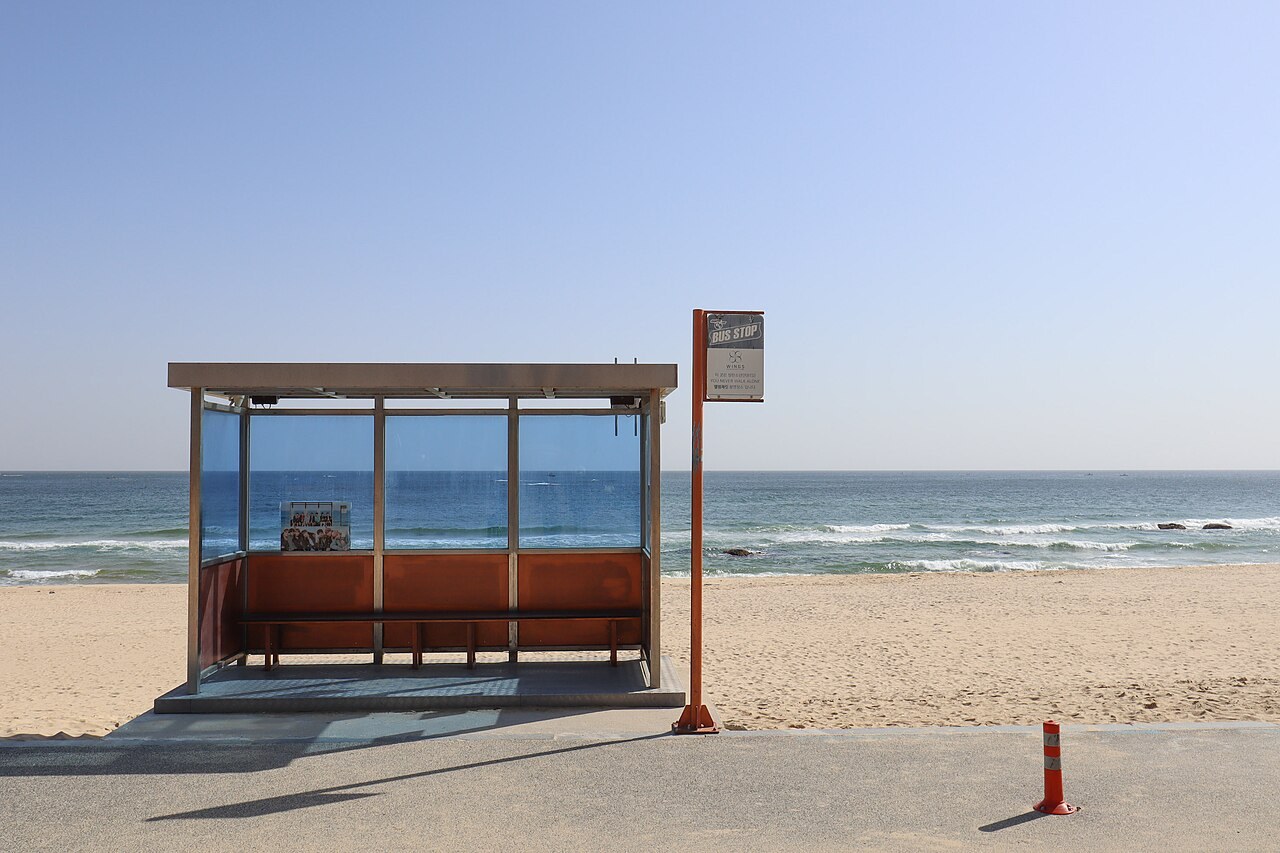
Beyond Gyeongpo, the coast strings together Gangmun (younger, surfier), Anmok (cafés), and Jumunjin (the fishing port). Two stops pull in foreign visitors specifically: the bus-stop on Hyangho Beach made famous by BTS’s “You Never Walk Alone” / “Spring Day” imagery, and the lone breakwater at Yeongjin Beach from the K-drama Goblin. Both are firmly on the Instagram trail.
Where to eat
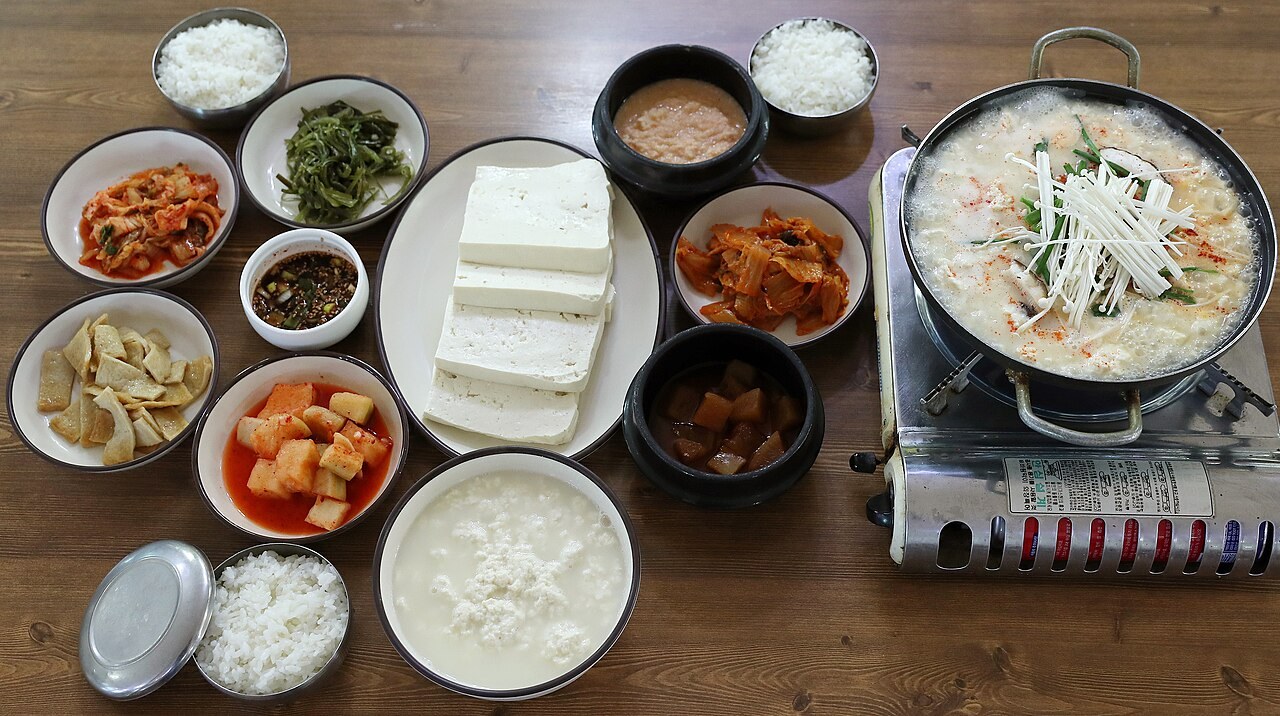
- Chodang Sundubu Village — Gangneung’s signature dish is sundubu, silky soft tofu curdled with East Sea seawater instead of the usual coagulant, a tradition going back centuries. A cluster of about 20 restaurants in the Chodang neighborhood serves it plain or as a bubbling jjigae (and yes, there’s soft-tofu gelato).
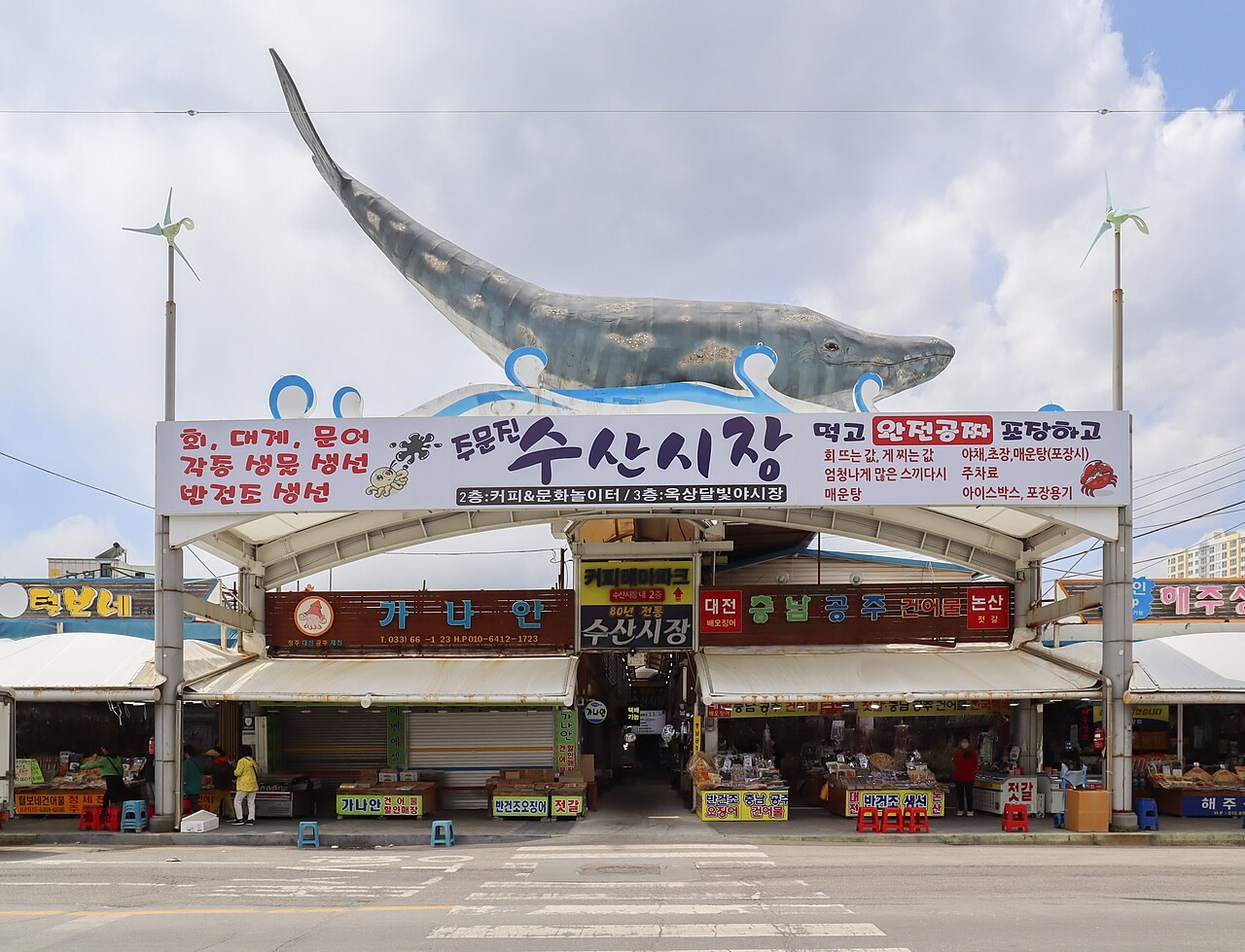
- Jumunjin fish market — raw fish and seafood straight off the boats at Korea’s east-coast fishing hub.
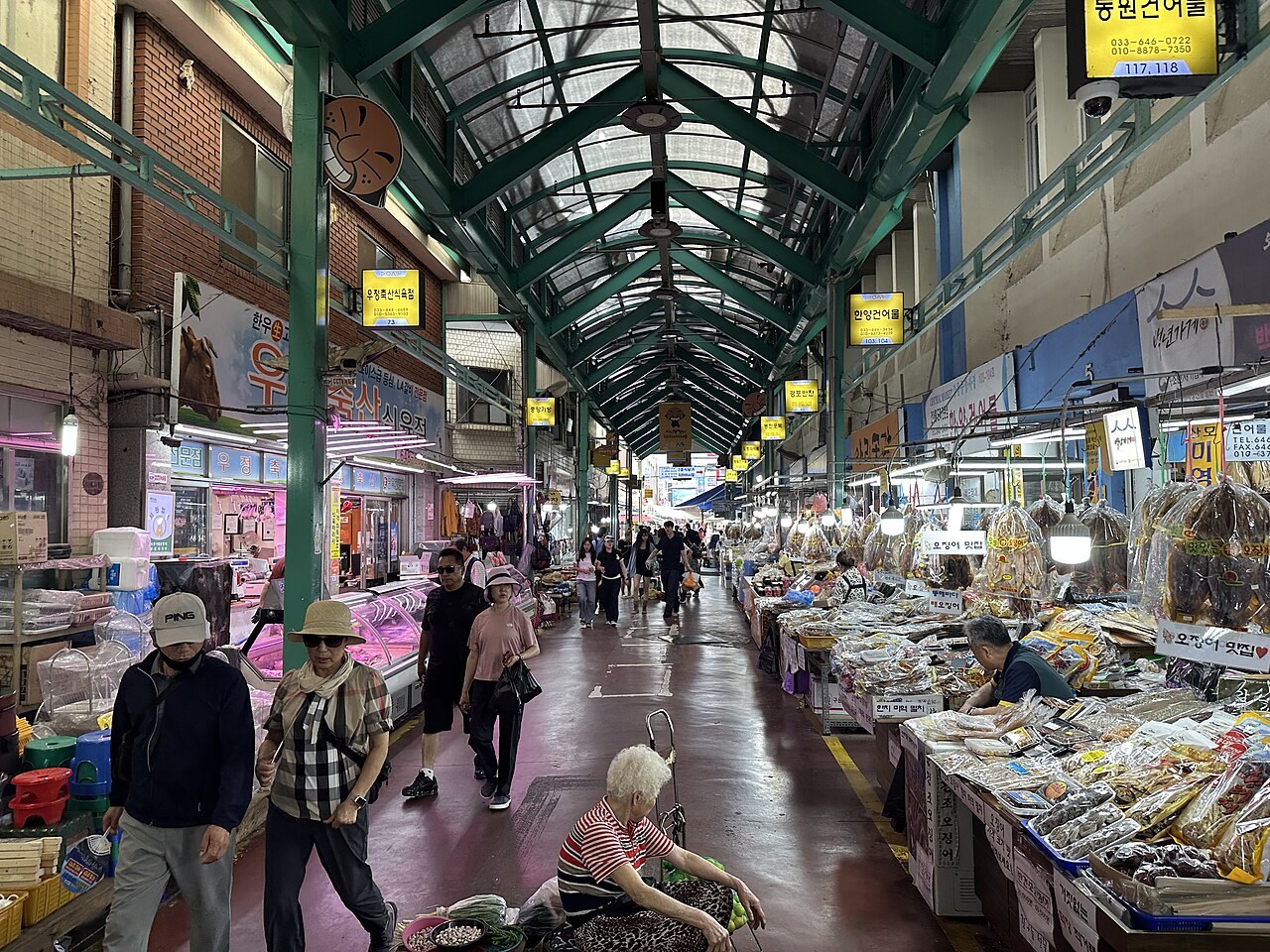
- Jungang Market — downtown’s covered market is the street-food stop: seed-stuffed hotteok, squid sundae, buckwheat jeonbyeong, grilled clams, and Gangneung’s famous potato bread.
A one-day plan from Seoul
A relaxed day trip, assuming an early KTX:
- ~9:00 — Arrive at Gangneung Station; drop bags in a locker, taxi to Gyeongpo.
- Morning — Walk Gyeongpo Beach and the lake path; climb up to Gyeongpodae.
- Lunch — Soft tofu in Chodang Village (10 minutes away).
- Afternoon — Coffee with an ocean view on Anmok Coffee Street; beach time.
- Early evening — Jungang Market for street food, or the sunset from the sand.
- Evening — Back to Gangneung Station for the train to Seoul.
With more time, swap in Jeongdongjin for sunrise, the rail bike, or Ojukheon (below).
Day trip or overnight?
Gangneung works beautifully as a day trip — beach, coffee, lunch, home by night. But it rewards an overnight (2D1N) if you can: a sunrise at Jeongdongjin, a slower second beach, and the coast at its quiet best before the day-trippers arrive. If you stay, base yourself near Gyeongpo/Anmok for the beach or near Gangneung Station for the trains — weekday rooms start around ₩40,000, and you can even sleep in a 260-year-old hanok at Seongyojang.
Beyond the beach
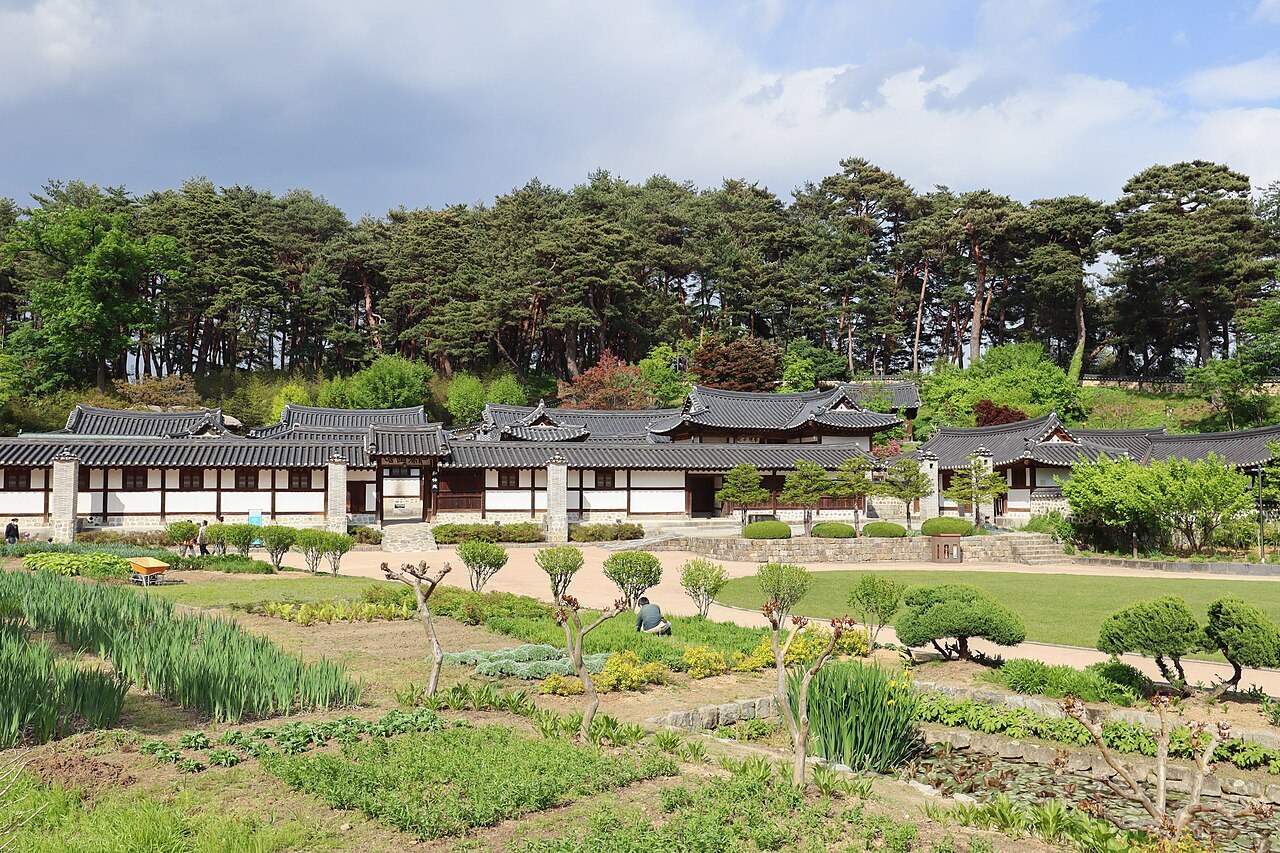
If the sand isn’t your whole reason: Ojukheon is the historic home of the scholar Yulgok Yi I and his mother, the artist Shin Saimdang — the two faces on Korea’s ₩5,000 and ₩50,000 banknotes. Seongyojang is the largest surviving Joseon-era residence in the country, and the immersive ARTE Museum (around ₩20,000) draws crowds for its room-filling digital art.
When to go
- Swimming: mid-July to late August, when lifeguards are on duty and the water’s warm — also the most crowded stretch.
- Cherry blossoms: early-to-mid April around Gyeongpo Lake.
- Autumn: September–October for mild ~20°C days and quieter cafés — arguably the nicest time.
- Festivals worth timing: Cherry Blossom (April), Danoje (a UNESCO-listed heritage festival, May–June), and the Coffee Festival (October).
Winter is dramatic and near-empty on the coast — and Gangneung doubles as the gateway to the PyeongChang and Yongpyong ski resorts on the same Olympic line.
Quick questions
Is Gangneung worth a day trip from Seoul? Yes. At under two hours and ₩27,600 each way, it’s one of the best-value escapes from Seoul — beach, coffee, and a proper lunch, home the same night.
How long is the train from Seoul to Gangneung? About 1 h 30 m to 1 h 50 m by KTX (KTX-Eum) on the Gyeonggang line.
How much is the KTX from Seoul to Gangneung? A one-way ticket is ₩27,600 (about US$20). Fares are fixed and regulated, so booking early secures a seat rather than a discount.
Which Seoul station do I leave from? Seoul Station or Cheongnyangni (Cheongnyangni often has the most departures). A few trains also start at Sangbong.
Is the Gangneung “Sea Train” still running? No — the East-coast Sea Train (Bada Yeolcha) between Gangneung and Samcheok was retired in December 2023 after its carriages aged out. For trains beside the water, head to Jeongdongjin — the world’s closest station to the sea — or ride the Jeongdongjin rail bike.
Is one day enough? For Gyeongpo, Anmok and a meal, yes. To add Jeongdongjin’s sunrise or a second beach, stay overnight.
Can I buy KTX tickets same-day? Midweek, usually yes. Summer weekends and holidays sell out — book ahead, and reserve your return at the same time.
Do I need a car? No. Taxis, city buses (T-money), and the SEA TEA tourist bus cover everything in this guide.
Related guides
- Best Day Trips from Seoul by Train — where Gangneung ranks among the easy escapes.
- How to Book KTX with a Foreign Credit Card — fix the payment problem before it finds you.
- Korail Pass: Is It Worth It? — honest math for multi-city trips.
- Do You Need Data in Korea? — staying connected on the coast.
- How to Travel Korea by Train — the whole system, explained once.
🔗 Affiliate disclosure: Some links on this site are affiliate links. If you book through them, we may earn a small commission at no extra cost to you. We only recommend services we believe are genuinely useful for train travel in Korea.