Things to Do Near Busan Station (Right Off the KTX)
🔗 Some links on this site are affiliate links. If you book through them, we may earn a small commission at no extra cost to you. We only recommend services we believe are genuinely useful for train travel in Korea.
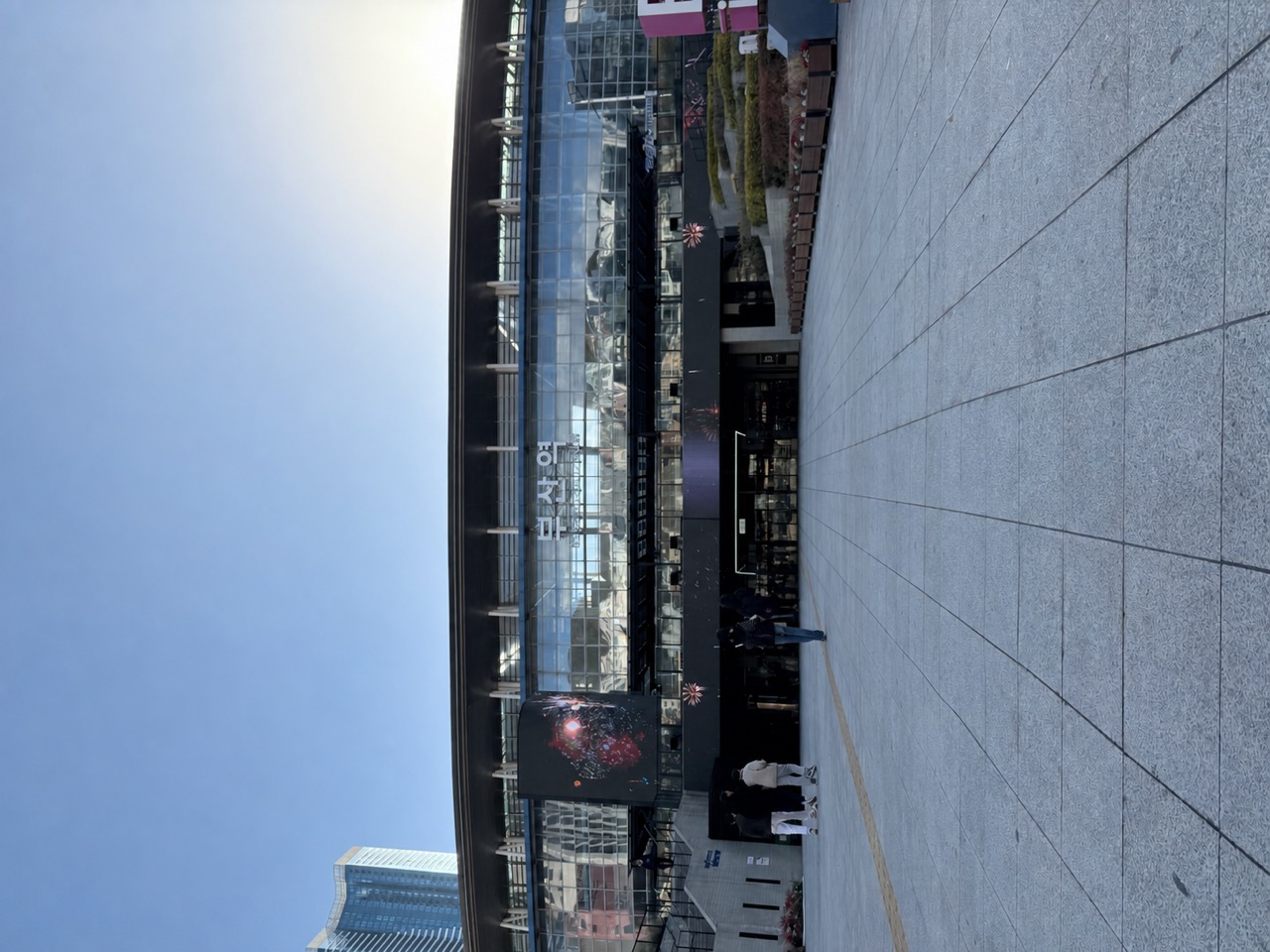
You step off the KTX at Busan Station after about 2.5 hours from Seoul — and unlike a lot of train stations, this one drops you right into the oldest, most atmospheric corner of the city. The port, the hills, Korea’s only official Chinatown, a fish market, and a city-view tower are all either out the front door or two subway stops away.
This guide walks you through what to do right around Busan Station, in rough order of how close it is — so whether you’ve got a spare hour before a connection or a full first afternoon, you can fill it without wandering far.
First, get your bearings at Busan Station
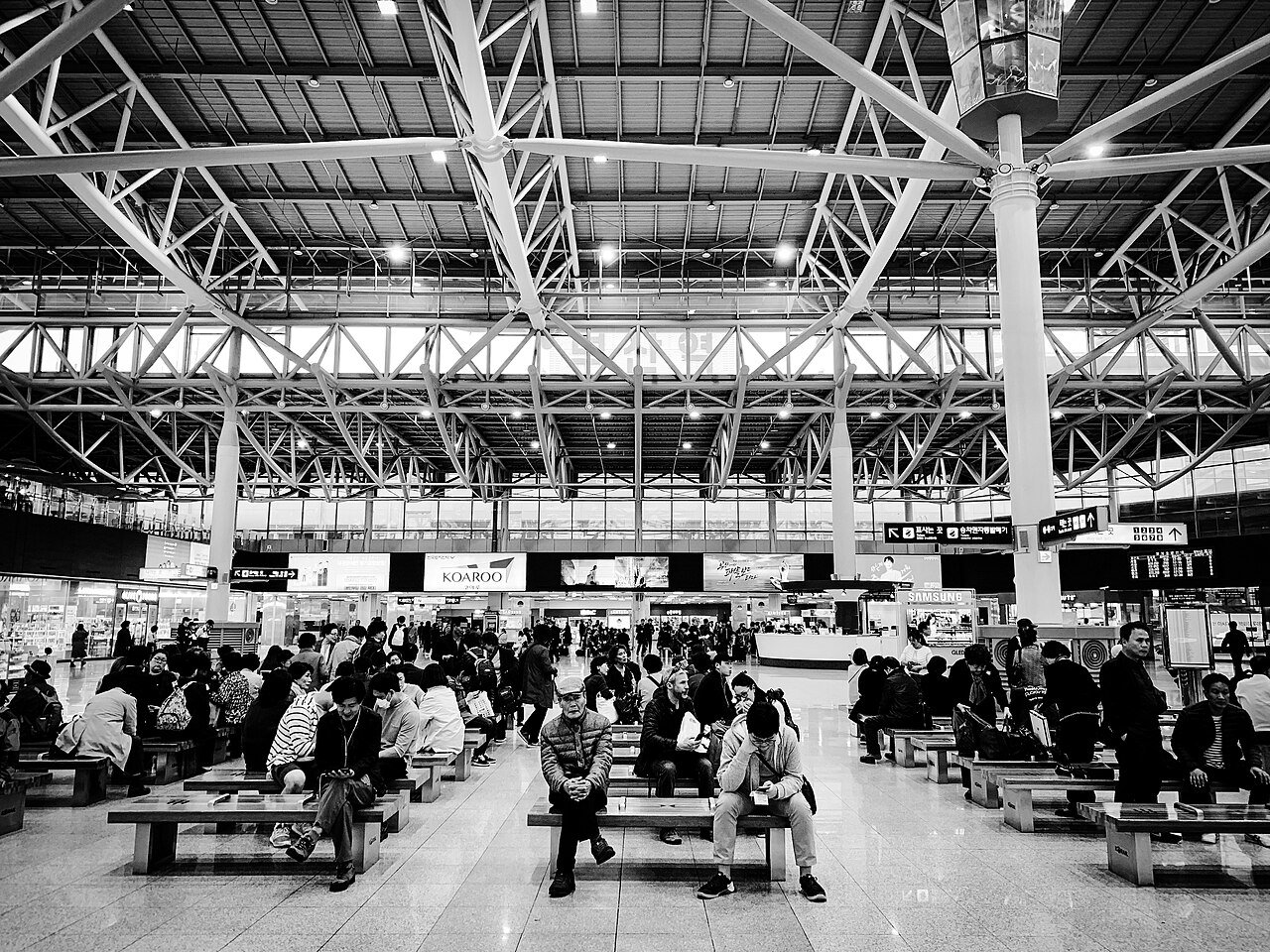
Busan Station (부산역, Busan-yeok) sits on the city’s main road, Jungang-daero, with the harbour just behind it. As you come down from the KTX platforms to the main floor, the big glass front doors face west across a plaza — and that plaza is your compass for everything below.
A few practical things to sort out the moment you arrive:
- Luggage. There are coin lockers on the 1st floor (near Exit 5) and the 2nd floor. Prices run roughly ₩2,000 (small), ₩3,000 (medium), and ₩5,000 (large), paid by card after you scan a fingerprint. Drop your bags here so you can explore hands-free — lockers get cleared if left more than 3 days, so same-day storage only.
- The subway. Busan Station’s metro stop (Line 1, also called Busan Station) connects to the train station by an underground passage, about a 5-7 minute walk with travelators. Follow the signs down from the plaza. A single ride is around ₩1,500; tap a T-money or Cashbee card, or buy a single-journey token from the machines.
- Tourist info. There’s a tourist information centre in the station with English-speaking staff and free maps — worth a 2-minute stop if it’s your first time in the city.
Everything in the next few sections is either walkable from that front plaza or a short hop on Line 1.
Chinatown (Shanghai Street) & Texas Street — right across the road
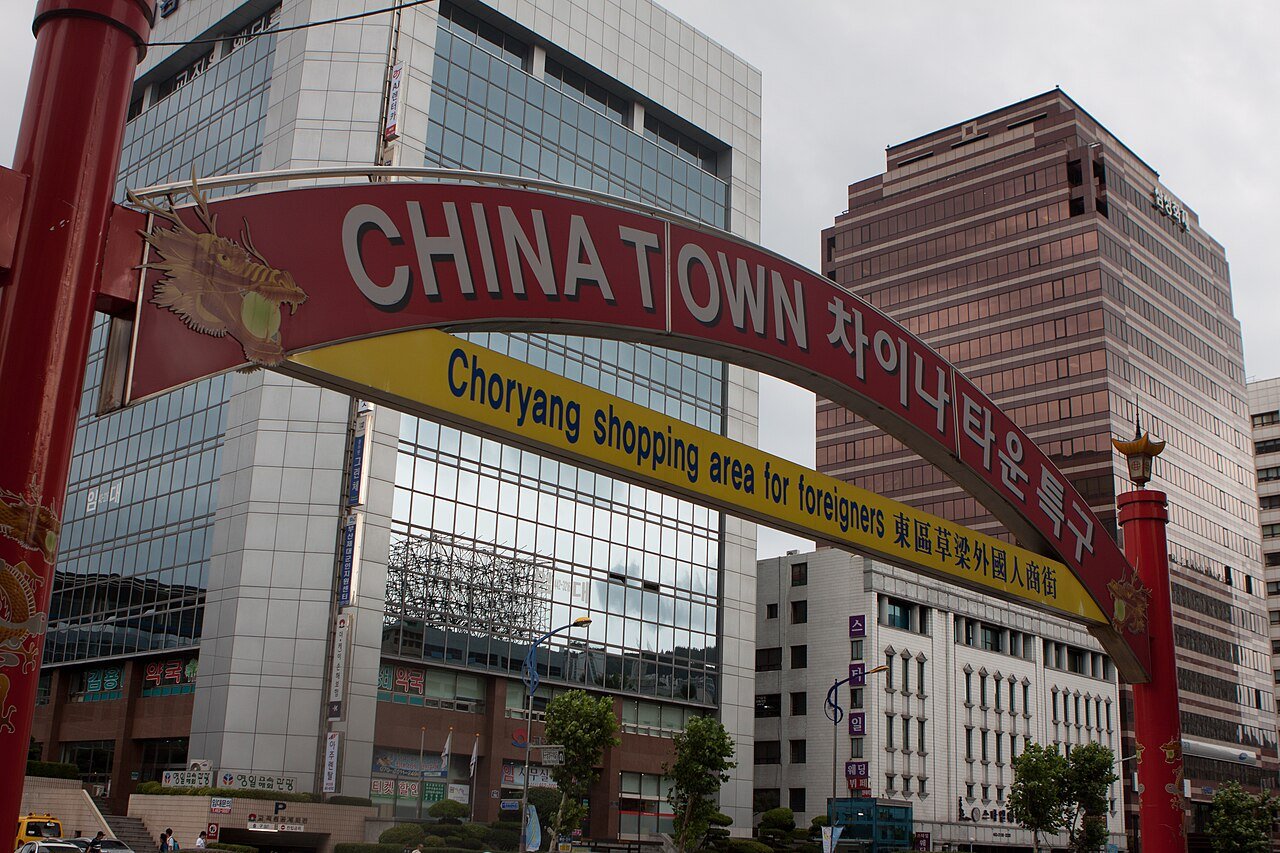
Walk straight out the front doors, cross the main road, and you’re at the red-arched gate of Shanghai Street — Busan’s Chinatown and the only officially designated Chinatown district in Korea. It dates back to the 1880s, when the port opened and a Qing-dynasty consulate was built here, and today it’s a compact few blocks of Chinese restaurants, lamb skewers, bakeries, and hand-pulled noodle shops under red lanterns.
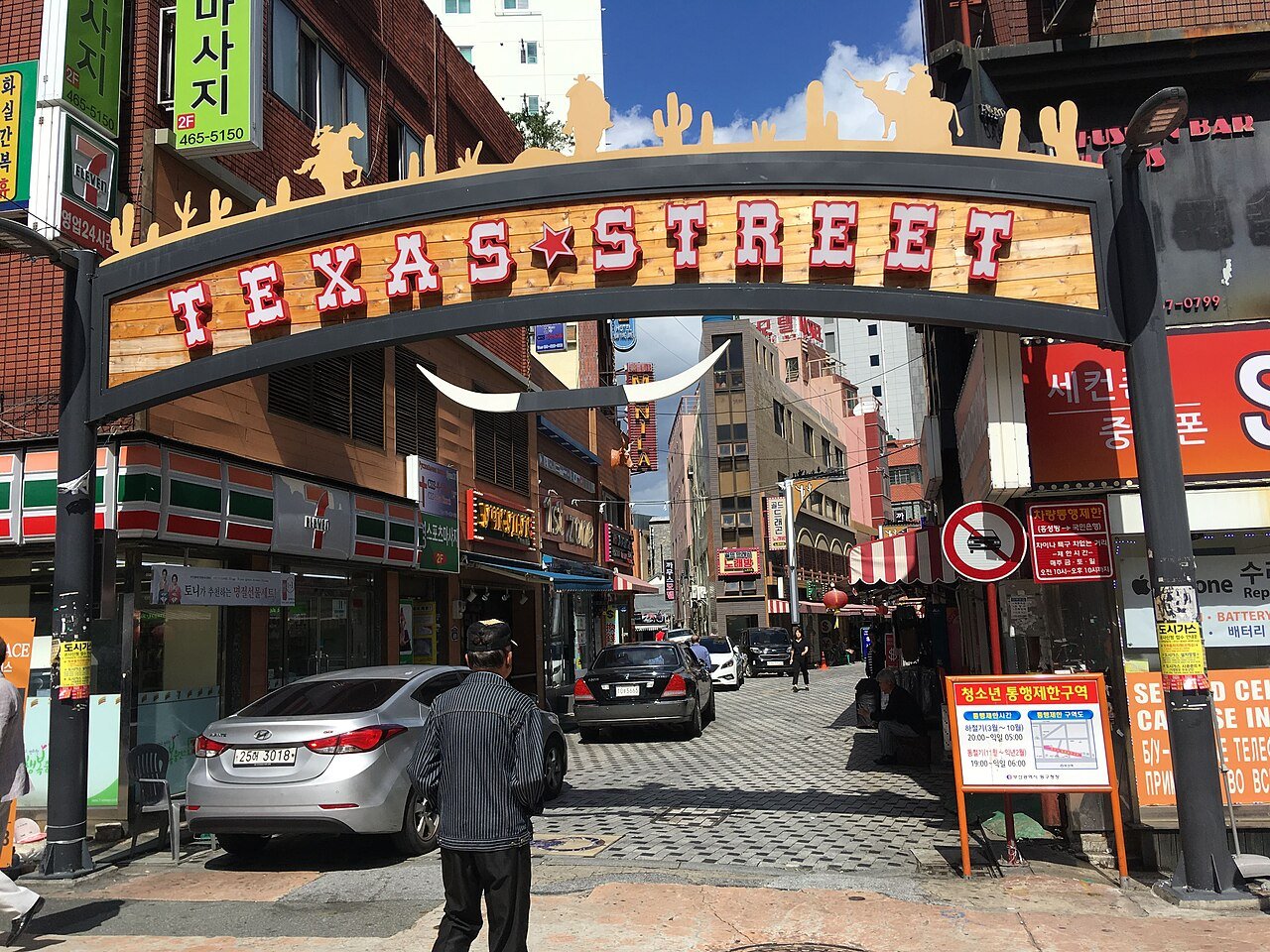
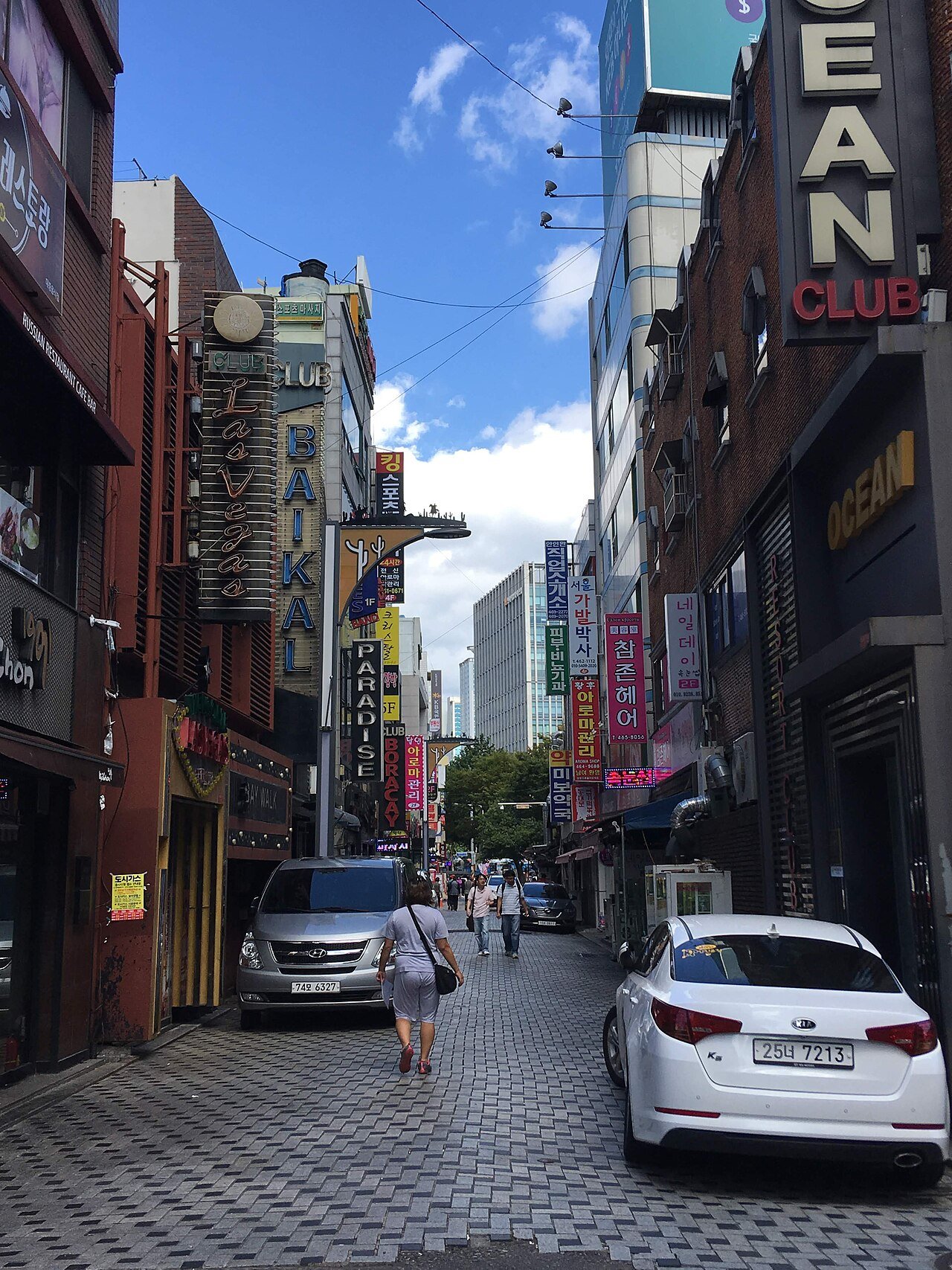
The same area flows straight into Texas Street (텍사스거리), the historically Russian and foreign-sailor quarter. It’s gritty and a little faded by day, more neon-lit and atmospheric in the evening, with Cyrillic signage, Russian and Central Asian eateries, and old bars. It’s not polished — but it’s genuinely one of the most distinctive streetscapes in Korea, and it’s right outside the station.
This is the easiest possible “I have 30-45 minutes” option: grab a snack, wander the lanes, and you’re never more than a few minutes from your platform.
Choryang Ibagu-gil & the 168 Stairs
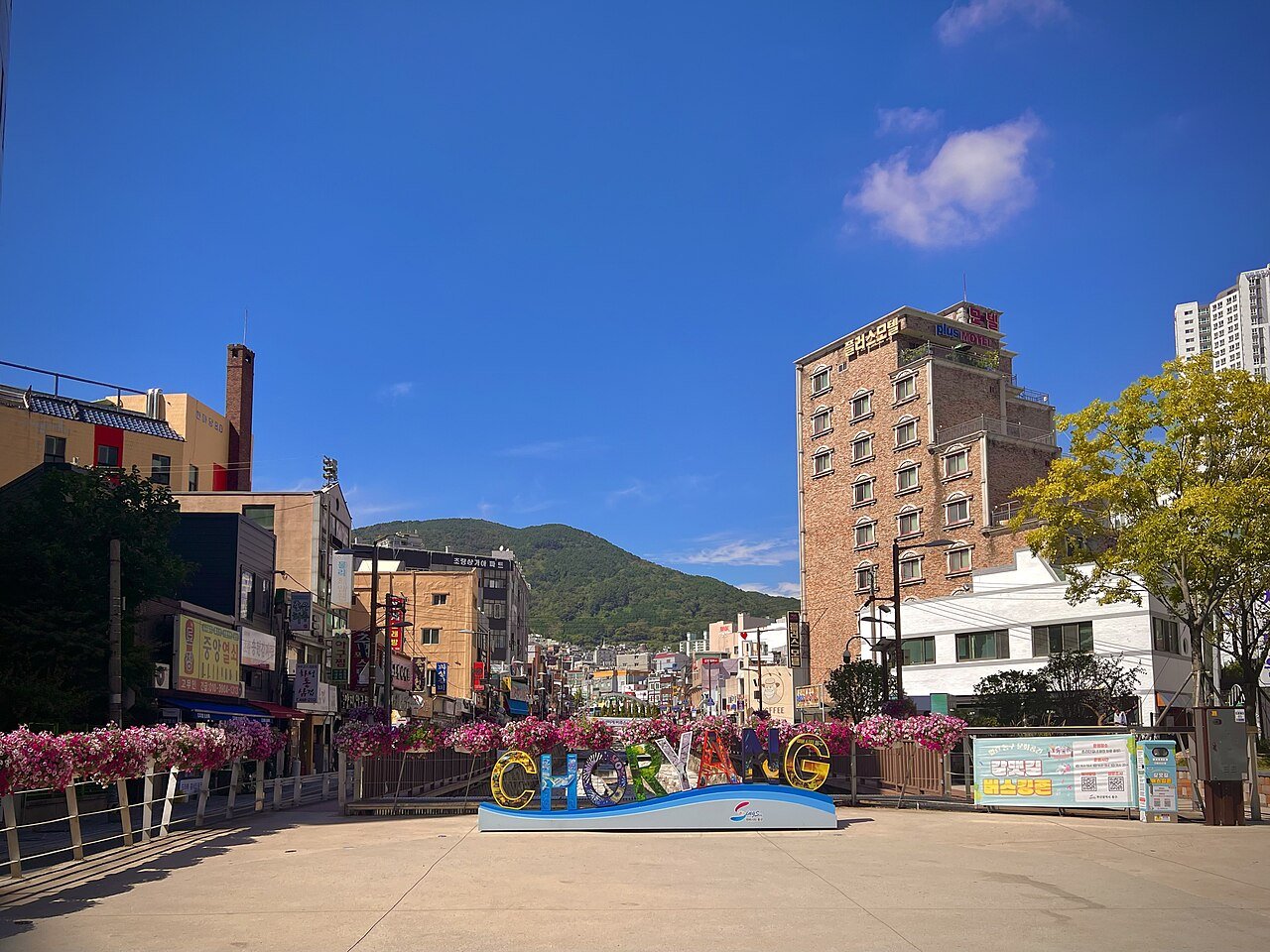
For a taste of old, hillside Busan without a long trip, head to Choryang Ibagu-gil (초량 이바구길) — the “Story Road.” It starts just a couple of minutes’ walk from the station (Exit 7 area) and climbs through the steep back-alley neighbourhood that refugees built into the hills during the Korean War.
The signposted walking route runs about 1.5 km up through the lanes, past small museums, viewpoint cafés, and murals telling the area’s story. Its centrepiece is the 168 Stairs (168계단) — a dramatic staircase climbing the slope at a 35-40° angle, with sweeping harbour views from the top.
The good news for tired legs: there’s a small inclined railway running alongside the stairs that’s free to ride, so you can let it carry you up and walk back down through the alleys. (The original monorail has been upgraded to an inclined elevator-style car, but it remains free and open to anyone.) Budget about an hour if you want to do the full loop and linger at a viewpoint café.
Yongdusan Park & Busan Tower
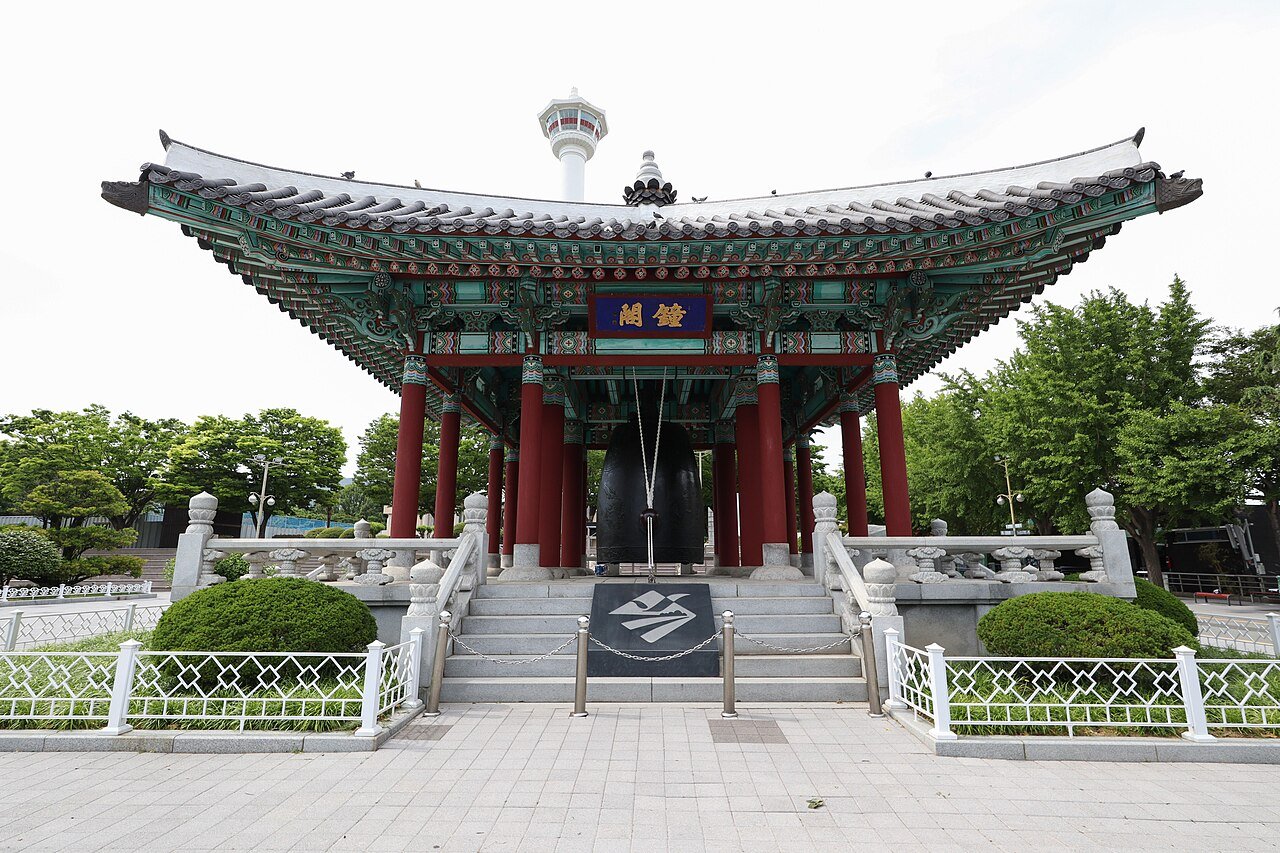
For the classic Busan city view, ride Line 1 two stops to Nampo and walk up to Yongdusan Park (용두산공원) — a hilltop green space crowned by Busan Tower. You don’t have to slog up the slope: a series of outdoor escalators from Nampo-dong carries you most of the way up, which makes this one of the easiest “views” in the country to reach.
The park itself is free and open around the clock, with leafy paths, a big bell pavilion, and pigeons that have seen it all. Busan Tower’s observation deck is a paid ticket and gives you a 360° panorama over the harbour, the bridges, and the hills rolling down to the sea — best in late afternoon as the light softens.
Rough hours for the observatory are around 10:00 to 22:00 (it opens earlier, near 09:00, in winter and 08:30 in summer; last entry about 30 minutes before close). Always double-check on the day, as the operator adjusts seasonally.
Jagalchi & Gukje markets (a short subway hop)
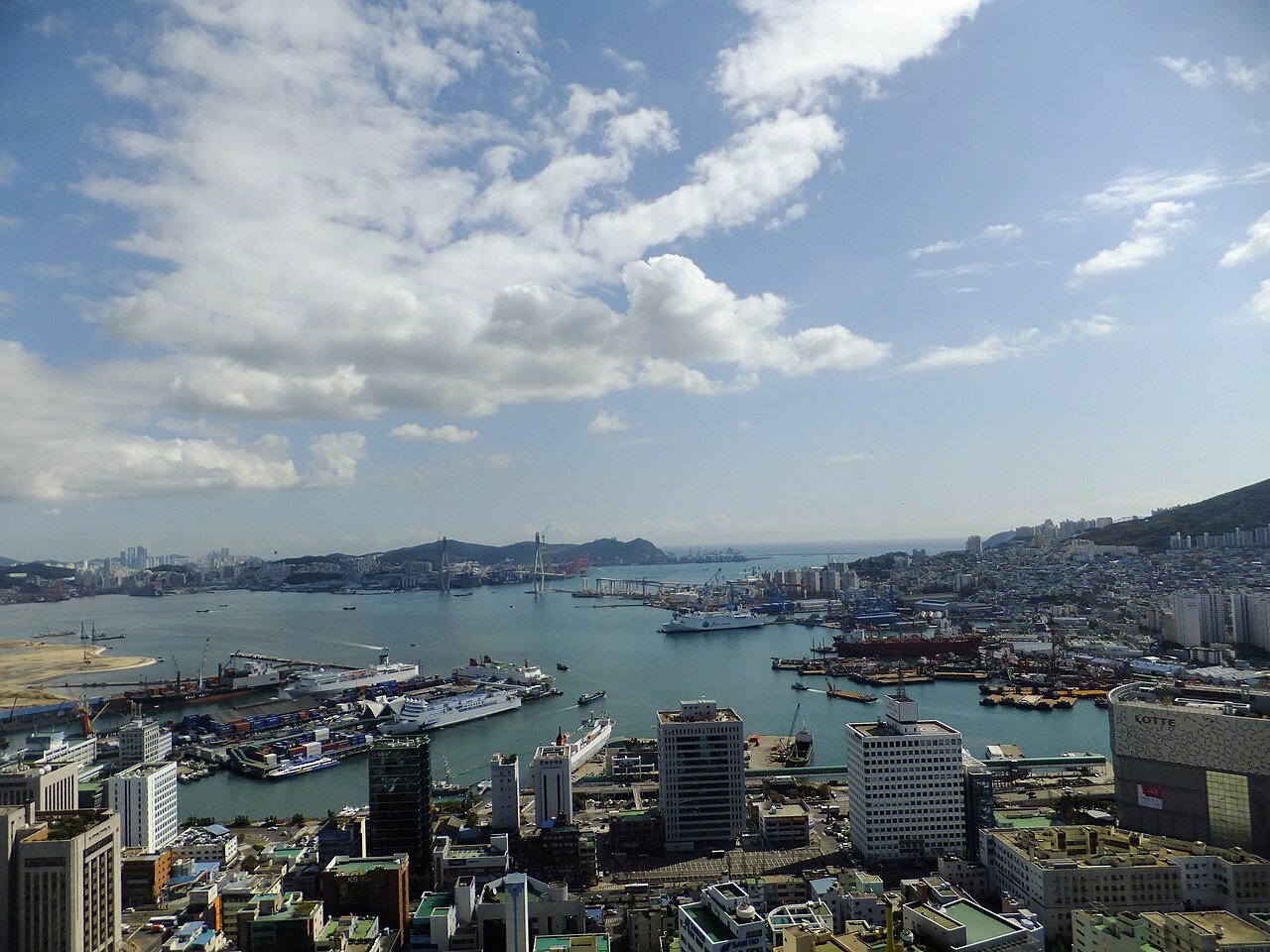
The same two-or-three-stop ride down Line 1 puts you in the beating heart of old Busan: the Nampo / Jagalchi district, where two of Korea’s most famous markets sit side by side.
Jagalchi Fish Market
Jagalchi (자갈치시장) is Korea’s largest seafood market — a sprawl of tanks, ice, and stallholders right on the water. The ritual is simple: pick your fish, crab, or shellfish downstairs, then take it up to a restaurant on the floor above, where they prepare it (raw as hoe, grilled, or in a spicy stew) for a cooking fee. It’s loud, briny, and one of the most authentic food experiences in the city. Get off at Jagalchi Station (Line 1, Exit 10).
Gukje Market & BIFF Square
A few minutes’ walk inland, Gukje Market (국제시장, “International Market”) is a dense maze of alleys selling everything from clothes and kitchenware to vintage finds — it grew out of the post-war years and still feels delightfully chaotic. Right beside it, BIFF Square is the city’s street-food strip, named for the Busan International Film Festival, where you can graze on ssiat hotteok (seed-stuffed sweet pancakes), gimbap, and skewers. Together with Yongdusan Park, Nampo makes an easy half-day on foot once you’ve ridden two stops from the station.
Where to eat near Busan Station
You won’t go hungry around here — the station area has some genuine local specialities:
- Choryang Milmyeon Street — Busan is the home of milmyeon (chewy wheat noodles in cold broth, the city’s answer to naengmyeon), and there’s a cluster of long-running shops near the station. A perfect cheap lunch.
- Chinatown / Shanghai Street — lamb skewers, hand-pulled noodles, and Chinese-Korean classics like jjajangmyeon and tangsuyuk, all a 3-minute walk from the platforms.
- Texas Street — Russian and Central Asian dishes (dumplings, kebabs, hearty stews) if you want something different.
- Dwaeji gukbap — pork-and-rice soup is Busan’s signature comfort dish, and there are well-known gukbap alleys near the station and over toward Seomyeon. Cheap, filling, and very local.
- Inside the station — there’s a food court and convenience stores on-site if you just need something fast before a connection.
Where to stay near Busan Station
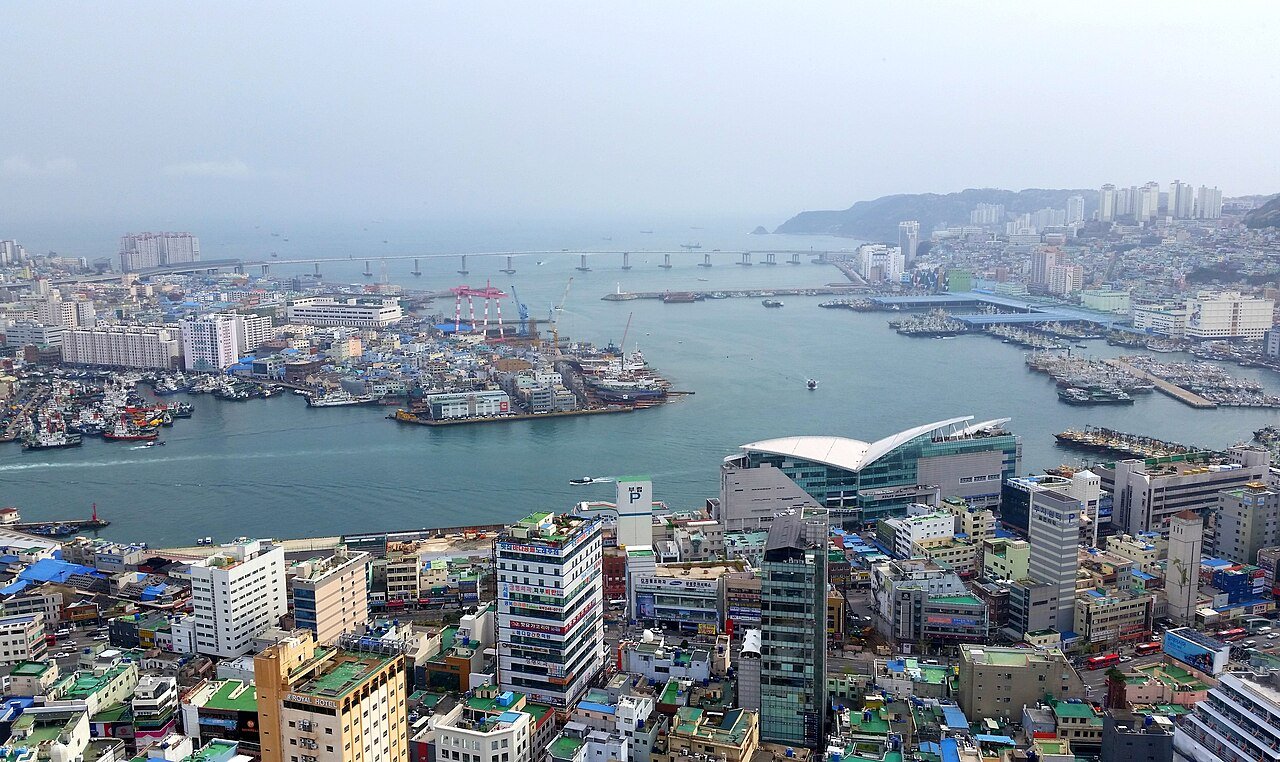
Basing yourself near Busan Station is smart if you’re city-hopping by train: you can roll your suitcase off the KTX and into a hotel within minutes, then make easy day trips to Gyeongju, Daegu, or back to Seoul. The immediate area (Choryang) is convenient and cheaper; one stop on for Seomyeon puts you in the city’s main shopping and nightlife hub; Nampo is great for markets and old-town charm; and Haeundae is the beach-resort option if you’d rather wake up by the sea.
Onward transport from Busan Station
Once you’ve explored the immediate area, Busan Station is a clean launchpad for the rest of the city and beyond:
- Around Busan by metro. Line 1 runs straight through the station. For Haeundae Beach, ride Line 1 north to Seomyeon and transfer to Line 2 out to Haeundae (allow roughly 45-50 minutes door to door). For Gamcheon Culture Village — Busan’s photogenic hillside of pastel houses — take Line 1 to Toseong and a short local bus up the hill.
- To/from Gimhae International Airport. Take the Busan-Gimhae Light Rail (BGL) to Sasang, then Line 2 — or grab an airport limousine bus. Allow around 45-60 minutes to the airport depending on where you start.
- Onward by train. Busan Station is the southern terminus of the KTX, with frequent trains back to Seoul and stops like Gyeongju and Daegu along the way. If you’re combining several cities, it’s worth checking whether a Korail Pass saves you money — the 3-day adult flexible pass is around ₩186,000, which even a five-leg loop doesn’t reach — it pays off from about six longer rides up.
Heading the other direction, our full Seoul → Busan KTX guide covers fares, timetables, and the booking quirks (foreign cards often fail in the Korail+ (formerly KorailTalk) app) so you can lock in the return leg without stress.
Quick questions
How far is Chinatown from Busan Station? It’s directly across the main road from the front of the station — about a 2-3 minute walk. Texas Street runs right alongside it.
Can I walk to the 168 Stairs from the station? Yes. Choryang Ibagu-gil starts roughly 2 minutes from the station (Exit 7 area), and it’s about a 10-minute walk up to the 168 Stairs. A free inclined railway runs beside the stairs if you’d rather ride up.
How do I get from Busan Station to Jagalchi and Nampo? Take Busan Metro Line 1 (the station connects underground, a 5-7 minute walk). It’s two to three stops to Jagalchi and Nampo Stations — under 10 minutes of riding.
How do I get to Haeundae Beach from Busan Station? Ride Line 1 to Seomyeon, transfer to Line 2, and continue to Haeundae — roughly 45-50 minutes in total.
Is there luggage storage at Busan Station? Yes — coin lockers on the 1st and 2nd floors, around ₩2,000-5,000 depending on size, paid by card. They’re for same-day storage (cleared after a few days), so they’re ideal for stashing bags while you explore before a connection.
Is Busan Station a good place to stay? It’s an excellent base for train travellers — minimal walking with luggage and easy onward trains. For nightlife choose Seomyeon, for beaches choose Haeundae, and for markets and old-town atmosphere choose Nampo.
Related guides
- Seoul to Busan by KTX: Complete Guide — fares, times, and how to book without a foreign-card headache.
- Is the Korail Pass Worth It? — work out whether the pass beats individual tickets for your trip.
- Things to Do Near Seoul Station — the other end of the line.
- Gyeongju Day Trip from Seoul — an easy add-on near Busan by KTX.
- How to Travel Korea by Train — the hub guide.
🔗 Affiliate disclosure: Some links on this site are affiliate links. If you book through them, we may earn a small commission at no extra cost to you. We only recommend services we believe are genuinely useful for train travel in Korea.