Incheon Airport to Seoul: AREX Train, Bus & Taxi (2026)
🔗 Some links on this site are affiliate links. If you book through them, we may earn a small commission at no extra cost to you. We only recommend services we believe are genuinely useful for train travel in Korea.
You’ve cleared immigration at Incheon, grabbed your bag, and now there’s one last puzzle between you and Seoul: how to actually get into the city. The good news is that it’s genuinely easy, and the smart default is the train — the Airport Railroad Express (AREX) runs straight from under the terminal to Seoul Station in the heart of the city, no traffic, fixed prices, English signs the whole way.
This guide compares every realistic option — the fast express train, the cheaper all-stop train (the one that reaches Hongdae directly), the airport limousine bus, and taxis — with current 2026 fares and times, plus the bit that matters most if you’re here to ride the rails: how to connect straight from the airport train to a KTX at Seoul Station.
Incheon Airport to Seoul at a glance
| Option | Time to Seoul Station | One-way fare | Best for |
|---|---|---|---|
| AREX Express (nonstop) | ~43 min (T1) / 51 min (T2) | ₩13,000 (a bit less online) | speed, a guaranteed seat, Seoul Station |
| AREX All-Stop (commuter) | ~58–66 min | ₩4,150 (T1) / ₩4,750 (T2) | budget; reaching Hongdae & other AREX stops |
| Limousine bus | ~60–90 min (traffic) | ₩17,000–18,000 | door-closer routes, heavy luggage |
| Taxi / transfer | ~60–80 min (traffic) | ~₩55,000–75,000 + toll | late arrivals, groups, door to door |
The two AREX trains share the exact same track — the difference is whether the train stops along the way. Below is when each one wins.
The AREX Express train — the fast default
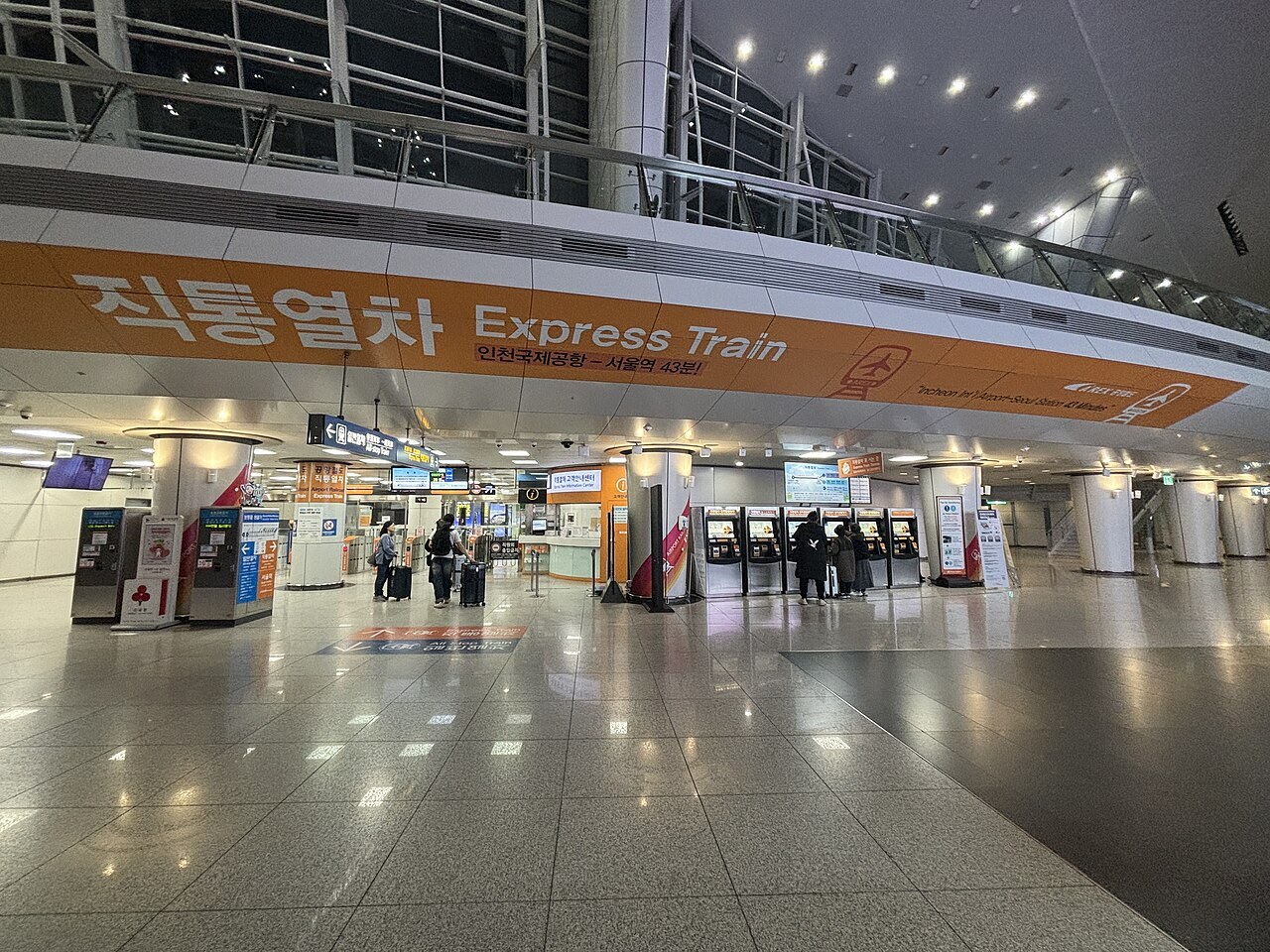
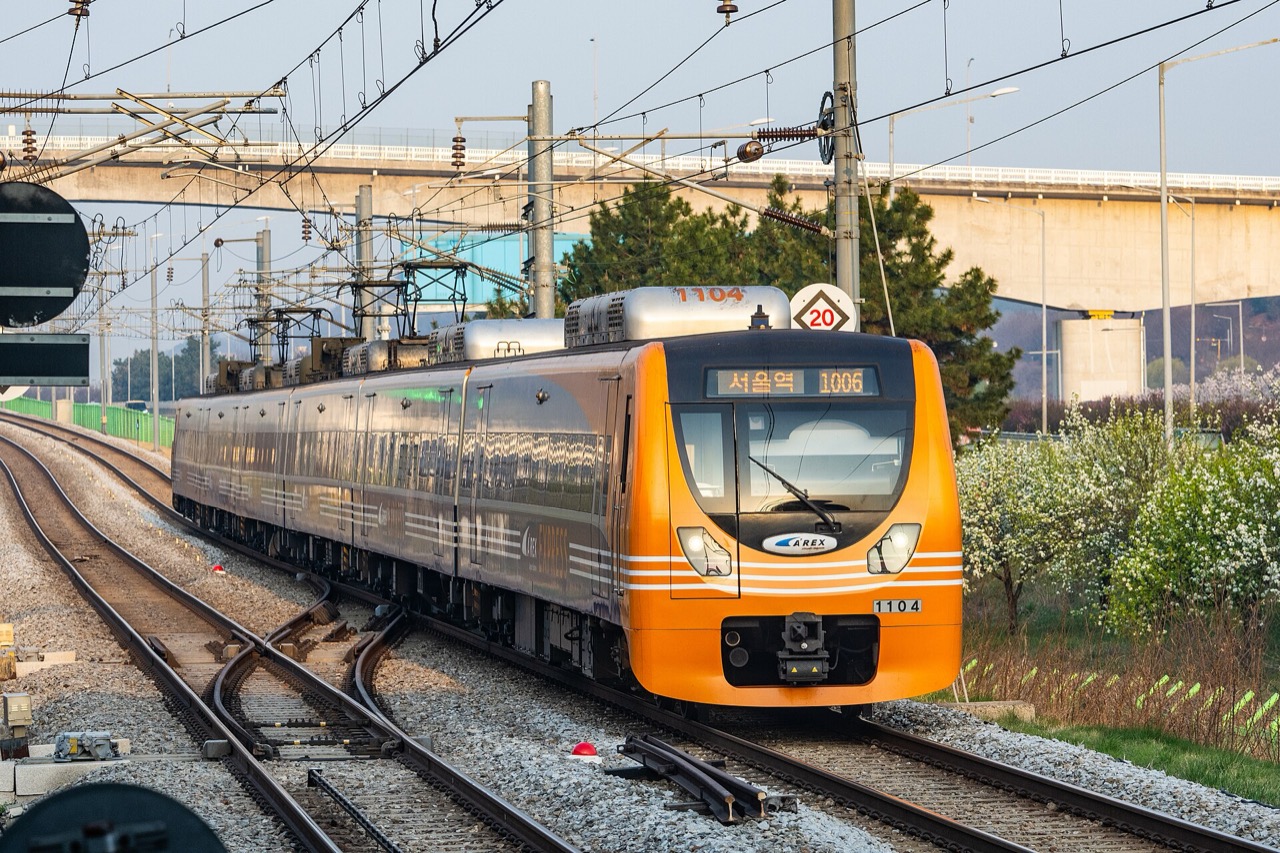
The AREX Express is the premium service: a nonstop run from the airport to Seoul Station in about 43 minutes from Terminal 1 (around 51 minutes from Terminal 2), with a guaranteed reserved seat and luggage space. The flat fare is ₩13,000 at the gate, and it’s usually a little cheaper — around ₩11,500 — if you book online ahead of time. Trains leave roughly every 20–40 minutes, from about 5:15 AM to the last departure around 10:48 PM.
It’s the right pick when you’re staying near Seoul Station or central Seoul, when you’re jet-lagged and just want a seat and no decisions, or when you’re connecting onward to a KTX (more on that below). The platform is signed in English, and you board right under the terminal — no shuttle, no weather, no traffic.
The AREX All-Stop train — the cheap, clever pick
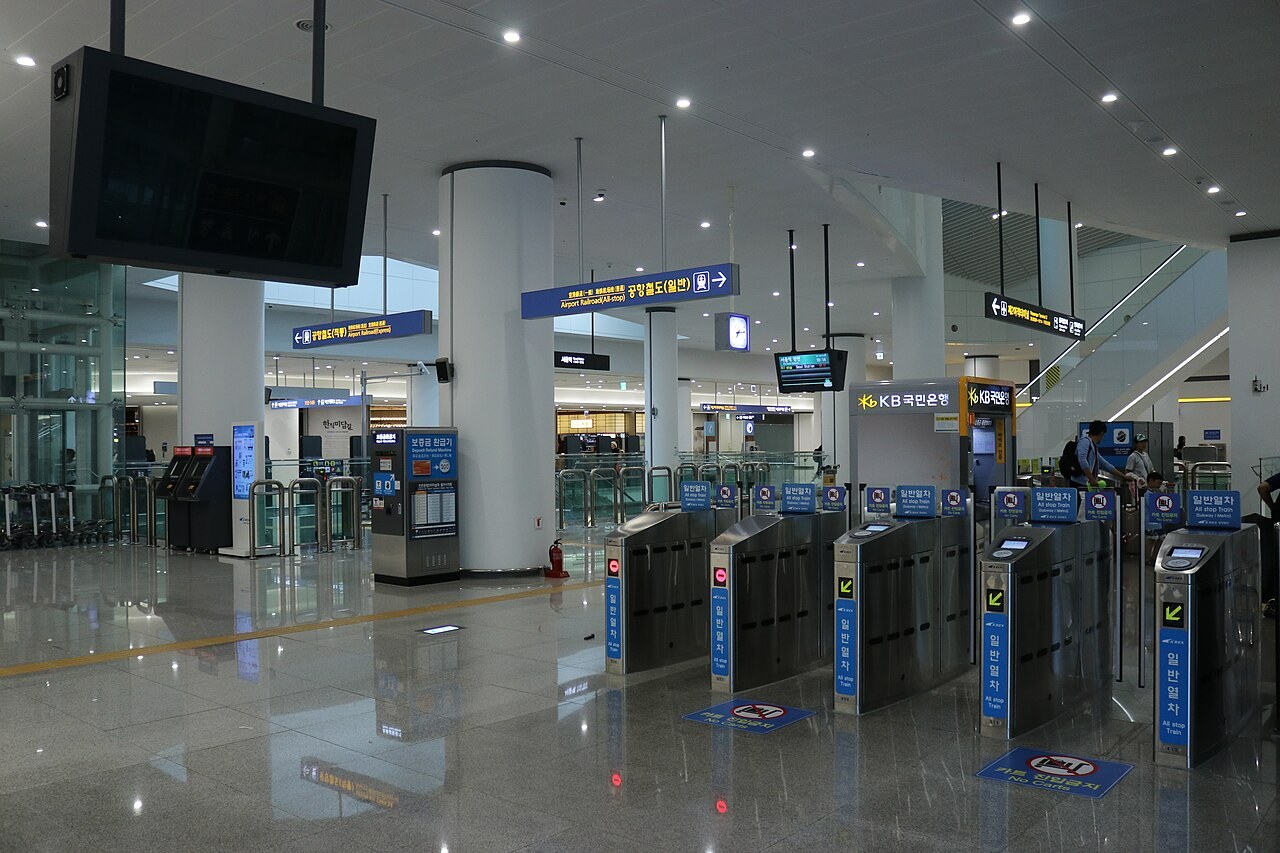
Here’s the option a lot of guides bury: the AREX all-stop (commuter) train runs on the same line as the express but makes about 11 stops, reaching Seoul Station in roughly 58–66 minutes for just ₩4,150 from Terminal 1 (₩4,750 from Terminal 2). There’s no reservation — you simply tap a T-money card (or buy a single-use ticket from the machine) and get on, with trains every 10–15 minutes.
For barely 15–20 minutes more than the express, you pay about a third of the price, which makes it the obvious budget choice. But the real reason to love it is its stops. The all-stop train calls at Gimpo Airport and, crucially, Hongik University (Hongdae) — so if you’re staying in Hongdae, the airport train drops you a short walk from your guesthouse with no transfer at all. It also connects to the Seoul subway at several points (Hongik Univ, Gongdeok, Digital Media City) if your hotel is closer to one of those lines.
Which AREX train should you take?
- Express if you’re going to Seoul Station or central Seoul, want a reserved seat, or you’re simply too tired to think.
- All-stop if you’re watching your budget, or if you’re staying near Hongdae or any other stop on the line — in which case it’s actually faster and cheaper, because you skip a transfer.
Either way you want a working data connection the moment you step off — to pull up Naver Map, message your host, and find your exit. That’s the one thing to sort before you fly; the full walkthrough is in our eSIM for Korea guide, and the honest case for why is in do you need data in Korea?.
The airport limousine bus
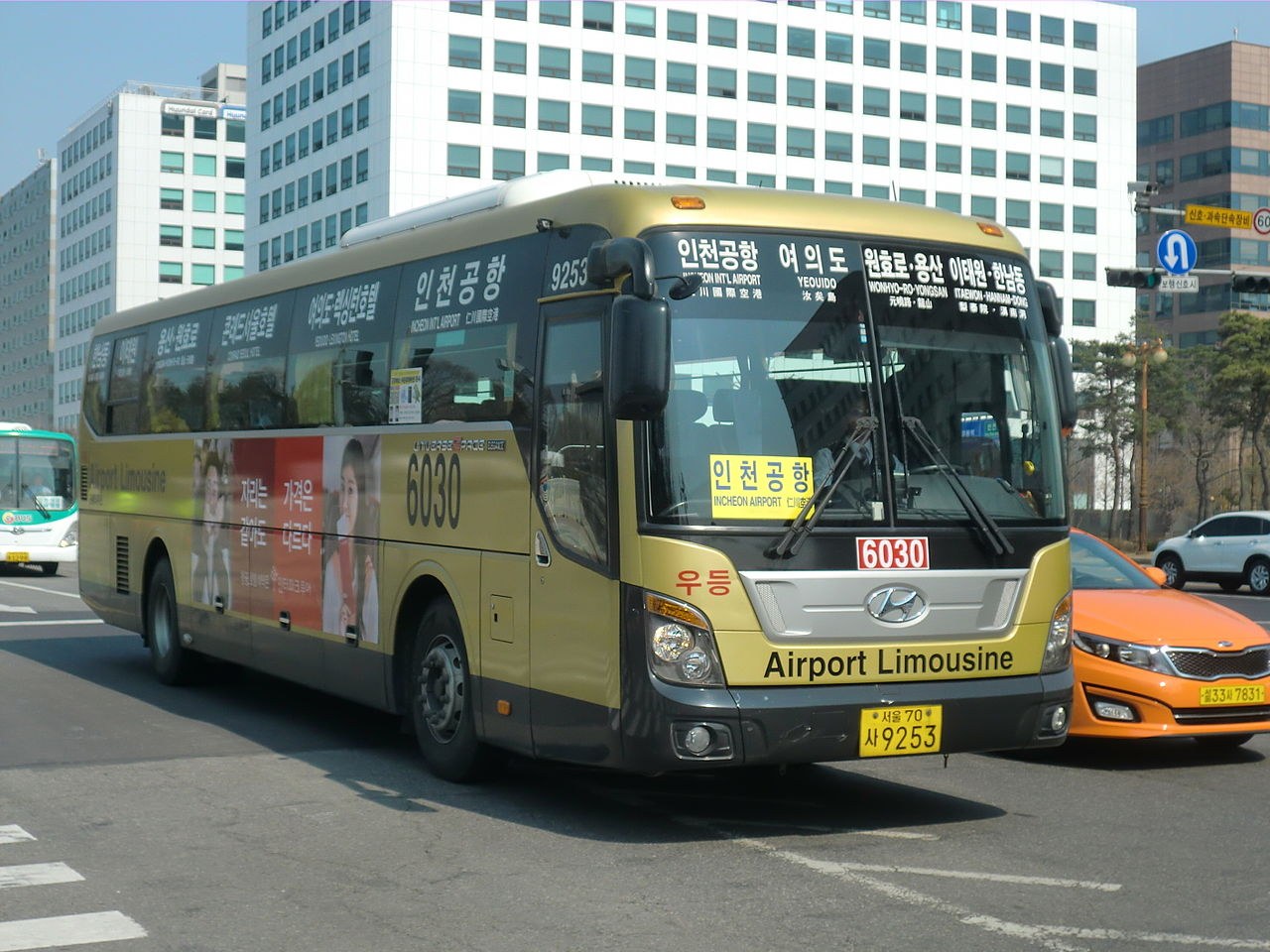
The airport limousine bus is the classic alternative, and it still earns its place for one reason: some routes drop you closer to your hotel’s front door than the train, with your suitcase stowed in the hold the whole way. Standard fares are ₩17,000 (premium “K-Limousine” coaches ₩18,000), with two bags up to 20 kg each carried free.
The catch is traffic — budget 60–90 minutes depending on the hour, versus the train’s fixed timing. Useful routes for visitors include 6015 to Myeongdong (via Seoul Station area, Namdaemun and Myeongdong) and 6009 to Gangnam. Note that the limousine network was trimmed after the pandemic, so fewer routes run than older guides suggest — check that a bus actually serves your neighborhood before counting on it. Buy your ticket first at a self-service kiosk or counter in the arrivals hall (they take international cards and switch to English); you can’t just tap on at the airport stop.
The bus wins when your hotel sits right on a route and you’d rather not drag bags through a station transfer. Otherwise the train is faster and immune to traffic.
Taxi and private transfer
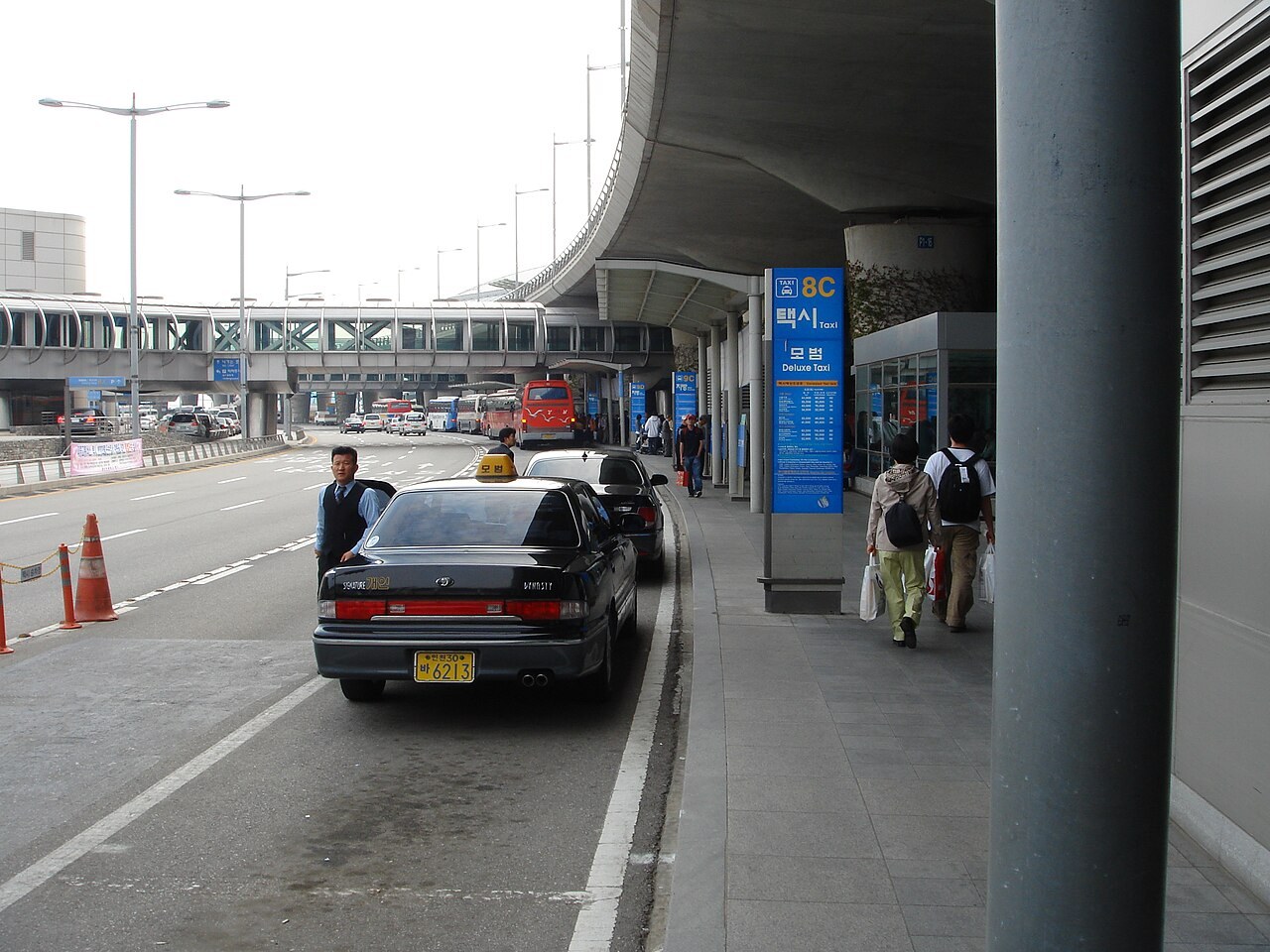
A taxi is the priciest option but the simplest at the wrong end of a long flight: walk to the rank, get in, door to door. Expect roughly ₩55,000–75,000 to central Seoul including the ₩7,900 airport-expressway toll, and about 60–80 minutes depending on traffic. Regular (orange/silver) taxis are metered and cheapest; deluxe “mobeom” (black) taxis and international taxis cost more but the latter guarantee an English-speaking driver. You can also call one with Kakao T, Korea’s standard taxi app.
For groups, families with luggage, or very late arrivals, a taxi or a pre-booked private transfer can work out reasonable per head and saves you navigating anything. For a solo traveler, though, the express train is far cheaper and usually faster.
Coming in through Gimpo (GMP)?
If you land at Gimpo Airport instead — common on flights from Tokyo, Osaka, Taipei, or Shanghai — you’re already much closer to the city. Gimpo is on the same AREX line, about 20 minutes from Seoul Station, and it also sits on subway Lines 5 and 9, so you can ride the metro straight into town. The all-stop AREX or the subway are both cheap and quick; a taxi from Gimpo to central Seoul is far less than from Incheon.
Connecting to a KTX at Seoul Station
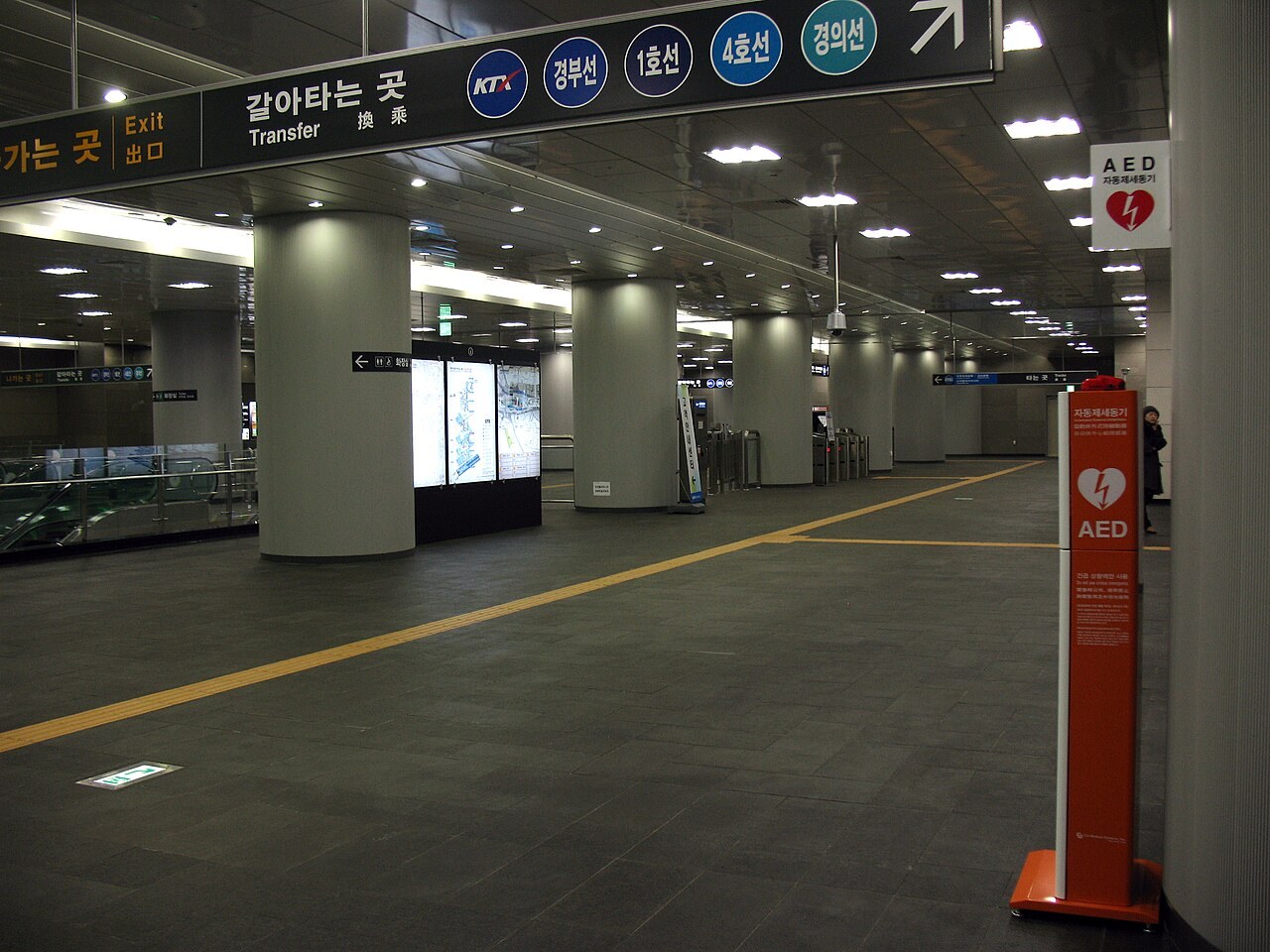
This is the part that matters most for a rail trip — and it’s where the express train quietly shines. AREX terminates at Seoul Station, which is also the country’s main KTX hub. So if you’re heading straight from the airport to Busan, Gyeongju, Gangneung or beyond, you don’t change cities or stations: you ride AREX into Seoul Station, then walk a few minutes within the same complex to the KTX concourse (the AREX platforms are downstairs; follow the Korail/KTX signs up to the main hall).
That makes a same-day airport-to-KTX connection completely realistic — just leave yourself a comfortable buffer to find the platform and, ideally, book the KTX leg in advance so you’re not buying a ticket with a jet-lagged brain. Our how to buy KTX tickets guide covers every booking method, how to book KTX with a foreign credit card heads off the usual payment snag, and the full flagship route is in our Seoul to Busan KTX guide. If you’re visiting several cities, check whether a Korail Pass saves you money first.
(One note for departure day: the old downtown check-in and baggage-drop service at Seoul Station has been limited or suspended in recent years, so don’t count on checking in for your flight downtown — plan to do it at the airport, and check the latest if it matters to your plans.)
First-timer tips
- Find the train downstairs. AREX is in the basement of both terminals — follow the “Airport Railroad / Train to Seoul” signs down from arrivals. It’s a short, covered walk.
- Terminal 1 vs Terminal 2. Terminal 2 serves Korean Air, Delta, Air France, KLM and other SkyTeam partners; Terminal 1 handles everyone else. AREX serves both directly — Terminal 2 is the start of the line, so the train reaches Terminal 1 a few minutes later.
- Grab a T-money card if you’ll use any public transport in Korea (you will). Buy one at a convenience store in arrivals, load some cash, and it works on the all-stop AREX, every subway, and city buses nationwide.
- Express vs all-stop, again: they often leave from the same platform area — check the signs and the train marking so you board the one you paid for.
- Going out, not in? All of the above runs in reverse. For the express, leave the city a clear two-plus hours before your flight; the all-stop train and the bus need a bigger buffer.
Quick questions
What’s the cheapest way from Incheon Airport to Seoul? The AREX all-stop (commuter) train: ₩4,150 from Terminal 1 or ₩4,750 from Terminal 2 to Seoul Station, about an hour, and you just tap a T-money card or buy a single-use ticket — no reservation. It’s the same line as the express, just with stops.
Is the AREX Express train worth it over the all-stop? If you’re heading to Seoul Station or you’re tired and in a hurry, yes: it’s nonstop, about 43 minutes, with a guaranteed reserved seat for ₩13,000 (a little less booked online). If you’re on a budget or staying near Hongdae or another AREX stop, the all-stop train is barely slower and a third of the price.
How do I get from Incheon Airport to Hongdae? Take the AREX all-stop train to Hongik University Station — it’s a direct stop on the line, no transfer, roughly 50–60 minutes and about ₩4,000. Hongdae is one of the few major Seoul neighborhoods the airport train reaches directly.
How do I get from Incheon Airport to Myeongdong? There’s no direct train. Either take the AREX to Seoul Station and finish with a short taxi or one subway transfer, or take the 6015 airport limousine bus, which runs straight to Myeongdong (about ₩17,000) and is easiest if you have heavy luggage.
How late do trains run from Incheon Airport? The last trains leave the airport before midnight — the express a bit earlier (around 10:48 PM), the all-stop until roughly 11:40 PM. After that your options are a taxi or a late airport bus, or waiting for the first train around 5:20 AM.
Can I take the airport train straight to my KTX? Almost. AREX terminates at Seoul Station, which is also the main KTX hub, so you transfer inside the same station complex — a few minutes’ walk down to the KTX concourse — and board a KTX to Busan, Gyeongju, or anywhere else without leaving the building.
Related guides
- Do You Need Data in Korea? — why you want an eSIM working the moment you land.
- Korea transit cards: T-money vs WOWPASS vs Climate Card — which card to tap onto the AREX all-stop train and around the city.
- How to Buy KTX Tickets — every way to book your onward train.
- Seoul to Busan by KTX — the flagship route, straight from Seoul Station.
- Things to Do Near Seoul Station — where AREX drops you, and what’s around it.
- How to Travel Korea by Train — the whole rail system, explained once.
🔗 Affiliate disclosure: Some links on this site are affiliate links. If you book through them, we may earn a small commission at no extra cost to you. We only recommend services we believe are genuinely useful for train travel in Korea.