Jeonju in a Day: Hanok Village, Food & How to Get There (2026)
🔗 Some links on this site are affiliate links. If you book through them, we may earn a small commission at no extra cost to you. We only recommend services we believe are genuinely useful for train travel in Korea.
Ask a Korean where to go to eat — really eat — and a lot of them will say Jeonju. This is the birthplace of bibimbap, a makgeolli town where ordering one kettle buries your table in free side dishes, and home to the country’s largest hanok village: around 700 traditional tiled-roof houses packed into a few walkable blocks, lined with tea rooms, craft studios, street-food stalls, and viewpoints. UNESCO named Jeonju a City of Gastronomy, and it earns the title with every meal.
The best part for train travelers: it’s close. A KTX from Seoul gets you here in well under two hours, and the old town is compact enough to do on foot in a single day. This guide covers the whole trip end to end — the train (fares, timing, which Seoul station), how to get from Jeonju Station into the village, every sight and snack worth your time, a copy-and-go one-day plan, and the honest call on day trip versus an overnight in a hanok. One thing to sort first: a working data connection, because you’ll be navigating the lanes on Naver Map.
Seoul to Jeonju at a glance
| Train | KTX on the Jeolla line |
| Journey time | About 1 h 26 m – 1 h 40 m |
| One-way fare | Around ₩31,300 (about US$25) |
| Departs from | Yongsan Station (most trains) |
| Arrives | Jeonju Station (about 4 km from the village) |
| Frequency | Roughly 20+ trains a day |
| Day trip? | Yes — easily. An overnight is even better. |
Getting there by KTX
KTX trains reach Jeonju Station from Seoul in about 1 hour 26 minutes to 1 hour 40 minutes for roughly ₩31,300 one-way (around US$25). Almost all of them leave from Yongsan Station in central Seoul — not Seoul Station — so double-check your departure point before you go. There are 20-plus trains a day, so even without a fixed plan you’re rarely waiting long.
A couple of route notes worth knowing. Jeonju sits on the Jeolla line, and some “KTX” services to Jeonju actually run as KTX-Sancheon sets; either way it’s the same high-speed comfort. A handful of cheaper, slower Mugunghwa and ITX trains also serve Jeonju if you want to save a few thousand won and don’t mind an extra 45 minutes or so. And note that KTX trains to nearby Gwangju or Mokpo do not stop at Jeonju — make sure your ticket actually reads Jeonju (전주).
Fares on the KTX are fixed and regulated — there’s no dynamic pricing, so a ticket costs the same a month out or an hour before departure. Booking early buys you a seat, not a discount. Jeonju is a hugely popular domestic weekend destination, though, so on Saturdays, Sundays, and holidays the trains genuinely sell out — book your return leg at the same time as the outbound. One exception worth knowing: Korail discounts a limited block of seats on quieter departures through its online special fare — how that works.
Booking with a foreign card
You can buy tickets on the Korail global site or the KorailTalk app in English, but foreign cards often fail silently at the payment step — a frustration we hear about constantly. The reliable fixes (desktop checkout, station counters, resellers) are in our how to book KTX with a foreign credit card guide, and if the app itself misbehaves, see what to do when KorailTalk won’t cooperate. New to the whole process? Start with how to buy KTX tickets.
Does the Korail Pass help?
For a single Jeonju round trip from Seoul, no — two one-way tickets (about ₩69,200) cost less than any pass. The Korail Pass only pays off when you’re stacking Jeonju into a wider multi-city run — say Busan, Gyeongju, and Jeonju in the same week. Run your own numbers in Korail Pass: is it worth it?.
From Jeonju Station to the Hanok Village
Here’s the one thing that trips people up: Jeonju Station is not next to the village. The KTX station sits about 4 km northeast of the old town, so you’ve got a short onward hop:
- Taxi — the simplest. About 10–15 minutes to the Hanok Village for roughly ₩6,000–8,000. The best choice if you’ve got luggage or you’re in a group.
- City bus — frequent buses run from the stop in front of the station toward the village; get off near Jeondong Catholic Cathedral, the unmistakable landmark at the village edge. Useful routes include 12, 79, 109, 119, 142, 508, 536, and others — the ride takes about 20–25 minutes. Tap on with a T-money card (buy and top up at any convenience store).
- Sightseeing bus — the Jeonju City Tour bus loops the main attractions if you’d rather not work out individual routes.
Coming back for an evening train, allow a comfortable buffer — Jeonju taxis can get scarce around the village on busy weekend nights.
Inside the Hanok Village
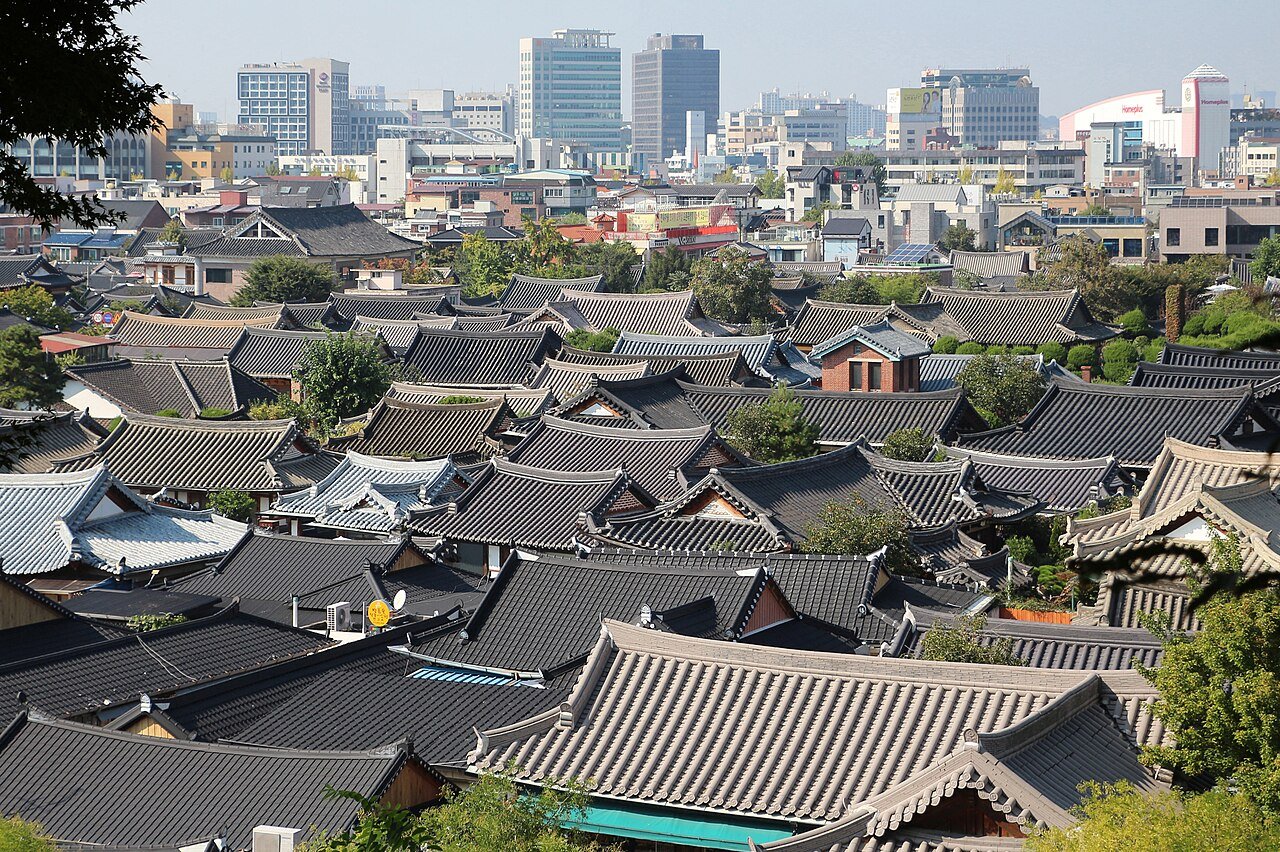
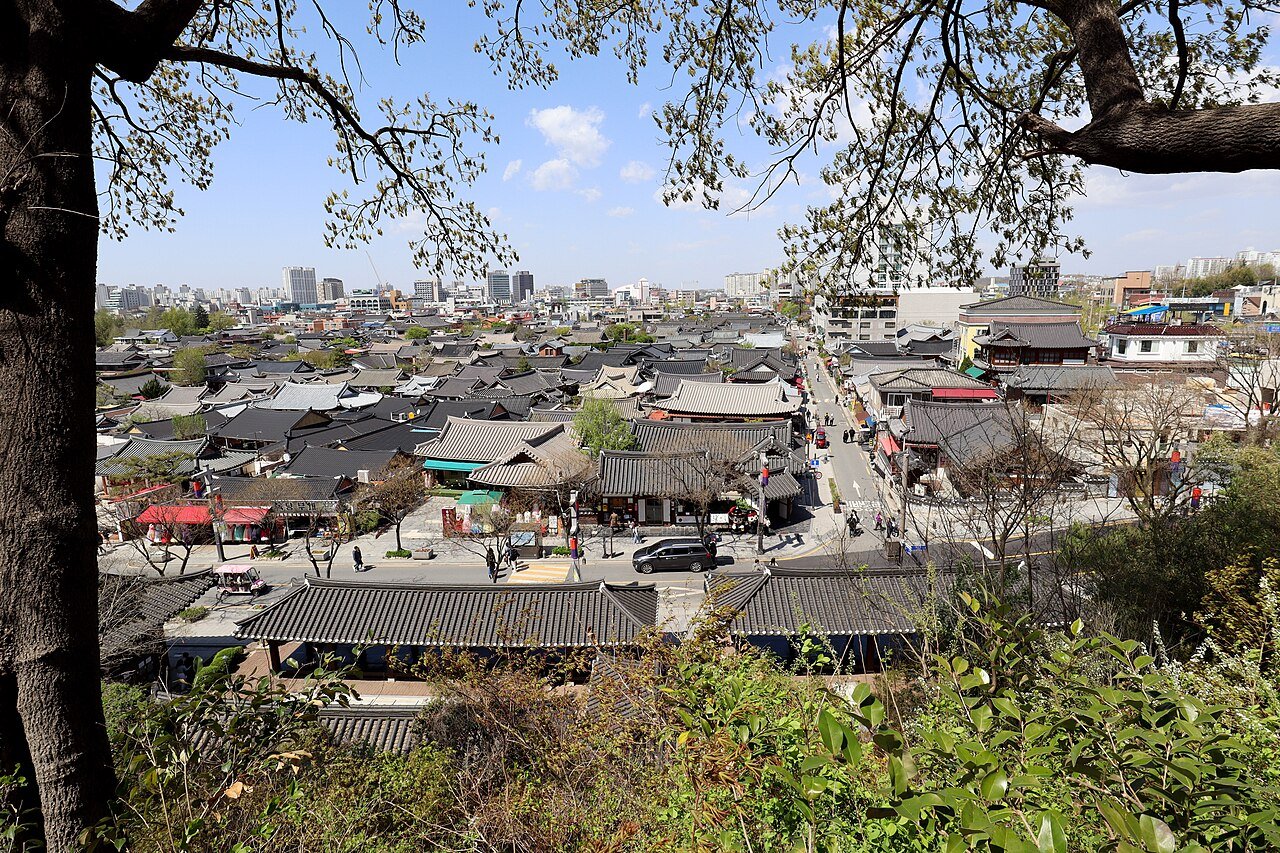
The village is the heart of any visit — roughly 700 hanok in a dense, walkable grid of slow lanes, hanji (mulberry-paper) workshops, tea houses, and viewpoints. There’s no admission to wander the streets themselves; you only pay at individual sights. Give yourself a few unhurried hours to get pleasantly lost.
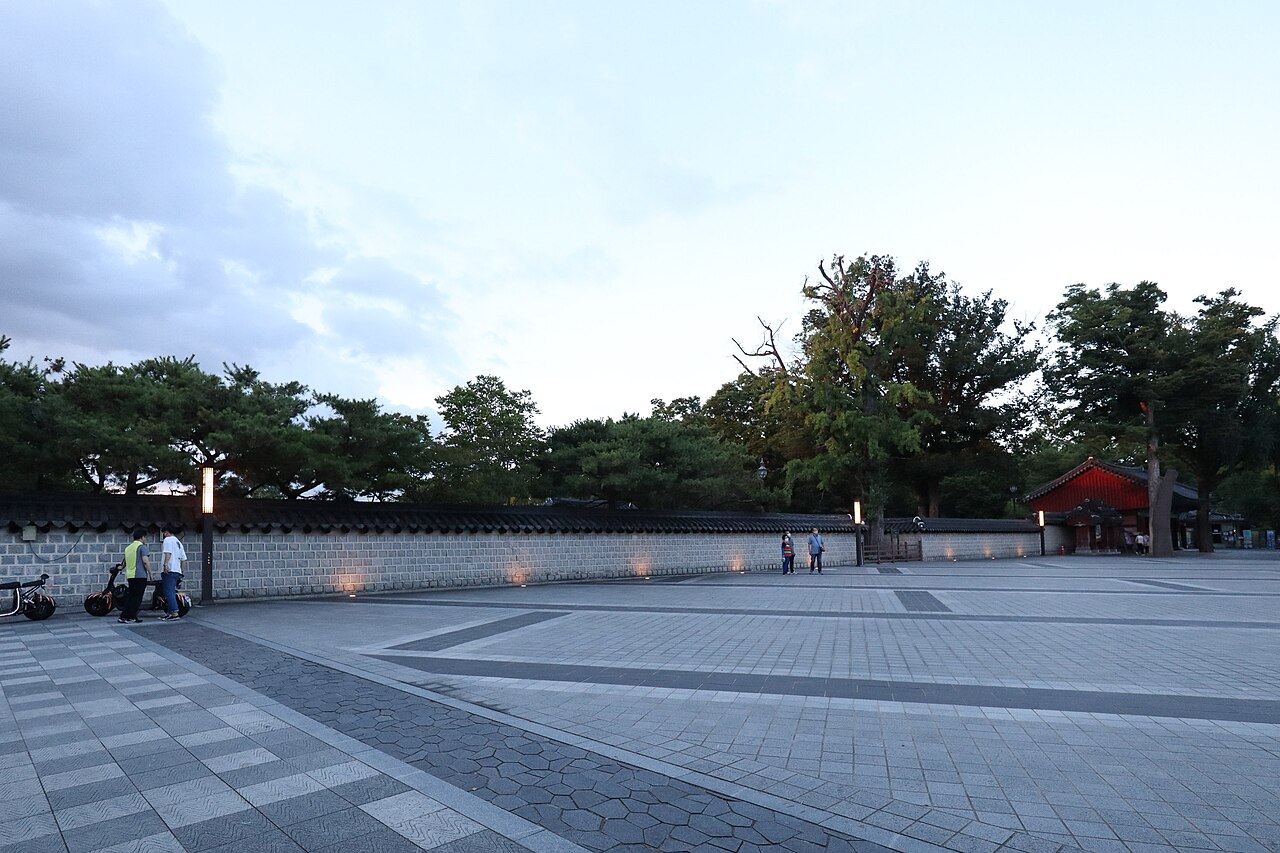
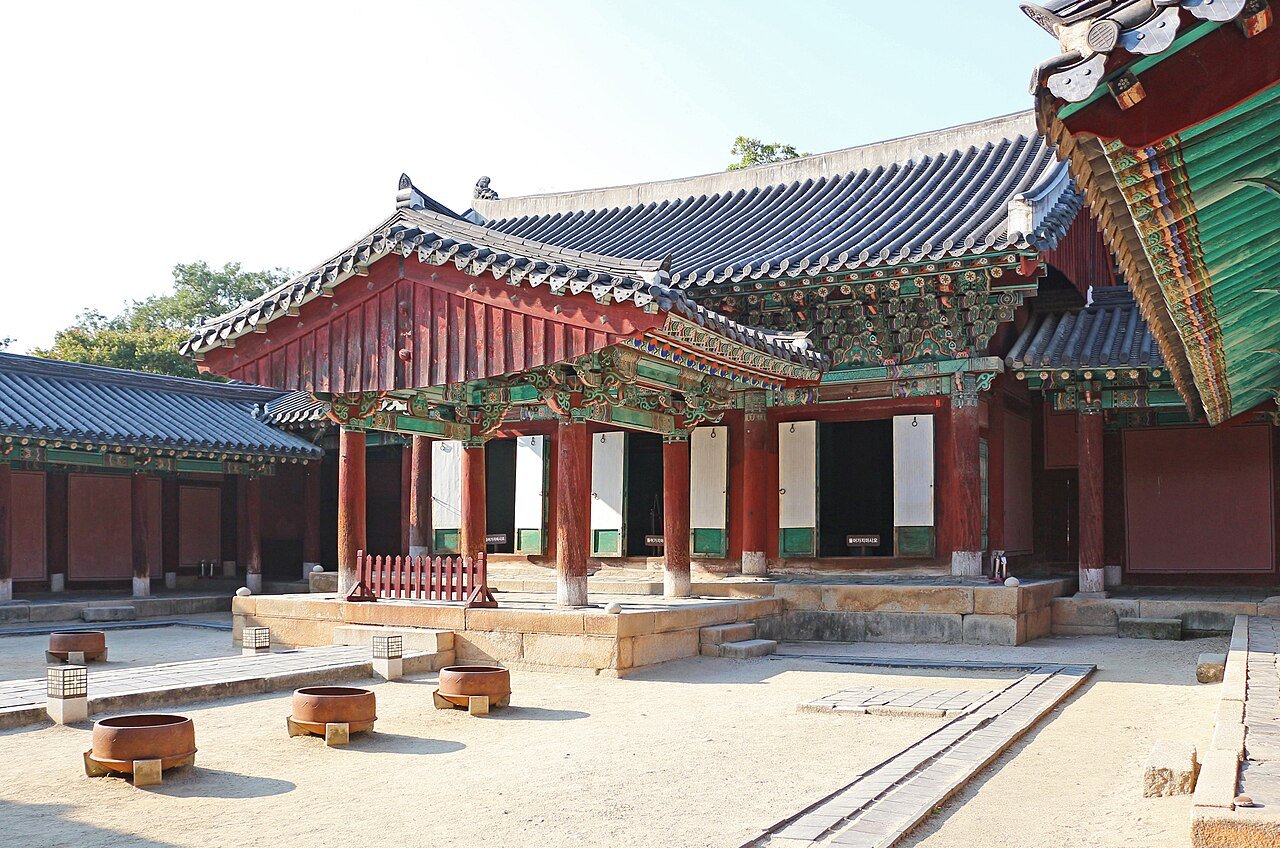
Gyeonggijeon Shrine
The atmospheric walled compound at the center of the village, built in 1410 to enshrine the official portrait of King Taejo, the founder of the Joseon dynasty. Inside you’ll find quiet courtyards, an ancient bamboo grove, and the Royal Portrait Museum. It’s a green, calm break from the busier lanes and one of the prettiest spots in town. Admission is about ₩3,000 — the one paid sight most visitors agree is worth it.
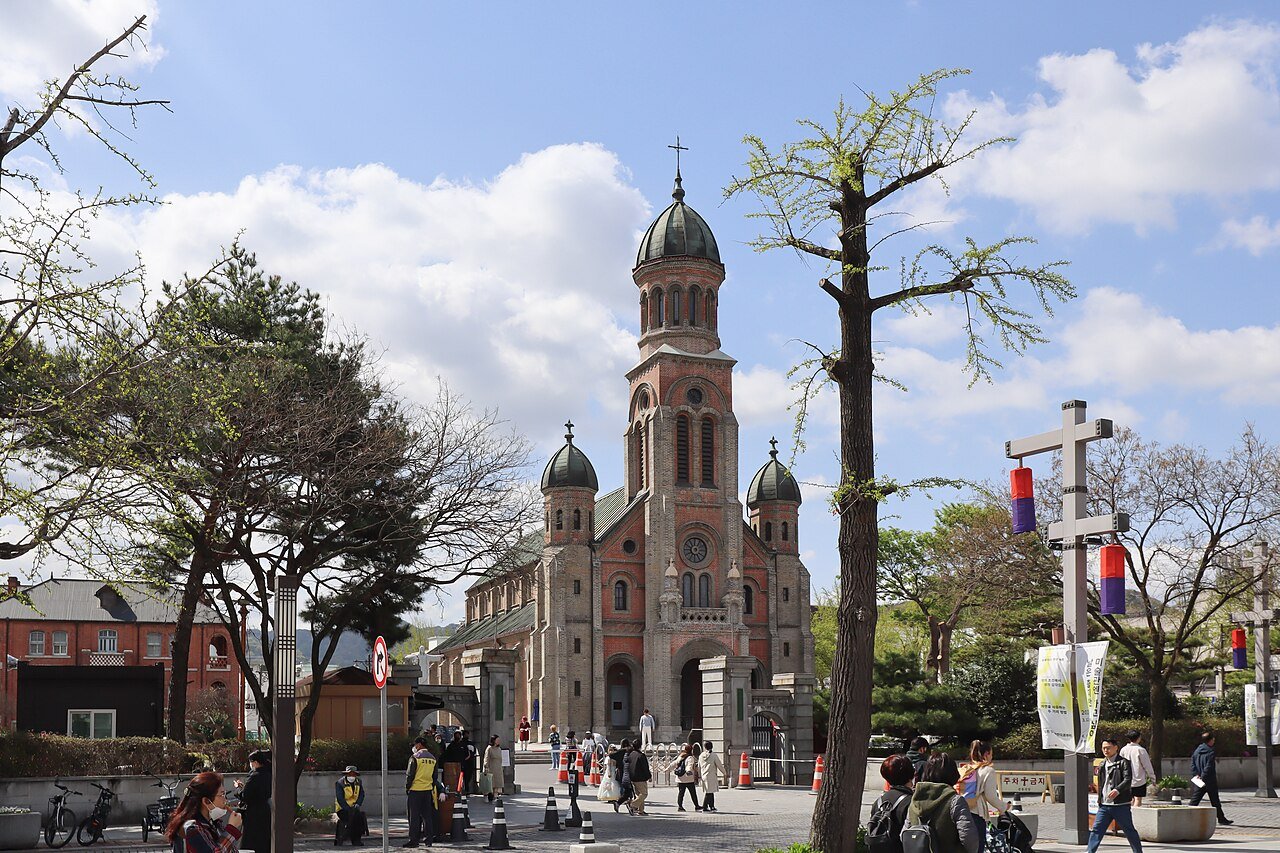
Jeondong Catholic Cathedral
Directly across from Gyeonggijeon stands one of Korea’s most beautiful churches — a Romanesque-Byzantine brick cathedral completed in 1914, built on the site where Catholic martyrs were executed in the 18th century. The contrast of its rounded brick towers against the surrounding tiled hanok roofs makes it Jeonju’s single most photographed building. Step inside; entry is free.
Omokdae viewpoint
A short uphill walk from the eastern edge of the village brings you to Omokdae, a wooden pavilion on a low rise that delivers the best panorama over the entire sea of hanok rooftops. It’s free, and it’s blissfully quiet even when the lanes below are heaving — the photo you came for, minus the crowd. Go at golden hour if you can.
Hanbok rental
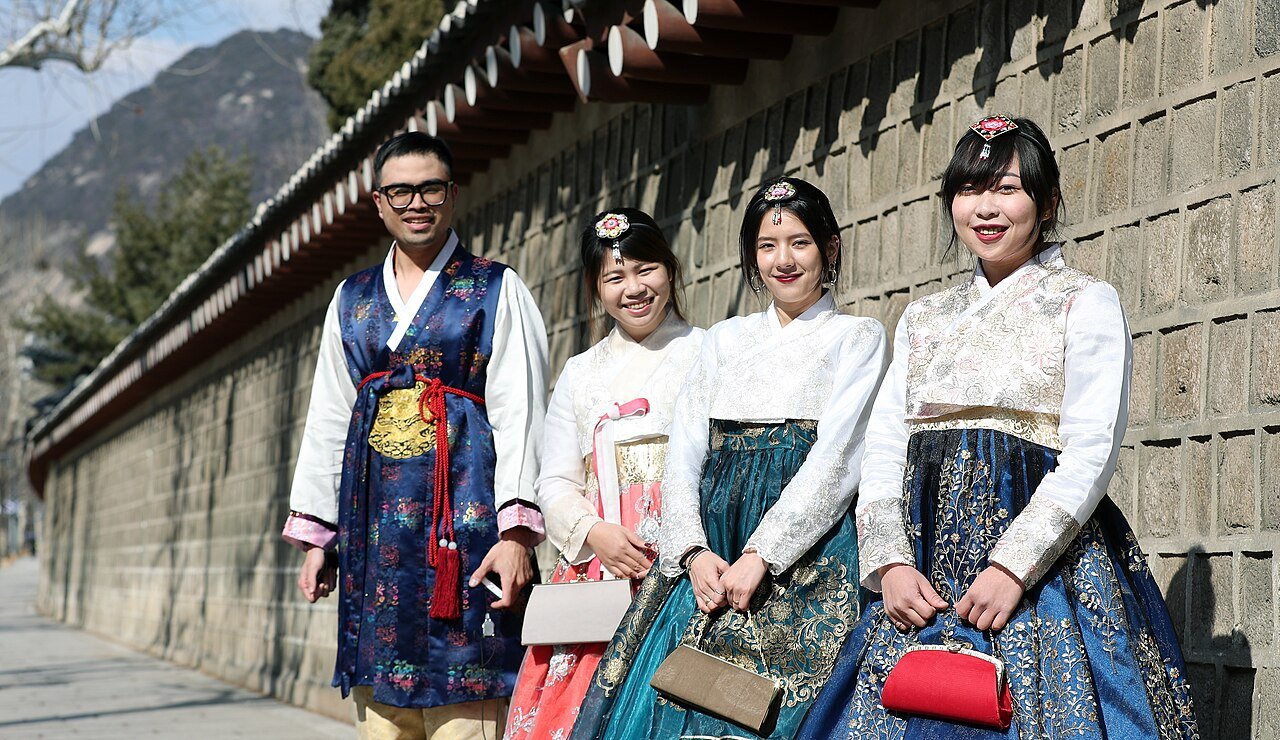
Renting a hanbok (traditional dress) for a few hours is practically a Jeonju ritual — you’ll see the lanes full of visitors in flowing silks posing against the hanok backdrops. Rental shops cluster around the village entrance; typical rates run ₩10,000–20,000 for a few hours, and many sights and cafés offer small discounts to anyone in hanbok. It’s touristy, it’s a little theatrical, and it’s genuinely fun.
What to eat in the food capital
You did not come to Jeonju to eat lightly. This is the country’s food capital, and the eating is the point.
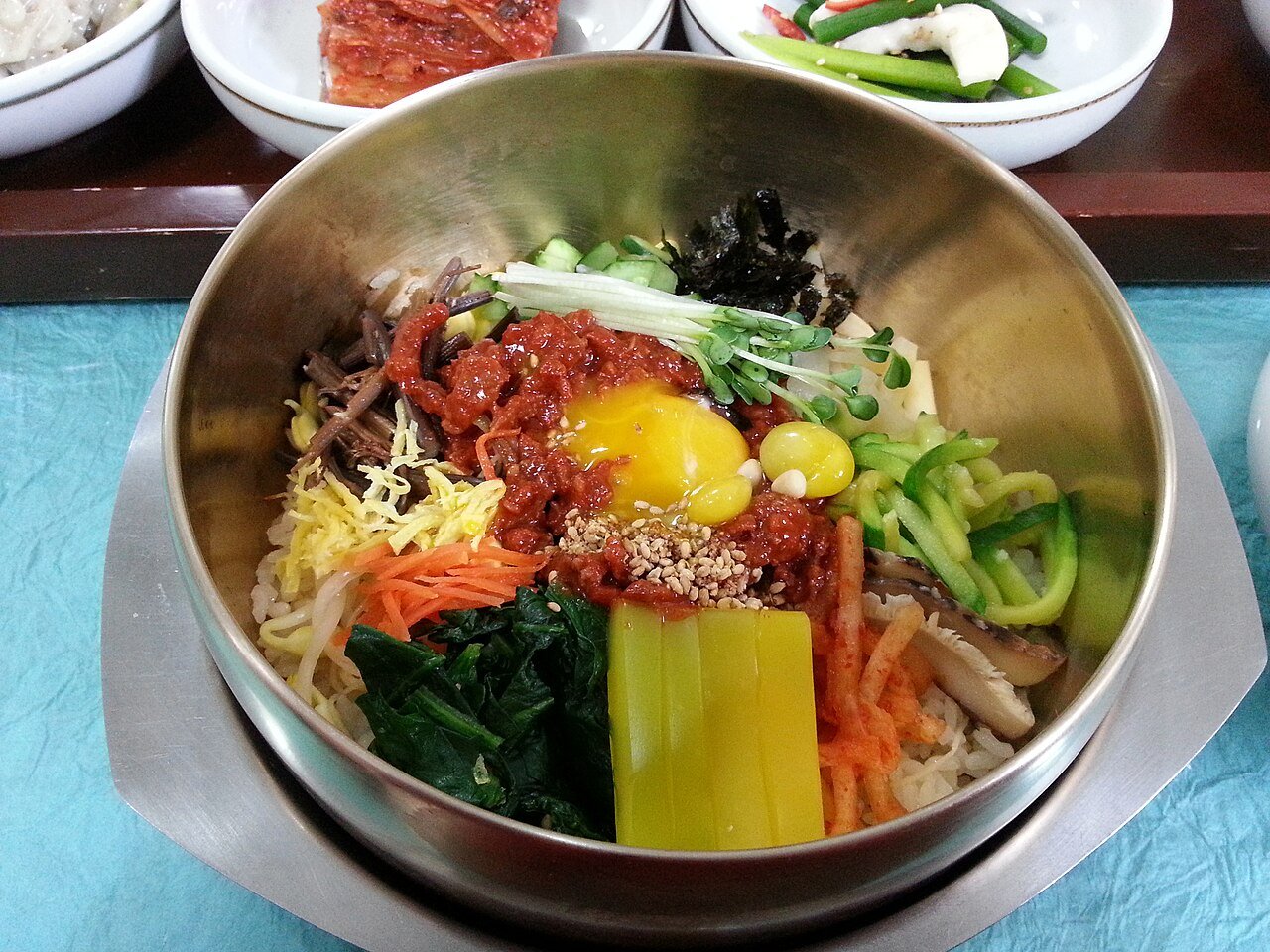
Jeonju bibimbap
The dish that put the city on the map. Jeonju bibimbap is a step above the version you’ve had elsewhere — rice cooked in beef-bone broth, a generous spread of seasonal vegetables, a raw or fried egg, a dab of chili paste, and often a sliver of raw beef (yukhoe), traditionally served in a brass bowl. The long-established houses in and around the village do it properly. Eat it where it was born; you’ll taste the difference.
Kongnamul-gukbap
Jeonju’s beloved everyday dish: bean-sprout-and-rice soup, a clear, peppery, restorative bowl that locals swear by as a hangover cure. It grew up around Nambu Market and the old train station in the mid-20th century and is still served all over town, often with a poached egg and a side of squid. Cheap, warming, and very Jeonju — the perfect breakfast before a day on your feet.
Makgeolli — the side-dish avalanche
Jeonju does makgeolli (cloudy rice wine) like nowhere else. Order a kettle at a traditional makgeolli house and the magic begins: a parade of free anju (side dishes) keeps arriving — grilled fish, pancakes, stir-fries, fruit — more food than the drink itself. The legendary spot is Samcheon-dong Makgeolli Alley, a whole street of makgeolli houses (a designated Jeonju Future Heritage) that comes alive after 5 PM and is in full swing by 8. Order a second kettle and the side dishes only get better.
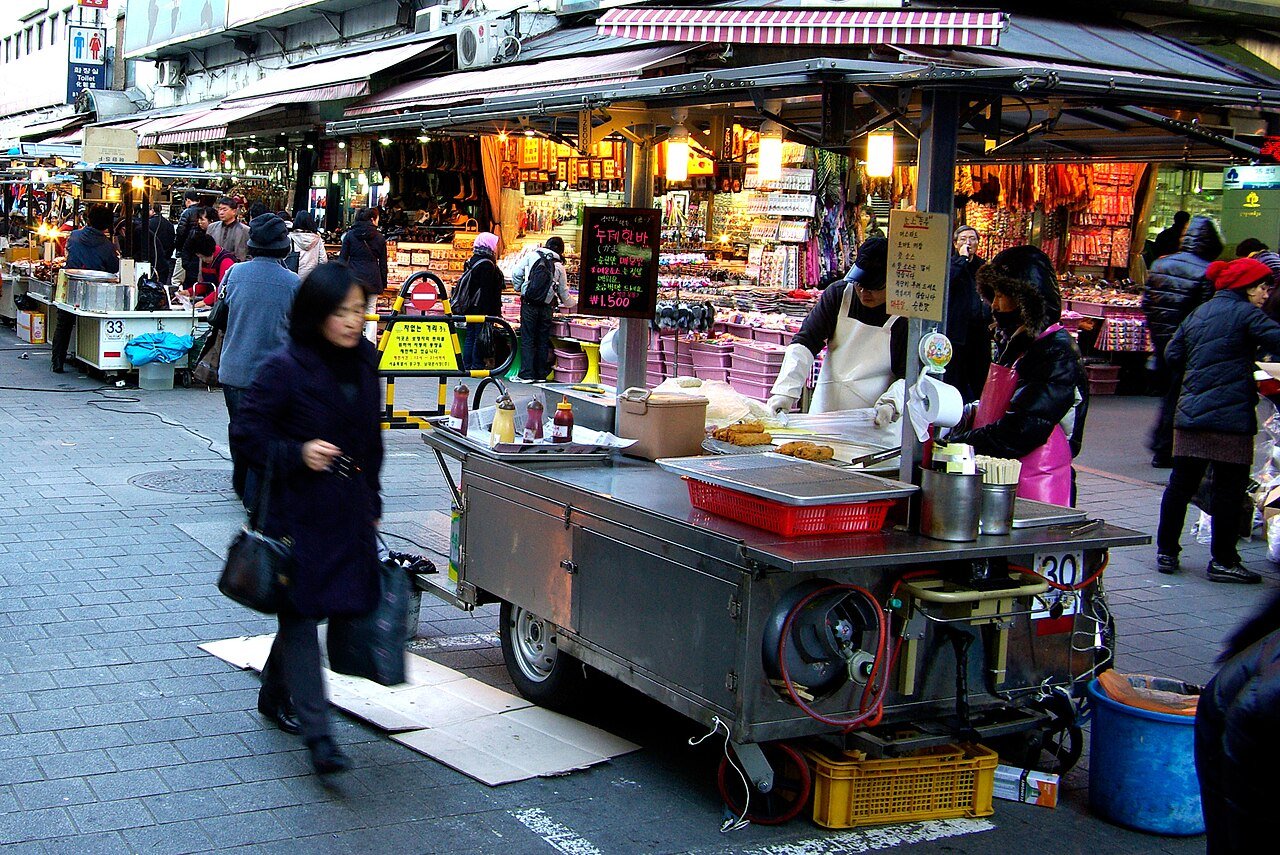
Nambu Market and street food
A short walk past Pungnammun Gate (the surviving south gate of the old fortress) brings you to Nambu Market, a sprawling traditional market that’s a destination in its own right — especially after dark.
- PNB choco pie — Jeonju’s most famous edible souvenir. PNB Bakery (Poongnyeon Confectionery), an institution since 1951, makes a handmade choco pie that’s nothing like the mass-produced supermarket version: rich, moist, and best eaten the day you buy it. Expect a line; it moves fast.
- Kongnamul-gukbap and sundae-gukbap — Nambu Market’s two legendary breakfast pillars. Pull up a stool at a counter and eat like a local.
- Nambu Night Market — on Friday and Saturday evenings (and through the warmer months), the market transforms into a buzzing night market of food stalls — Korean and global street eats, craft drinks, and a young, lively crowd. It’s the best after-dinner move in town.
A one-day plan from Seoul
A relaxed day trip, assuming an early KTX from Yongsan:
- ~9:30 — Arrive at Jeonju Station; taxi or bus to the Hanok Village.
- Morning — Wander the lanes; visit Gyeonggijeon Shrine and Jeondong Catholic Cathedral; rent a hanbok if you fancy.
- Lunch — Proper Jeonju bibimbap at a village restaurant.
- Early afternoon — Climb to Omokdae for the rooftop panorama; browse hanji and craft shops; coffee in a hanok café.
- Late afternoon — Walk through Pungnammun Gate to Nambu Market; PNB choco pie for the road.
- Evening — Makgeolli in Samcheon-dong (or the Nambu Night Market on a weekend) before the train back.
With more time, slow all of it down — Jeonju is best unhurried.
Day trip or overnight?
Jeonju works perfectly well as a day trip — under two hours each way, everything walkable, home by night. But if you can spare it, stay over. The village is at its most magical in the early morning and evening, once the day-trippers have cleared out and the lanes go quiet and golden. Better still, you can sleep inside the experience: dozens of hanok guesthouses offer rooms with traditional ondol (heated-floor) sleeping right among the tiled roofs. It’s atmospheric, surprisingly affordable midweek, and the single best reason to make Jeonju more than a day. Book ahead — the nicest hanok stays fill up fast, especially on weekends.
If you’re weaving Jeonju into a bigger loop, it slots neatly between Seoul and the southwest coast, or pairs with Gyeongju as a two-city traditional-Korea run.
Quick questions
Is Jeonju worth visiting? Yes — it’s one of the most rewarding short trips from Seoul. Korea’s largest hanok village, its single best food scene, and a calm, walkable old town, all under two hours away by train.
How long is the train from Seoul to Jeonju? About 1 h 26 m to 1 h 40 m by KTX, for roughly ₩31,300 one-way.
Which Seoul station do I leave from? Yongsan Station, not Seoul Station — almost all Jeonju KTX trains depart from Yongsan.
Is one day enough for Jeonju? For the village, the main sights, and a couple of great meals, yes. To catch the quiet early-morning and evening atmosphere — and to sleep in a hanok — stay overnight.
How do I get from Jeonju Station to the Hanok Village? A 10–15 minute taxi (about ₩6,000–8,000) or a 20–25 minute city bus (12, 79, 109, 119, 142, 508 and others) to the stop near Jeondong Catholic Cathedral.
What should I eat in Jeonju? Jeonju bibimbap (it was born here), kongnamul-gukbap for breakfast, a kettle of makgeolli with its free side dishes, and a PNB choco pie from Nambu Market.
Related guides
- Gyeongju Day Trip from Seoul — pair Jeonju with Korea’s other great traditional city.
- 5 Days in Korea by KTX — where Jeonju fits into a wider loop.
- How to Book KTX with a Foreign Credit Card — fix the payment problem before it finds you.
- Korail Pass: Is It Worth It? — honest math for multi-city trips.
- How to Travel Korea by Train — the whole system, explained once.
🔗 Affiliate disclosure: Some links on this site are affiliate links. If you book through them, we may earn a small commission at no extra cost to you. We only recommend services we believe are genuinely useful for train travel in Korea.