Gyeongju from Seoul by KTX: Hour-by-Hour Day Trip Plan
🔗 Some links on this site are affiliate links. If you book through them, we may earn a small commission at no extra cost to you. We only recommend services we believe are genuinely useful for train travel in Korea.
Gyeongju was the capital of the Silla kingdom for nearly a thousand years, and it’s often called a “museum without walls” — temples, royal tombs, and a stone observatory sit out in the open across the city, not behind glass. For a single ancient city you can reach by bullet train, nothing else in Korea comes close. The catch is that it’s far from Seoul and the sights are spread out, so the difference between a magical day and a frustrating one comes down to planning.
This guide covers the whole trip end to end — the KTX (fares, timing, the station name that trips people up), how to get around once you arrive, what to see by day and after dark, what to eat, a timed one-day plan you can copy, and the honest case for staying overnight instead. One thing to sort before you leave: a working data connection, because every bus check and taxi call here runs on Naver Map or Kakao.
Seoul to Gyeongju at a glance
| Train | KTX on the Gyeongbu high-speed line |
| Journey time | About 2 h – 2 h 15 m |
| One-way fare | ₩44,200 (about US$32) standard class |
| Departs from | Seoul Station |
| Arrives at | Gyeongju Station (type “Gyeongju”, not “Singyeongju”) |
| Frequency | 17+ trains a day |
| From Busan | Just ~30 minutes, ~19 trains a day |
| Day trip? | Doable, but tight — overnight is genuinely better |
Getting there by KTX
KTX trains from Seoul Station reach Gyeongju Station in about 2 hours to 2 h 15 m, depending on how many stops your train makes. Standard-class fare is ₩44,200 one-way (around US$32); first class runs about ₩69,000. There are 17-plus departures a day, with the first leaving around 5:15 AM, so a same-day return is realistic — take an early-morning train out and a mid-evening train back.
The station-name trap
Here’s the one thing every older guide gets wrong. The station was called Singyeongju (“new Gyeongju”) for years, but on 28 December 2023 it was officially renamed Gyeongju Station. The old Gyeongju Station in the city center closed back in 2021. So when you search Korail+ (formerly KorailTalk), the Korail global site, or any reseller, type “Gyeongju” as your destination — not Singyeongju, which no longer exists in the booking systems. Old blog posts and screenshots still say Singyeongju; ignore them.
Fares on the KTX are fixed and regulated — there’s no dynamic pricing, so a ticket costs the same a month out or an hour before departure. Booking early buys you a seat, not a discount. Weekends and holidays do sell out on this route, so if you’re set on specific times, book your return at the same time as the outbound. One exception worth knowing: Korail discounts a limited block of seats on quieter departures through its online special fare — how that works.
Booking with a foreign card
You can buy tickets on the Korail global site or the KorailTalk app in English — but foreign cards often fail silently at the payment step, a problem this route shares with every KTX line. The reliable fixes (desktop checkout, station counters, resellers) are in our how to book KTX with a foreign credit card guide, and if the app misbehaves, see what to do when KorailTalk won’t cooperate. New to the whole process? Start with how to buy KTX tickets.
Coming from Busan instead?
If you’re already in the southeast, Gyeongju is a no-brainer from Busan: just ~30 minutes by KTX, with roughly 19 trains a day. That makes Gyeongju a far easier day trip from Busan than from Seoul — many travelers pair it with a Busan base. If you’re routing through both cities, see our Seoul to Busan KTX guide and things to do near Busan Station.
Does the Korail Pass help?
For a single Seoul–Gyeongju round trip, no — two one-way tickets (₩98,600) are cheaper than any pass. The Korail Pass only pays off when Gyeongju is one stop in a wider multi-city run — say Seoul → Busan → Gyeongju → back in the same week. For 2026 every pass is flexible (2, 3, 4, or 5 travel days you can spread across a 10-day window), which makes a side trip like this easy to slot in. Run your own numbers in is the Korail Pass worth it? and learn the redemption steps in how to use the Korail Pass.
Getting around once you arrive
This is the part to plan, because Gyeongju Station sits about 12 km outside the city center — the sights are not at the station. Your options:
- Taxi — the simplest and the one we’d recommend for a day trip. About 15-20 minutes into the downtown sights (Daereungwon, Cheomseongdae) for roughly ₩15,000-20,000. Worth every won when your clock is ticking. Use the Kakao T app to call one.
- City bus 700 — runs from the station through downtown to Bulguksa Temple (about 55 minutes end to end), timed loosely with train arrivals. Tap on with a T-money card (the same one from Seoul works here). Cheap, but it does not run often.
- City buses 60 / 61 — head from the station to the downtown tomb-and-observatory cluster. Inexpensive (~₩1,500) but infrequent, roughly every 70 minutes, so check the next departure before you commit.
- Bike — central Gyeongju is flat and compact, and the downtown sights (tombs, Cheomseongdae, the pond) sit within easy cycling distance of each other. Rentals are cheap (around ₩1,000/day from some shops), and on a sunny day it’s the nicest way to link them.
A practical rhythm for one day: taxi from the station into the downtown cluster, do the flat central sights on foot or by bike, then taxi or bus 700 out to Bulguksa.
What to see
Bulguksa Temple & Seokguram Grotto
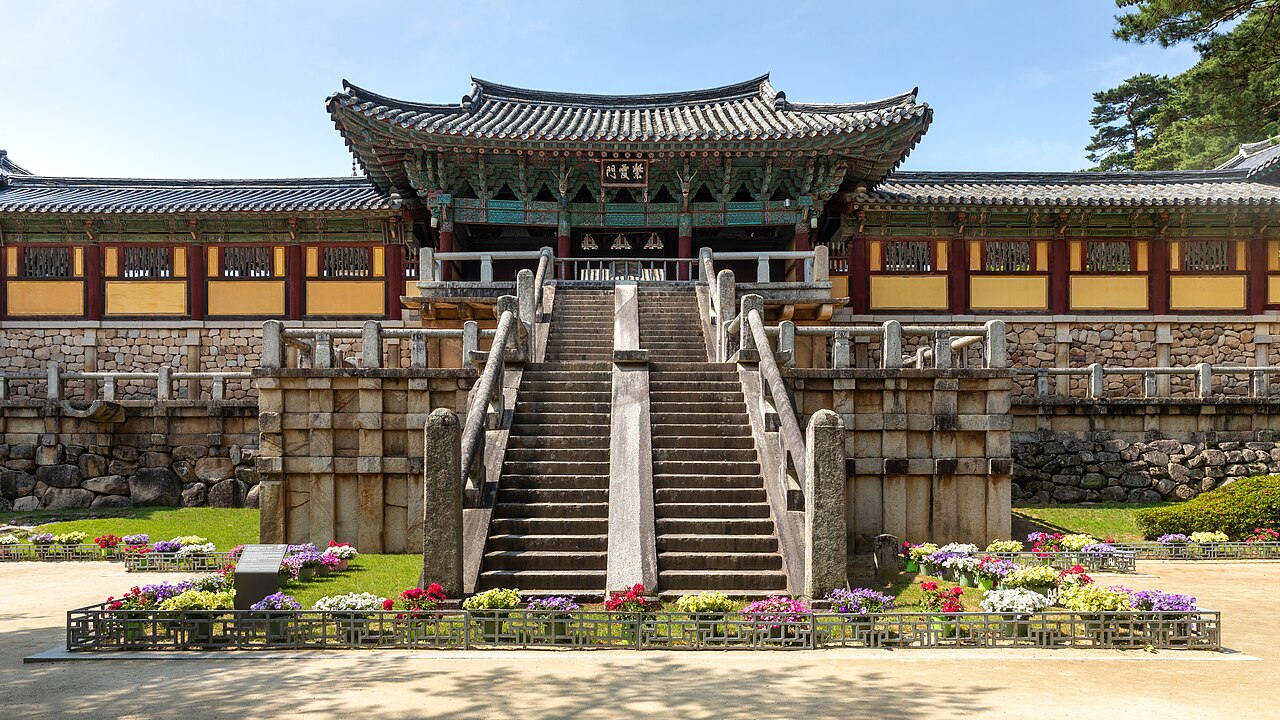
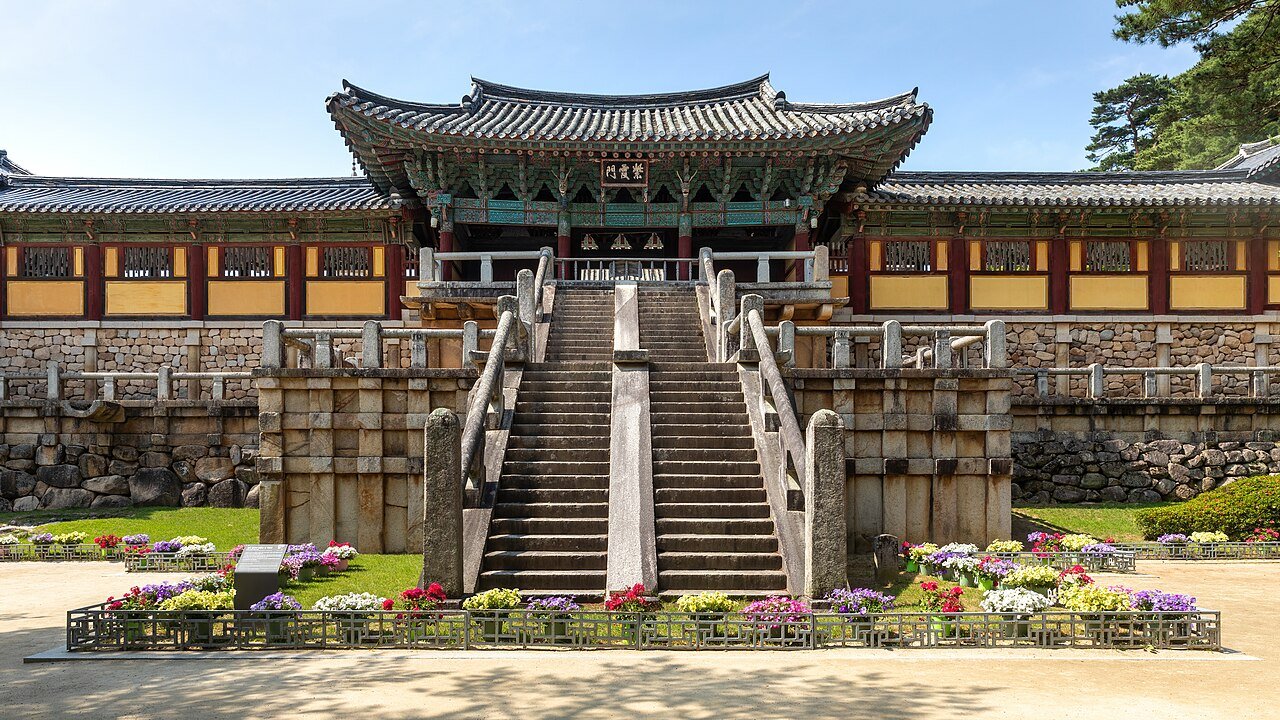
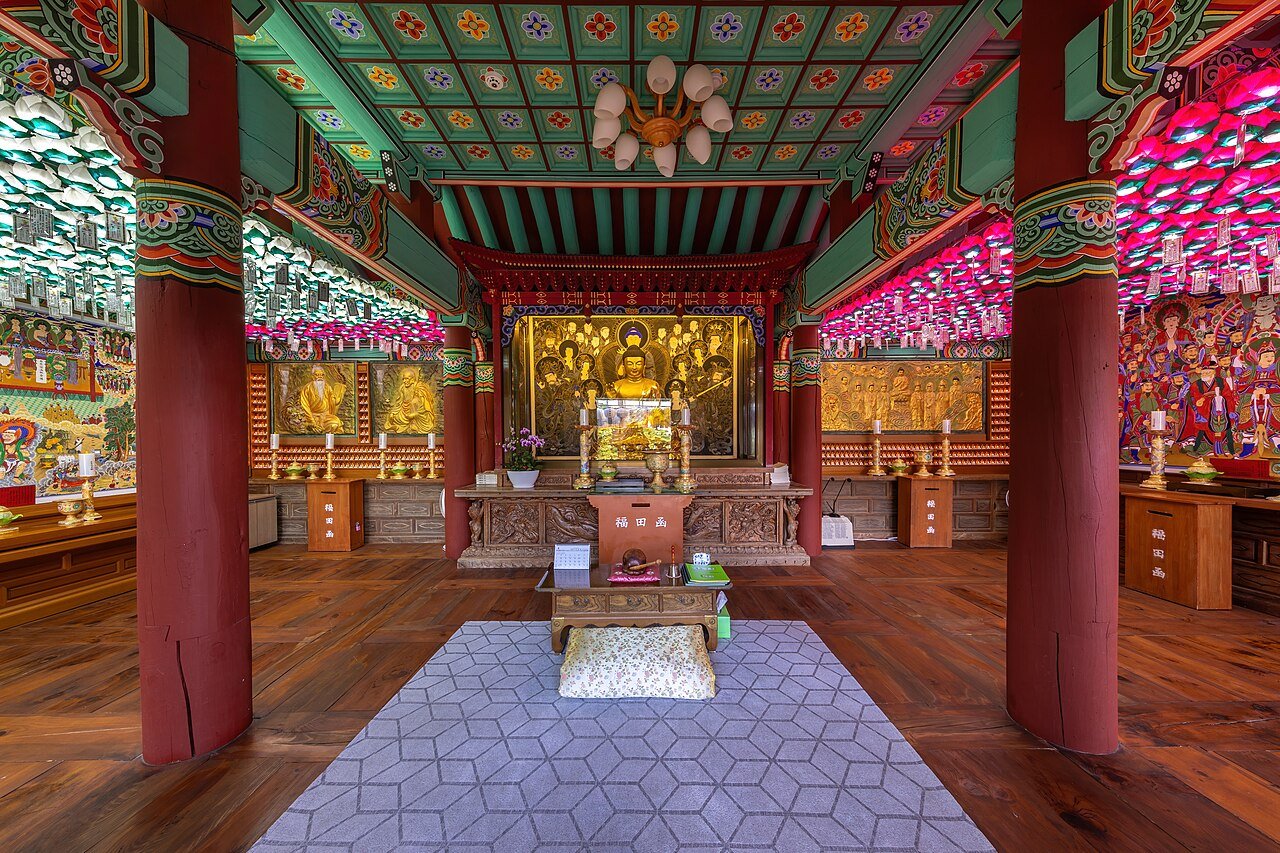
Gyeongju’s headline UNESCO sights, and the reason many people come. Bulguksa is a beautifully terraced 8th-century temple, its stone staircases and twin pagodas considered masterworks of Silla architecture. Up the mountain above it, Seokguram Grotto houses a serene granite Buddha gazing out toward the sea — one of East Asia’s great Buddhist artworks. They sit a short bus or taxi ride apart on the mountainside; allow a good half-day for both, and note Seokguram needs a separate short hop (bus 12) up from Bulguksa.
Daereungwon — the royal tomb mounds
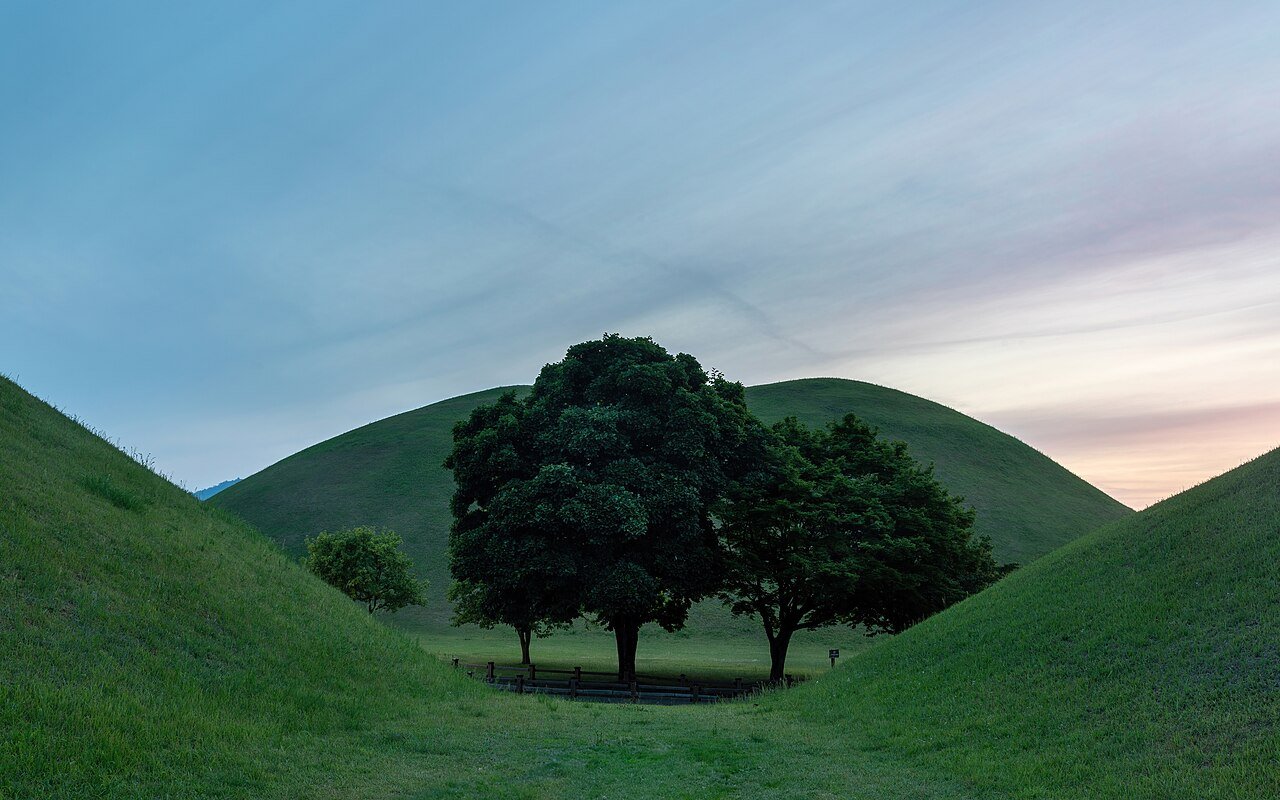
Right in the center of town, Daereungwon is a park of grassy burial mounds where Silla royalty were laid to rest — softly rounded green hills that look almost surreal in the morning light. One tomb, Cheonmachong (“Heavenly Horse Tomb”), is open inside so you can see the excavated chamber and a replica of the famous painted saddle flap. It’s the most photographed everyday scene in Gyeongju.
Cheomseongdae Observatory
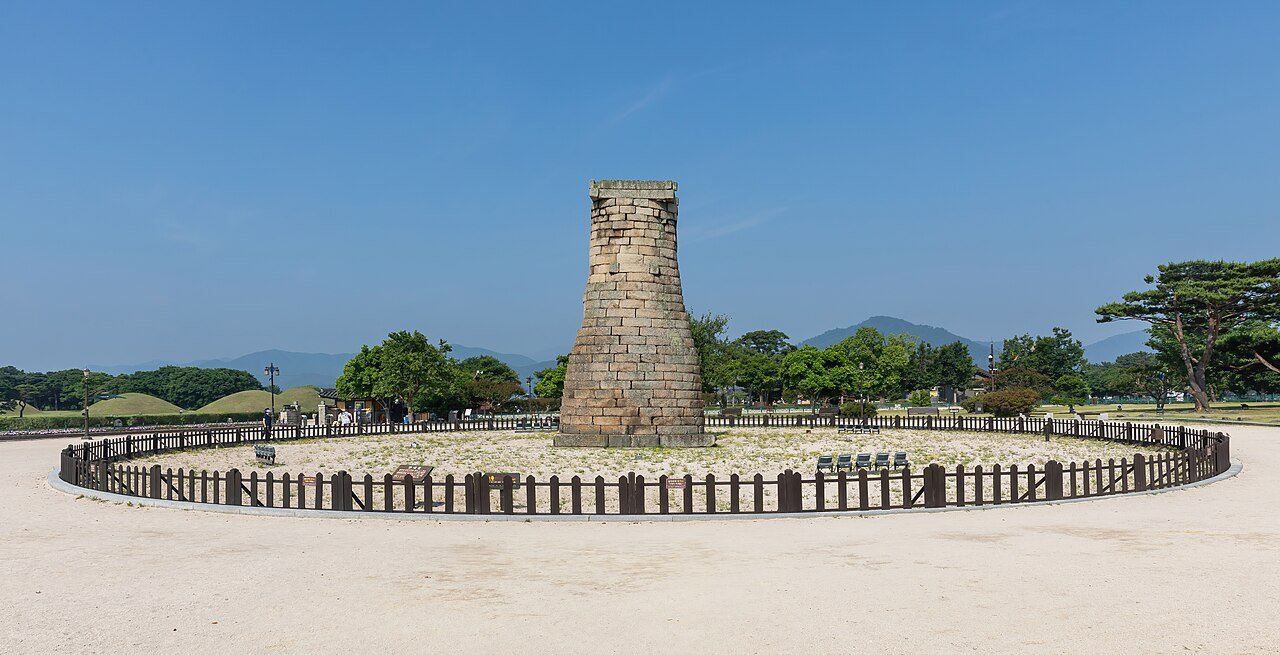
A 7th-century stone astronomical observatory — one of the oldest surviving in Asia — standing in an open field a short walk from the tombs. It’s a simple bottle-shaped tower of cut granite, but knowing people read the stars from it 1,300 years ago gives it real weight. The surrounding meadow is gorgeous at golden hour.
Donggung Palace & Wolji Pond (after dark)
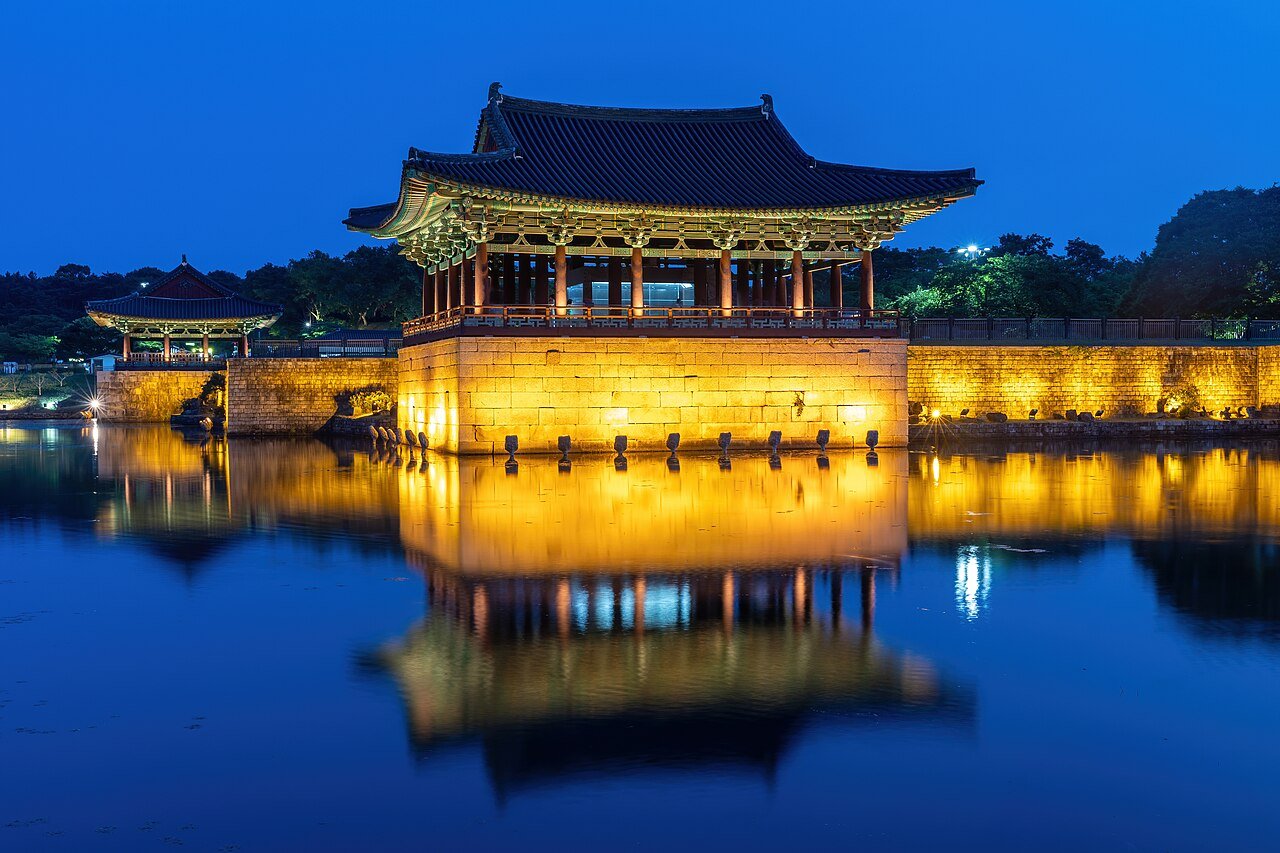
Don’t skip this, and time it for the evening. Donggung Palace and Wolji Pond (long known as Anapji) was a Silla pleasure garden, and after the lights come on around 6:30 PM, the reconstructed pavilions throw perfect mirror reflections across the still water. It is, without argument, the most photographed view in the city — and the single best reason to consider staying past sunset. Entry is about ₩3,000.
Woljeonggyo Bridge
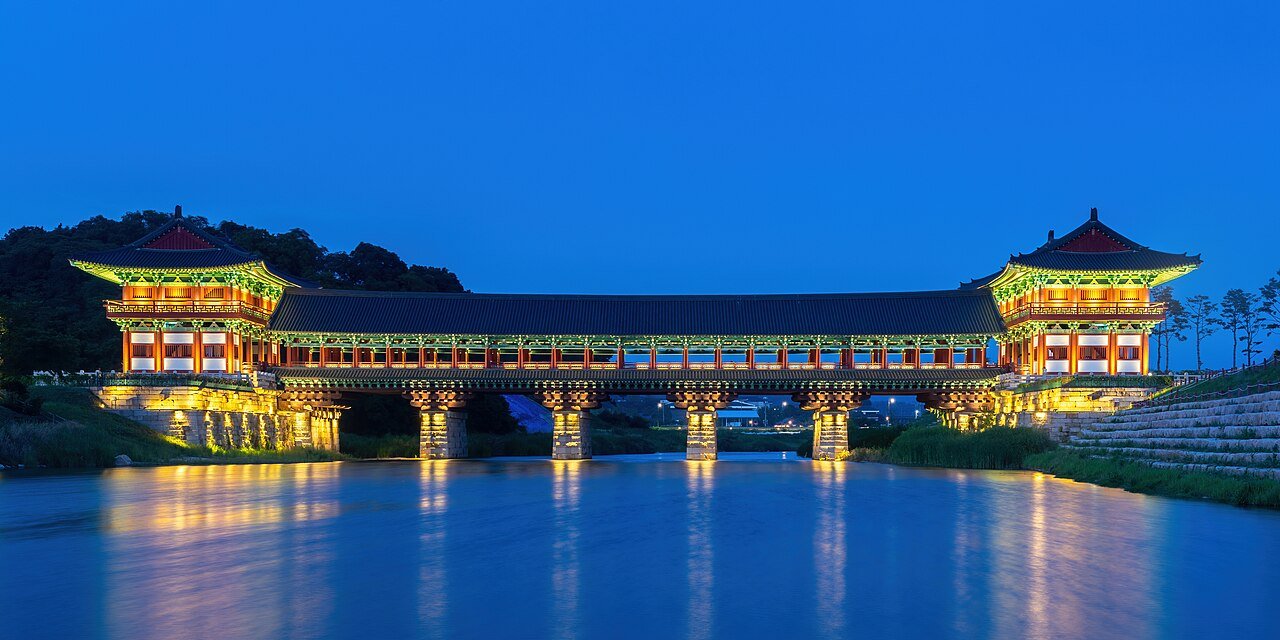
A short stroll from Wolji, Woljeonggyo is a grand reconstructed wooden footbridge over the Namcheon stream, originally built in the Silla era. Like the pond, it’s floodlit after dark and reflects beautifully in the water — pair the two for an easy lit-up evening walk.
Hwangnidan-gil
A trendy street of cafés, dessert shops, and boutiques in restored old houses, threaded right through the historic core near the tombs. It’s the natural place to refuel between sights — and where you’ll find a lot of the local sweets below.
What to eat
- Hwangnam-ppang — Gyeongju’s iconic sweet. A small, thin-skinned bun packed almost entirely with red-bean paste, baked since 1939 and now in its third family generation. The original Hwangnam Bread shop lets you watch them being made; a box is the classic Gyeongju souvenir. You’ll also see chalbori-ppang (glutinous-barley cakes) all over town.
- Ssambap — Gyeongju is famous for these set meals: a spread of leafy wraps with rice, grilled meat or fish, and a dozen-plus side dishes. The restaurant rows near Daereungwon do the classic version.
- Gyeongju beopju & local fare — the old Choi family is also tied to a traditional rice liquor, and the Hwangnidan-gil cafés have turned the historic quarter into a dessert destination in its own right.
A timed one-day plan from Seoul
A realistic single day, assuming the earliest practical KTX:
- ~6:00 — Early KTX from Seoul Station.
- ~8:15 — Arrive Gyeongju Station; taxi straight into the downtown sights.
- Morning — Daereungwon tomb mounds, then walk to Cheomseongdae; coffee on Hwangnidan-gil.
- Lunch — Ssambap near the tombs, with a box of Hwangnam-ppang to take home.
- Early afternoon — Taxi or bus 700 out to Bulguksa, then up to Seokguram (allow a half-day).
- Late afternoon — Back toward the center.
- ~6:30 onward — Donggung Palace & Wolji Pond lit up after dark, plus Woljeonggyo bridge.
- Evening — Taxi to Gyeongju Station for a mid/late-evening KTX back to Seoul.
It works — but you’ll notice it’s packed, and the best part (the illuminated pond) lands right when you need to leave. Which brings us to the honest question.
Day trip or overnight?
You can do Gyeongju from Seoul in a day, and plenty of people do. But the round-trip rail time (about 4-4.5 hours), the 12 km station gap, and the spread-out sights mean a day trip is genuinely rushed — and the city’s signature experience, Wolji Pond after dark, falls awkwardly at the end. If your itinerary allows, an overnight (2D1N) transforms it: you see the lit pond and bridge without watching the clock, catch Bulguksa in soft morning light before the tour buses, and travel at a Silla pace instead of a sprint.
A few smart structures:
- From Seoul: stay one night in Gyeongju — it’s the difference between a checklist and an experience.
- From Busan: the easiest version of all. With Gyeongju ~30 minutes away, base in Busan and day-trip without the long haul, or do one night in Gyeongju on the way through.
- As a stopover: slot Gyeongju between Seoul and Busan on a rail loop. Our 5-day Korea rail itinerary and 7-day Korea itinerary both show exactly where it fits.
If you stay, base yourself near Hwangnidan-gil / the historic center to be walking distance from the night sights, or near Bomun Lake for resort-style hotels.
Quick questions
Is Gyeongju worth a day trip from Seoul? Yes, if Silla history excites you — there’s nowhere else like it in Korea. But with about 4-4.5 hours of round-trip rail and spread-out sights, it’s a packed day. If you possibly can, stay one night.
How long is the train from Seoul to Gyeongju? About 2 hours to 2 h 15 m by KTX, ₩44,200 one-way in standard class, with 17-plus departures a day.
Why can’t I find Singyeongju Station when booking? Because it was renamed Gyeongju Station on 28 December 2023. Search “Gyeongju” instead — Singyeongju no longer exists in the booking systems, even though older guides still use the name.
Is it better to visit Gyeongju from Busan? For convenience, yes — it’s only ~30 minutes by KTX from Busan versus ~2 hours from Seoul. Many travelers day-trip from a Busan base.
Do I need a car in Gyeongju? No, but the sights are not at the station (it’s ~12 km out). Use taxis (Kakao T) to bridge the gaps, with city buses or a rental bike for the flat downtown cluster.
What should I eat in Gyeongju? Hwangnam-ppang (the red-bean bun baked here since 1939) and a ssambap set meal near the tombs are the two local must-tries.
Related guides
- Best Day Trips from Seoul by Train — where Gyeongju ranks among the easy escapes.
- 5 Days in Korea by KTX — where Gyeongju fits into a wider loop.
- Things to Do Near Busan Station — Gyeongju pairs perfectly as a side trip from Busan (much closer than Seoul).
- How to Book KTX with a Foreign Credit Card — fix the payment problem before it finds you.
- How to Travel Korea by Train — the whole system, explained once.
🔗 Affiliate disclosure: Some links on this site are affiliate links. If you book through them, we may earn a small commission at no extra cost to you. We only recommend services we believe are genuinely useful for train travel in Korea.